How to Use Conditioner on Fine Hair Without Losing Volume
Fine hair often creates a frustrating choice: use conditioner and risk flat roots, or skip it and deal with tangles, static and rough ends. Fortunately, those are not the only options.
Conditioner can improve slip, reduce friction and make hair easier to detangle. The key is controlling four variables: formula, amount, placement and rinsing. Fine hair may need less product than coarse hair, but “less” is not the same as “none.”
The right technique should leave the lengths soft and manageable while preserving natural movement at the roots. This guide explains how to get there for straight, wavy, curly, coily, oily and colour-treated fine hair.
Why Conditioner Can Flatten Fine Hair
Fine hair has narrow individual strands. A small amount of rich product can represent a larger coating relative to the strand’s diameter, causing hairs to group together and reducing visible movement.
Flatness may result from:
- Using more conditioner than the hair needs
- Applying it directly to oily roots
- Choosing a formula richer than the current level of dryness requires
- Incomplete rinsing
- Layering conditioner with leave-in, cream and oil
- Applying product unevenly so one section becomes coated
- Using conditioner to solve dryness caused by excessive heat or rough handling without adjusting those habits
Conditioner is not automatically the problem. Technique often determines whether the finished result feels balanced or heavy.
Fine Hair Still Benefits From Conditioning
Fine strands can tangle, become static, feel rough after colouring or experience friction during detangling. Skipping conditioner may create more knots and encourage forceful brushing.
A well-matched conditioner can:
- Improve slip
- Make detangling easier
- Reduce the rough feel of the fibre
- Support smoother-looking ends
- Help manage static and flyaways
- Improve softness after shampooing
These are cosmetic benefits. Conditioner does not permanently change strand diameter, create new hair or reverse every form of structural damage.
Step 1: Choose the Formula by Hair Need
Do not choose conditioner by strand diameter alone. Consider scalp oil, length, processing and texture.
Fine hair with oily roots
Look for a conditioner that can be used in a controlled amount and rinses cleanly. The Luxivie Rosemary Mint Conditioner is designed specifically for oily hair and is the more relevant current Luxivie option when the roots become oily or flat quickly.
Because the formula is clear rather than creamy, avoid describing or depicting it as a thick white cream. Its role is targeted conditioning for manageability within an oily-hair routine.
Fine hair with dry or processed lengths
If the hair is normal to dry, coloured, lightened or fragile-feeling, the Luxivie Biotin + Keratin Conditioner may be the more relevant option. Apply it to the areas that need conditioning and start with a modest amount.
Protein-containing formulas may help some hair feel smoother or stronger. If several protein-rich products leave the hair stiff or rough, simplify the routine and observe how it responds.
Fine curly or coily hair
Fine curls and coils may require enough conditioner for sectioning and detangling. A lightweight result does not always mean using very little; it can mean distributing an appropriate amount evenly and rinsing according to the desired definition.
Avoid applying straight-hair rules automatically to textured hair.
Step 2: Start With Less Than You Think You Need
The ideal amount depends on hair length, density, texture and dryness. A coin-size comparison is not precise because product viscosity and hand size vary.
Use this method instead:
- Begin with a small amount in wet hands.
- Emulsify it between the palms.
- Apply to one section of the mid-lengths and ends.
- Add more only where the hair still lacks slip.
- Remember how much produced a balanced result.
High-density fine hair may need more total product than low-density fine hair because there are more strands to cover. “Fine” describes strand diameter, not how much hair is present.
Step 3: Control Placement
For fine, straight hair with oily roots
Begin around the mid-lengths and work toward the ends. Keep the heaviest application away from the scalp if conditioner reduces root lift.
For a dry fringe or face-framing pieces
Use the residue remaining on your hands rather than adding a fresh amount near the hairline.
For curls and coils
Condition section by section. You may need product closer to the roots for detangling and curl formation. Use less near the scalp rather than avoiding the area completely when that would leave tangles.
For short fine hair
It may be difficult to avoid the root area. Use a smaller amount, distribute carefully and rinse thoroughly.
For oily roots and dry ends
Treat the hair as separate zones. Shampoo the scalp, condition the lengths and add a finishing product only to the driest ends when necessary.
Step 4: Give Conditioner Time to Distribute
Follow the product directions. More time is not always better, and a rinse-out conditioner does not become a deep treatment simply because it remains on the hair longer.
While it is distributed:
- Gently smooth it through sections
- Detangle if the product directions and your texture support wet detangling
- Avoid twisting or rough scrubbing
- Add a little water to improve distribution before adding more product
Water can help spread conditioner across fine strands, allowing a smaller amount to cover more evenly.
Step 5: Rinse Thoroughly
Incomplete rinsing is a common reason fine hair feels heavy immediately after washing.
Lift sections and direct water through the crown, nape and underneath layers. Move the lengths gently so water reaches the inner sections.
How fully you rinse may vary with texture and product instructions. Straight fine hair seeking maximum movement may benefit from a very thorough rinse. Curly or coily hair may prefer a different finish for definition, but the scalp should not feel coated unintentionally.
The hair should feel smooth and flexible, not waxy or unusually slippery after the shower.
Step 6: Avoid Rebuilding the Weight After Rinsing
A lightweight conditioner routine can be undone by several leave-in layers.
After washing, ask what the hair actually needs:
- Heat protectant for hot tools
- One lightweight styling product for shape or volume
- A small amount of leave-in for detangling
- A trace of oil for dry ends
Do not apply all four automatically. Give each product one clear job.
For fine hair, start with the smallest effective amount and keep rich products away from the roots unless your texture or product directions call for root use.
A Complete Fine-Hair Conditioning Routine
Before shampooing
Detangle very gently if your texture benefits from pre-wash detangling. Avoid forcing a brush through dry curls or knots.
During shampooing
Concentrate shampoo at the scalp. Massage with fingertips and rinse thoroughly. Avoid roughing up the ends.
During conditioning
- Squeeze excess water from the lengths.
- Emulsify a small amount of conditioner.
- Apply where the hair needs slip.
- Distribute through sections.
- Add water before adding more product.
- Detangle gently if appropriate.
- Rinse carefully.
After washing
Blot rather than rub. Apply one essential styling or protection product. Dry the roots in a way that supports lift, using controlled heat and heat protection when appropriate.
Troubleshooting Fine Hair After Conditioner
|
What you notice |
Likely routine factor |
Adjustment to try |
|
Roots look flat immediately |
Product placed too high or incomplete rinsing |
Move application lower and rinse in sections |
|
Ends still tangle |
Too little product or uneven distribution |
Add a small amount to the driest sections and use more water |
|
Hair feels waxy |
Formula, amount or layered leave-ins may be too rich |
Reduce amount and simplify post-wash products |
|
Hair feels rough |
Conditioner may be insufficient or cleanser/heat may be too strong |
Improve conditioning and review the full routine |
|
Curls lose definition |
Too little slip or excessive rinsing for that texture |
Adjust distribution and finish according to curl needs |
|
Hair looks oily the next morning |
Root placement, styling layers or natural oil timing |
Keep rich products lower and audit everything touching the roots |
Change one factor at a time so you can identify what improved the result.
Conditioner and Fine, Oily Hair
An oily scalp does not moisturize the full length evenly. Long hair, processed ends and curls can remain dry even when the roots become oily quickly.
For this combination:
- Use Rosemary Mint Shampoo mainly at the scalp
- Apply Rosemary Mint Conditioner to the lengths
- Adjust placement for texture
- Rinse thoroughly
- Avoid heavy oil at the roots
- Wash according to scalp comfort
The Rosemary Mint Conditioner is intended for oily hair. It should not be positioned as the main Luxivie conditioner for dry hair, because the Biotin + Keratin line is the appropriate collection for normal to dry concerns.
Conditioner and Colour-Treated Fine Hair
Colouring or lightening may leave lengths more fragile-feeling. Use enough conditioner for slip, reduce high heat and detangle carefully.
Check whether a product is labelled as suitable for colour-treated hair before making a colour-safe claim. Sulfate-free status alone does not guarantee colour suitability or a specific level of gentleness.
Conditioner and Canadian Weather
Humid summer weather
Fine hair may feel flatter as humidity and sweat affect the roots. Use less conditioner near the top and keep styling layers light.
Dry winter weather
Indoor heating, wind and friction from coats or scarves can leave ends static-prone. Increase conditioner only where needed rather than applying a rich layer at the roots.
Hat season
Hats can compress root volume. Extra dry shampoo and extra conditioner can create more buildup. Reposition the roots after removing the hat and keep conditioning targeted.
Common Conditioner Mistakes
Skipping conditioner entirely
This may leave the lengths tangled and require more force during detangling. Try a smaller amount or different placement first.
Applying one large amount to the outside layer
The surface becomes coated while inner sections receive little slip. Use smaller amounts across sections.
Applying conditioner automatically to the scalp
Scalp application may flatten some fine hair. Use it only when texture, dryness or directions make it appropriate.
Using a mask at every wash because the ends feel dry
Masks can be helpful, but frequent rich treatments may weigh down fine hair. Review heat, friction and chemical processing as well.
Leaving rinse-out conditioner on indefinitely
Follow the directions. Longer application does not guarantee more benefit.
Adding oil before checking the finished result
Let hair dry enough to assess softness before adding another layer. A trace amount may be sufficient.
Can Conditioner Make Fine Hair Look Fuller?
Conditioner does not increase density. It may help the hair look more polished by reducing tangles, roughness and breakage associated with difficult handling.
When the amount and placement are balanced, the hair can retain movement and the ends may look smoother. Too much coating can reduce separation and visible volume.
The goal is not maximum volume at the expense of manageability. It is hair that feels light enough to move and conditioned enough to handle gently.
Frequently Asked Questions
Should fine hair use conditioner every wash?
It can. Adjust amount and placement according to how the hair responds. Dry, coloured or tangle-prone lengths may benefit from conditioning every wash.
Should conditioner go on fine-hair roots?
If root application makes straight fine hair flat, begin at the mid-lengths. Fine curls or coils may need conditioner closer to the roots, so texture matters.
How much conditioner should fine hair use?
Begin with a small amount and add only where slip is missing. Length and density influence the total amount more than strand diameter alone.
Why does my hair feel greasy after conditioner?
Possible factors include too much product, rich formula weight, application near the scalp, incomplete rinsing or additional leave-in layers.
Which Luxivie conditioner is best for fine hair?
For fine hair with oily roots, use the Luxivie Rosemary Mint Conditioner as part of the Rosemary Mint Set. For normal-to-dry or fragile-feeling lengths, the Biotin + Keratin Conditioner may be more appropriate.
The Bottom Line
Fine hair does not need to choose between volume and conditioning. Start with a small amount, apply it where the hair needs slip, adjust for texture and rinse thoroughly.
For fine hair with oily roots, the Luxivie Rosemary Mint Shampoo & Conditioner Set is the strongest fit. The conditioner is specifically intended for oily hair and should be used strategically through the lengths.
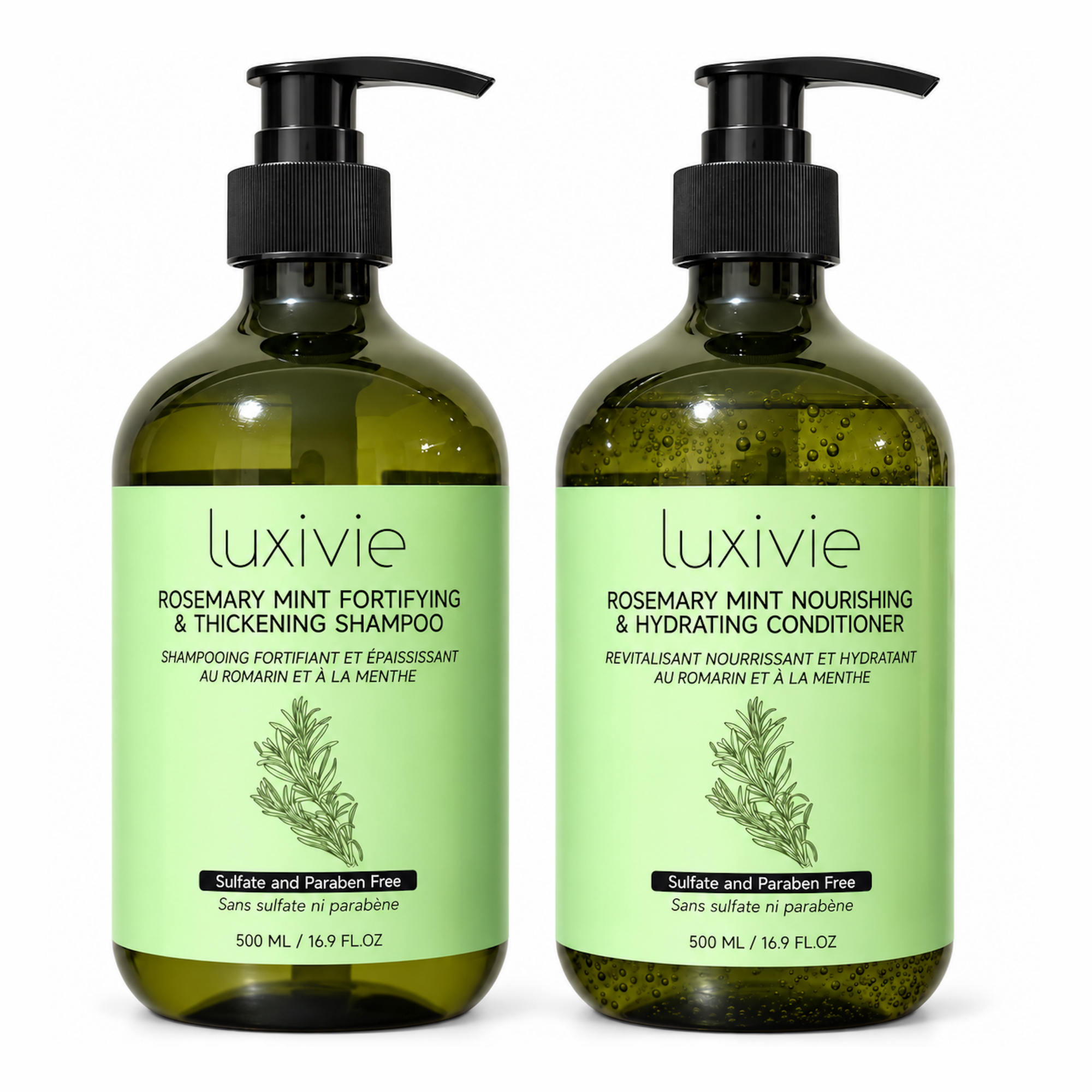
Luxivie Rosemary Mint Shampoo & Conditioner Set for Oily Hair — Gentle Cleansing & Lightweight Hydration
Refresh oily roots without weighing down your hair. This Rosemary Mint duo gently cleanses and refreshes while the lightweight conditioner softens and hydrates without leaving hair feeling heavy. Hair feels fresh, smooth and manageable, with a fuller-looking finish.
Shop Now on Amazon.caIf the hair is normal to dry, choose the Biotin + Keratin line instead. The most effective routine is the one that leaves the roots movable and the lengths manageable.
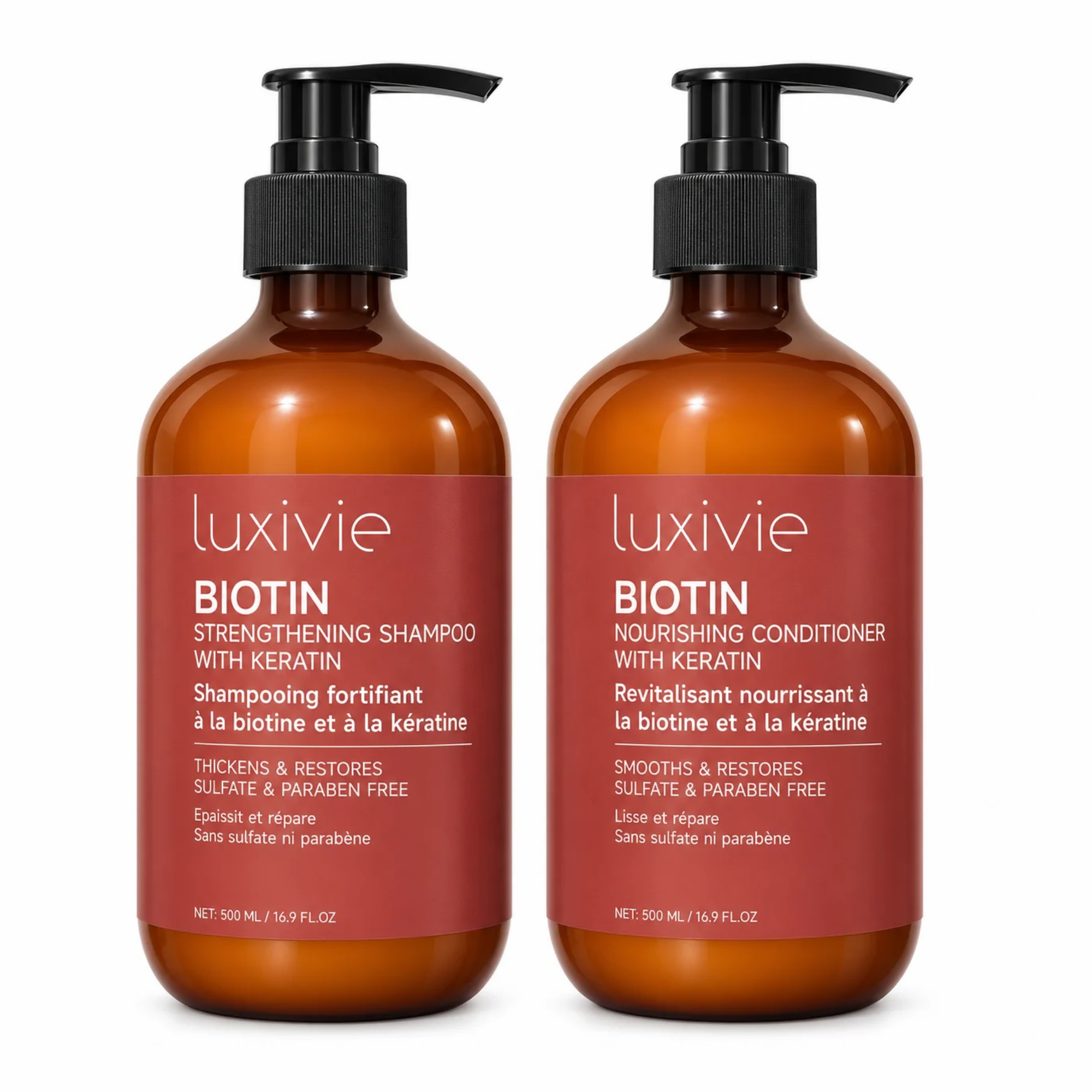
Luxivie Biotin & Keratin Shampoo & Conditioner Set for Dry & Damaged Hair — Strengthening & Smoothing Care
Care for dry, damaged-looking hair with a strengthening and smoothing duo. The shampoo gently cleanses while helping hair look fuller and more polished. The conditioner softens and smooths for easier detangling and improved manageability, leaving hair feeling soft and refreshed without weighing it down.
Shop Now on Amazon.ca