How to Choose a Shampoo for Fine Hair
Choosing a shampoo for fine hair can feel more complicated than it should. A formula may promise volume but leave the lengths rough. A moisturizing shampoo may improve softness but make the roots look flat sooner. Add an oily scalp, colour-treated ends or a Canadian winter, and a single label such as “for fine hair” may not tell you enough.
The most useful approach is to look beyond one marketing claim and consider the whole routine: how quickly your scalp becomes oily, how the lengths feel after washing, how much product you use and whether the formula rinses cleanly from your hair.
Fine hair describes the diameter of each strand. It does not automatically mean that the hair is thinning, weak or unhealthy. Because individual strands are narrow, however, oils and product residue can group them together and reduce visible movement. That is why a well-matched shampoo can make such a noticeable cosmetic difference. It does not change the number of hairs on the scalp, but it can help the hair feel clean, light and easier to style.
This guide explains how to choose a shampoo for fine hair without relying on rigid rules or exaggerated claims.
Start With Your Scalp, Not Only Your Strand Size
Fine hair tells you about strand diameter, but shampoo primarily cleans the scalp and roots. Two people with equally fine strands may need very different formulas because one has an oily scalp while the other has a dry or sensitive-feeling scalp.
Before comparing products, ask:
How soon do my roots look oily after washing?
Does my scalp feel comfortable, tight or coated after shampooing?
Do I use dry shampoo, hairspray, mousse or other products near the roots?
Are my lengths untreated, coloured, heat-styled or naturally dry?
Does my hair feel clean after one wash and a thorough rinse?
Do seasonal changes affect how often I want to wash?
These questions provide more useful direction than choosing a shampoo based only on the words “fine,” “volumizing” or “natural.”
Fine Hair Is Not the Same as Thin Hair
Fine hair refers to narrow individual strands. Thin hair generally refers to lower density, meaning fewer strands across an area of the scalp. You can have fine hair with high density, medium or coarse hair with lower density, or fine hair that is also lower-density.
The distinction matters when setting expectations. Shampoo can remove oil and residue that make hair look separated or flat. This may create a fresher, fuller-looking result. Shampoo cannot create new follicles or treat a medical cause of hair loss.
If you are unsure which description applies, begin with the difference between fine hair and thin hair before changing your routine. If you notice a sudden, patchy or persistent change in density, speak with a qualified healthcare professional rather than relying on a cosmetic product to explain it.
What Should a Shampoo for Fine Hair Do?
A useful shampoo for fine hair should cleanse effectively, rinse thoroughly and leave the hair prepared for lightweight conditioning. “Gentle” does not have to mean that the formula barely cleans, and “deep cleansing” does not have to mean that the hair should feel squeaky or rough.
The right result is practical: the scalp feels comfortable, the roots look fresh, the lengths do not feel unnecessarily dry and the hair retains natural movement after drying.
Remove the amount of oil and residue you actually have
Fine hair may show oil sooner because a small amount can make narrow strands group together. Styling residue can create a similar appearance. A shampoo should remove the day’s oil, sweat and routine product use without requiring aggressive scrubbing.
If the roots remain coated after washing, first check technique. Use enough water to saturate the scalp, distribute shampoo across several areas rather than placing one large amount at the crown, massage gently with fingertips and rinse longer than you think is necessary. A formula cannot perform well if it is concentrated in one spot or incompletely rinsed.
Leave the scalp comfortable
A tight, itchy or unusually dry feeling is not proof that a shampoo cleaned better. It may simply mean that the formula, washing frequency, water temperature or amount used does not suit you.
At the other extreme, a heavily conditioning shampoo may leave some fine hair feeling coated. The goal is neither maximum oil removal nor maximum conditioning. It is a comfortable balance that fits your scalp and wash schedule.
Work with conditioner instead of trying to do everything
Shampoo does not need to provide all the softness your ends require. Trying to get rich conditioning from the cleansing step can add more weight at the roots than fine hair needs.
Many people get better control by dividing the work: shampoo cleans the scalp and a conditioner provides targeted softness to the mid-lengths and ends. This is especially useful when the roots are oily but the ends are dry, coloured or exposed to heat.
How to Choose by Your Main Hair Concern
The best shampoo category depends on the problem you are trying to solve. Use the following scenarios as starting points rather than fixed diagnoses.
Fine hair with oily roots
If your roots look shiny, separated or flat relatively soon after washing, prioritize effective rinsing and a fresh, lightweight finish. Look for a shampoo designed for regular use and avoid assuming that the richest formula is the most caring.
Product placement also matters. Keep conditioner and oils away from the roots if they make your hair look heavy, but adjust that advice if your curl pattern or scalp comfort requires conditioning closer to the top. Hair care should respond to your texture, not a universal rule.
For this concern, the Luxivie Rosemary Mint Shampoo & Conditioner Set is the most relevant of Luxivie’s current pairings. The shampoo can anchor a fresh-feeling wash routine, while the conditioner can be used strategically where the lengths need softness.
Fine hair with dry or processed lengths
Fine hair can be oily at the roots and still feel dry through the ends. Colouring, lightening, frequent hot-tool use, friction and winter air can all affect the feel of the older lengths.
Choose a shampoo that cleans the scalp without leaving the lengths rough, then rely on conditioner for targeted care. If the hair is primarily dry, fragile-feeling or processed rather than oily, the Luxivie Biotin Keratin Shampoo & Conditioner Set may be the more relevant pairing. Protein-containing products can help some hair feel smoother or stronger, but they should not be described as permanently repairing structural damage.
Pay attention to response. If repeated use of several protein-rich products leaves the hair stiff or rough, simplify the routine and alternate with conditioning focused on softness.
Fine, colour-treated hair
Colour-treated fine hair often needs a careful balance: enough cleansing for lift, but not a routine that leaves processed lengths feeling rough. Check whether a product is specifically labelled as suitable for colour-treated hair rather than assuming every sulfate-free formula is automatically colour-safe.
Use comfortably warm rather than very hot water, concentrate shampoo at the scalp and reduce unnecessary friction when the hair is wet. The shampoo matters, but water temperature, washing technique and heat styling can influence the result just as much.
Fine curly or coily hair
Fine does not mean straight. Fine curls and coils may be easily weighed down, yet they can still need enough slip and conditioning for detangling.
Choose shampoo by scalp needs, then adjust conditioner placement and amount for the curl pattern. Someone with fine coils may need conditioner closer to the roots than someone with fine, straight hair. A rigid “conditioner only below the ears” rule may not provide enough slip for every texture.
Avoid treating volume as the only goal. Curl definition, comfort, detangling and breakage reduction may be equally important.
Fine hair that encounters frequent buildup
Dry shampoo, texturizing sprays, root powders, leave-ins and oils can accumulate over time. If hair feels coated even after a normal wash, an occasional clarifying shampoo may be useful. Clarifying products are designed to remove more accumulated residue than an everyday cleanser, but they do not have to replace your regular shampoo.
Use them as needed based on product use and how the hair feels, not according to a rigid weekly rule. If one thorough wash with your everyday shampoo restores movement, stronger cleansing may be unnecessary.
How to Read a Shampoo Label More Usefully
Ingredient lists can help identify known sensitivities or personal preferences, but they do not tell the full performance story at a glance. Concentration, ingredient combinations, pH, manufacturing and the way a formula rinses all affect the experience.
Look at the complete formula
Avoid choosing or rejecting a shampoo because of one featured botanical or one ingredient category. For example, sulfate-free describes the absence of certain surfactants; it does not tell you how strongly or gently the complete formula will cleanse your particular hair.
Similarly, words such as “clean,” “natural” and “non-toxic” may be defined differently by different brands. Use the back label, directions and actual results rather than treating front-label language as a guarantee.
Be cautious with dramatic volume promises
A volumizing shampoo can help hair feel lighter and look more lifted by removing residue and limiting unnecessary coating. It does not permanently increase strand diameter or density.
Reasonable cosmetic language includes “adds body,” “supports visible volume” and “helps hair feel light.” Be cautious when a shampoo promises to regrow hair, stop shedding or permanently thicken follicles unless it is an appropriately authorized therapeutic product making permitted claims.
Fragrance and scalp feel are personal
Some shoppers enjoy a noticeable fresh scent; others prefer very light fragrance. Fragrance alone does not determine whether a shampoo is good or bad, but a strongly scented formula may not suit everyone. If you know that your scalp is sensitive to certain products, patch-use according to label directions and stop using a product that causes discomfort.
Shampoo Ingredients: What Matters for Fine Hair?
People often search for one “best” ingredient, but fine hair usually responds to a well-balanced formula rather than a single hero ingredient.
Surfactants do the main cleansing work. Conditioning agents can improve feel and reduce roughness. Proteins or film-forming ingredients may temporarily make some strands feel smoother or more substantial. Botanical extracts and essential oils may contribute to the sensory experience, scent and brand positioning.
No individual ingredient can guarantee volume for every user. The more useful test is whether the finished product cleans your scalp, rinses well and supports the result you want.
Use Technique to Get More From Your Shampoo
Before deciding that a product is wrong, make sure the wash method gives it a fair test.
Wet the scalp and hair thoroughly. Fine, dense hair may take longer to saturate than it appears.
Apply shampoo in several small placements around the scalp.
Massage gently with the pads of the fingers. Avoid scratching with nails or piling the lengths on top of the head.
Let the lather move through the lengths during rinsing rather than vigorously scrubbing the ends.
Rinse carefully around the crown, nape and behind the ears.
Repeat only when oil or product use makes a second cleanse useful. More lather is not automatically evidence of cleaner hair.
Follow with an appropriate amount of conditioner where the hair needs it.
If you regularly use dry shampoo or several styling products, a second light cleanse may sometimes be helpful. If one cleanse leaves the scalp fresh and comfortable, there is no need to shampoo twice out of habit.
Give a New Shampoo a Consistent Trial
Changing several products at once makes it hard to identify what affected the result. Test a shampoo with the same conditioner and similar styling routine for several washes, unless it causes discomfort.
Observe:
How the scalp feels after drying
How soon the roots lose freshness
Whether the lengths feel rough or manageable
Whether the hair moves naturally
Whether you need more styling product to create volume
How completely the product rinses
Weather and activity can change the answer. A shampoo that works well during a dry Toronto winter may feel different during a humid July or after frequent workouts. Adjusting frequency or product amount may be enough; you do not always need an entirely new routine.
Common Mistakes When Choosing Shampoo for Fine Hair
Choosing the strongest cleanser for more volume
Removing residue can improve lift, but a cleanser that leaves the scalp tight and the lengths rough is not automatically a better volumizer. Sustainable volume comes from a balanced routine, not from making the hair feel squeaky.
Skipping conditioner completely
Fine hair can still be dry, tangled or processed. Use a smaller amount and control placement rather than assuming all conditioner will flatten the hair.
Applying rich products at the roots
Masks, oils and creams may be useful on dry lengths, but root application can reduce visible lift on fine hair. Start with less than you think you need and add only where necessary.
Blaming shampoo for every flat-hair problem
Heavy styling layers, incomplete rinsing, dirty brushes, repeated touching, humid weather and the way hair is dried can all affect volume. Shampoo is important, but it is one part of the result.
Expecting a cosmetic product to address a health concern
If your density has changed suddenly or your scalp has persistent discomfort, seek appropriate professional guidance. A shampoo can support cleansing and appearance, but it should not be positioned as a diagnosis or treatment.
Frequently Asked Questions
Should fine hair be washed every day?
Fine hair can be washed as often as the scalp and formula comfortably tolerate. Daily washing may suit someone with oily roots, frequent exercise or a preference for a fresh daily style. Others may prefer every second or third day. There is no universal schedule.
Is sulfate-free shampoo good for fine hair?
It can be, but “sulfate-free” does not guarantee that a formula will be light, gentle or suitable for every person. Consider the complete formula and how your hair responds.
Can moisturizing shampoo weigh down fine hair?
Some richly conditioning formulas may leave fine hair feeling coated, especially at the roots. That does not make moisturizing ingredients bad. It means the formula, amount or placement may not match your needs.
Should fine hair use clarifying shampoo?
Occasional clarifying may help when dry shampoo or styling residue builds up. Use it according to how the hair feels and the product directions rather than assuming it is required every week.
Which Luxivie set is best for fine hair?
For fine hair with oily roots, flatness or frequent washing, begin with the Luxivie Rosemary Mint Shampoo & Conditioner Set. If the main concern is dry, processed or fragile-feeling lengths, the Biotin Keratin Shampoo & Conditioner Set may be more relevant. Choose according to the dominant concern and adjust conditioner placement to your texture.
The Bottom Line
The best shampoo for fine hair is not necessarily the one with the biggest volume claim. It is the formula that cleans your scalp effectively, rinses thoroughly, leaves the lengths manageable and works with your wash schedule.
If your fine hair becomes oily or flat quickly, consider the Luxivie Rosemary Mint Shampoo & Conditioner Set as a lightweight starting point. Use the shampoo mainly at the scalp and adjust the conditioner amount and placement to the needs of your lengths. A consistent, well-placed routine usually tells you more than a long list of front-label promises.
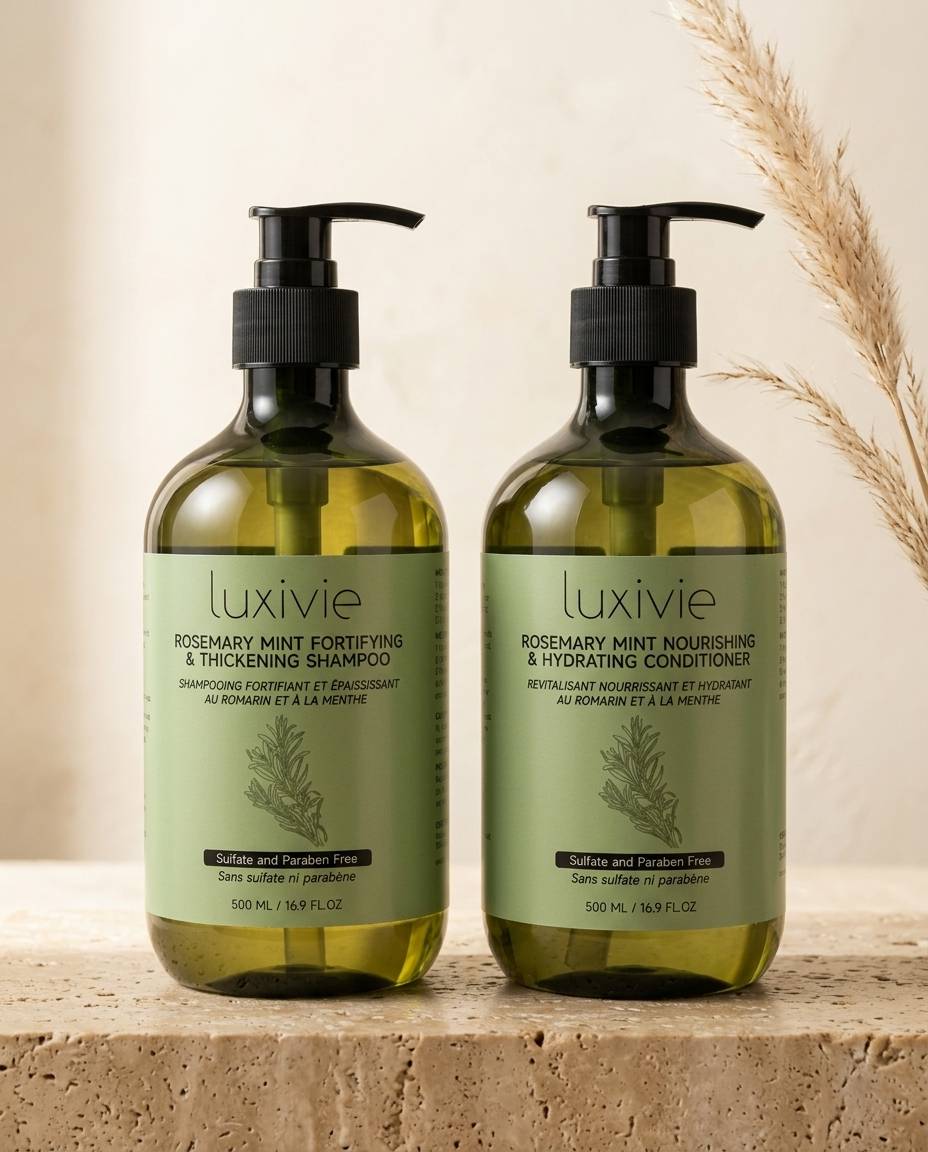
Luxivie Rosemary Mint Shampoo & Conditioner Set for Oily Hair — Gentle Cleansing & Lightweight Hydration
Refresh oily roots without weighing down your hair. This Rosemary Mint duo gently cleanses and refreshes while the lightweight conditioner softens and hydrates without leaving hair feeling heavy. Hair feels fresh, smooth and manageable, with a fuller-looking finish.
Shop Now on Amazon