
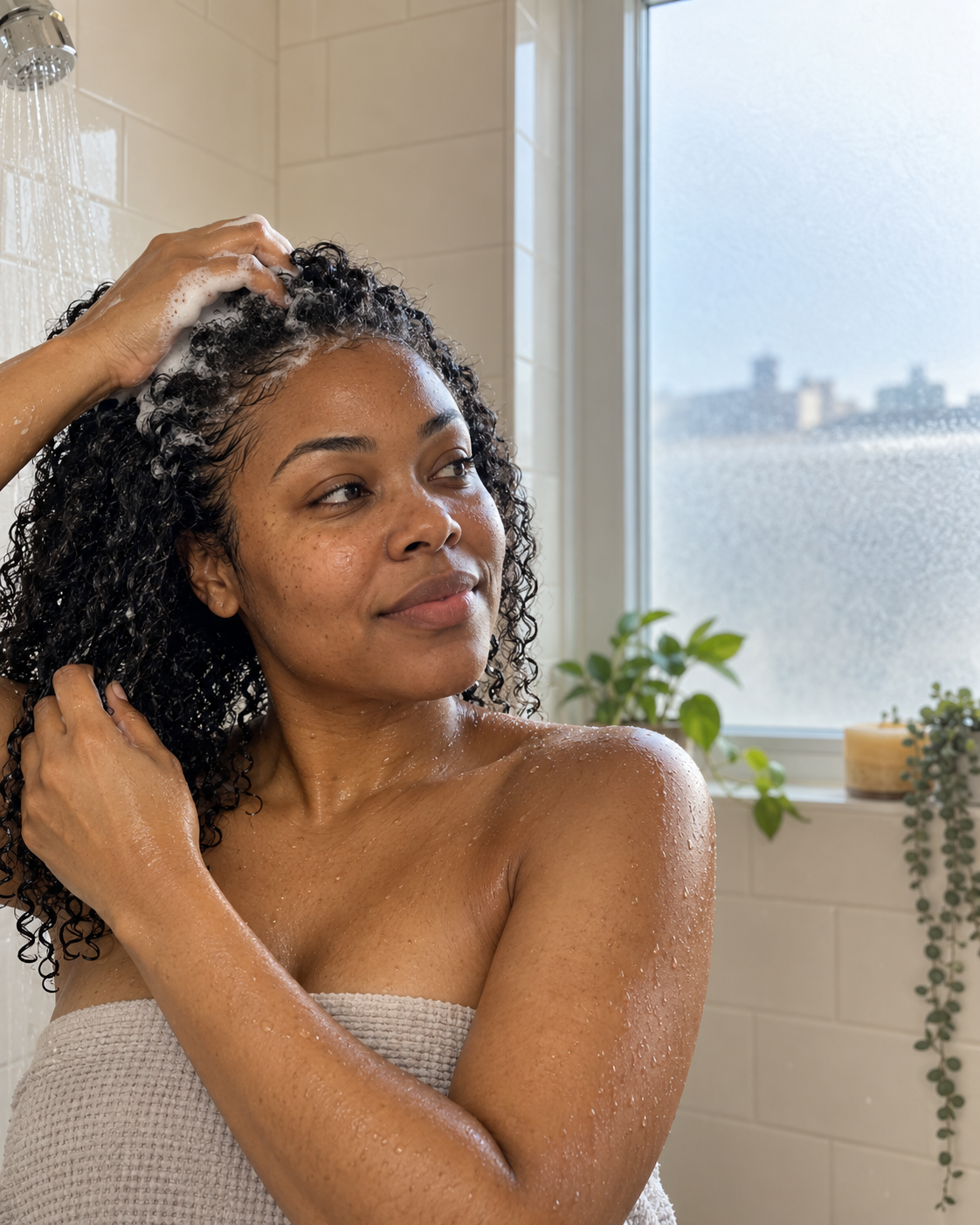
Should You Shampoo Twice? A Guide for Oily Hair
The second shampoo often produces more foam than the first, which can make double shampooing feel like proof that the hair is finally clean. But more lather is not the same as a universal need for two washes.
For oily hair, shampooing twice can be useful after heavy product use, several days between washes or a particularly sweaty day. On an ordinary wash day, one well-distributed cleanse may be enough. The right number is the fewest cleanses that leave the scalp fresh and comfortable and the lengths manageable.
Instead of following a fixed rule, use what is on the hair that day, how effectively the first cleanse spreads and how the hair feels after drying.
What Does Double Shampooing Mean?
Double shampooing means applying shampoo, massaging and rinsing completely, then repeating with a second application during the same shower. It does not mean using twice as much shampoo at once.
The two applications can serve slightly different practical roles:
- The first loosens much of the oil, sweat and styling residue.
- The second works on a surface carrying less residue and may spread or foam more easily.
That difference explains why the second wash can feel more luxurious. It does not prove the first wash failed, and it does not mean you should keep cleansing until you produce maximum foam.
Why the First Shampoo May Lather Less
Shampoo contains surfactants that help water interact with oil and residue so they can be rinsed away. Foam is created when the formula, water, air and agitation meet. Oil, dry shampoo and styling products can change how much visible lather forms.
The first application may produce modest foam because it is interacting with a larger soil load. After that material is partly removed, a smaller second application may lather more.
Water amount, formula, hair density, mineral content and distribution also affect foam. Judge cleanliness by the dried result, not by bubbles alone. The guide Why More Lather Does Not Always Mean Cleaner Hair explains this distinction in more detail.
When Shampooing Twice May Be Helpful
You have layered dry shampoo
Dry shampoo can temporarily absorb oil and improve root appearance, but it does not wash the scalp. Multiple applications may leave powder, starches and styling ingredients near the roots. A two-step cleanse can help when one careful wash does not remove that coated feeling.
You used several styling products
Root powder, hairspray, mousse, wax, gel, leave-in spray and oil can accumulate. If several were used together, the first wash may primarily loosen the product film.
You went longer than usual between washes
More time can mean more sebum, environmental particles and product residue. That does not make the hair unhygienic; it simply changes what the cleanser needs to remove.
You applied oil near the roots
Pre-wash scalp oiling or an accidental heavy application may take more than one pass. A second light cleanse is usually more controlled than pouring a large amount of shampoo into one area.
You had a high-sweat day
After vigorous exercise, hot weather, a long shift in headwear or another sweaty activity, two cleanses may feel appropriate if the scalp also carries oil and styling residue. Sweat alone does not automatically require two washes.
The first cleanse did not distribute properly
If you missed the crown or nape, a second application can correct coverage. Next time, improve placement so one cleanse may be enough.
When One Shampoo Is Usually Enough
One cleanse may be sufficient when:
- You washed recently.
- Styling-product use was light.
- The scalp was fully saturated.
- Shampoo reached the hairline, crown, sides and nape.
- The product spread easily with added water.
- The scalp feels fresh after drying.
- The roots have movement and no coated residue.
- A second wash routinely leaves the lengths rough.
One thorough cleanse is not an incomplete routine. Many people need different numbers of applications on different wash days.
A Simple Decision Test in the Shower
After the first rinse, pause before automatically reaching for more shampoo.
Ask:
- Was the scalp completely wet before shampooing?
- Did shampoo reach every area, including the crown and nape?
- Was there substantial oil, dry shampoo or styling product?
- Does the scalp still feel coated rather than simply wet?
- Does a second wash usually improve the dried result?
If the first application was well distributed and the soil load was light, move to conditioner. If residue was heavy or coverage was poor, use a smaller second application.
How to Double Shampoo Without Overdoing It
Step 1: Saturate thoroughly
Let lukewarm water reach the entire scalp. Move dense hair in sections. Incomplete saturation makes shampoo harder to spread and can lead to unnecessary product use.
Step 2: Use several small placements
Emulsify shampoo between wet hands, then apply at the hairline, temples, crown and nape. Concentrate on the scalp rather than scrubbing the lengths.
Step 3: Massage gently
Use the pads of the fingertips. More pressure does not create a deeper cleanse, and fingernails may leave the scalp uncomfortable.
Step 4: Add water before adding shampoo
If the product is not spreading, add a little water and continue massaging. Low foam does not automatically call for a larger dose.
Step 5: Rinse completely
Rinse from several directions. Residue left behind can mimic the heavy feeling you were trying to remove.
Step 6: Make the second application smaller
The second wash often needs less shampoo because much of the oil and residue is already gone. Repeat gentle placement, massage briefly and rinse well.
Step 7: Condition strategically
Oily roots do not mean the lengths should be left tangled. Apply an appropriate amount of conditioner mainly to the mid-lengths and ends.
Can Double Shampooing Dry Out Hair?
It can leave some hair feeling dry or rough when the formula, frequency or technique exceeds what the scalp and lengths comfortably tolerate. The risk is more noticeable for long, colour-treated, textured, porous or already dry hair.
Reduce unnecessary dryness by:
- Keeping shampoo concentrated at the scalp
- Allowing diluted lather to pass through the lengths
- Using lukewarm rather than very hot water
- Avoiding vigorous piling and scrubbing
- Conditioning the lengths after cleansing
- Double cleansing only when the day’s oil and residue justify it
- Alternating with one-cleanse wash days
If the scalp feels tight, burning or persistently irritated, stop treating the issue as a cleansing challenge. Review the products and seek professional guidance when symptoms continue.
Double Shampooing Fine, Oily Hair
Fine strands can show oil and residue quickly because grouped strands lose visible space. They can also become limp when shampoo or conditioner is not fully rinsed.
For fine, oily hair, prioritize distribution over quantity. Two small applications may work better after heavy buildup than one oversized handful, but one small, thorough cleanse may be ideal on a routine wash day.
Keep rich masks, oils and conditioners away from the roots unless their directions specify scalp use. Apply conditioner precisely rather than skipping it entirely.
Double Shampooing Curly or Coily Hair With an Oily Scalp
An oily scalp can coexist with curly, coily or dry lengths. Work in sections so shampoo reaches the scalp without repeatedly roughing up the hair shaft.
Use enough water, keep circular tangling motions small and condition generously enough for the texture. Some people may need two scalp cleanses while protecting the lengths from repeated direct shampoo application.
The goal is not to make textured hair conform to a straight-hair wash schedule. It is to cleanse the scalp at a frequency and intensity that supports comfort while preserving manageability.
Double Shampoo vs Clarifying Shampoo
These approaches are not interchangeable.
Double shampooing repeats an ordinary shampoo application. Clarifying shampoo is formulated to remove more accumulated residue than many everyday cleansers. Product strength and directions vary.
If everyday shampoo works after two passes, a clarifying formula may be unnecessary. If persistent styling residue remains despite good technique, occasional clarifying may be more suitable than triple or repeated everyday cleansing. Check whether the clarifying product is appropriate for colour-treated or dry hair.
Choosing the Luxivie Routine
For oily hair, the relevant Luxivie option is the Rosemary Mint Shampoo & Conditioner Set. Use the shampoo primarily at the scalp. Follow with the clear/transparent Rosemary Mint Conditioner, which is also intended specifically for oily hair, focusing on the lengths.
On a standard wash day, begin with one cleanse. Add a smaller second cleanse after significant oil, sweat or product buildup when the first pass does not give sufficient coverage.
This is a cosmetic cleansing routine. It should not be described as changing sebum production, treating a scalp disorder or addressing hair loss.
Common Double-Shampoo Mistakes
Using the full amount twice
The second application generally needs less product. More shampoo can increase rinsing difficulty without improving coverage.
Scrubbing harder on the second pass
Better placement is more useful than more force.
Shampooing the ends twice
Directly working shampoo through dry ends can add friction. Focus on the scalp unless the lengths carry a product that truly needs removal.
Treating foam as the finish line
High lather does not confirm that the nape, crown or hairline was covered or rinsed well.
Double cleansing every day without reassessing
A habit may outlast the reason for it. Adjust according to activity, product use and the hair’s response.
Frequently Asked Questions
Should oily hair always be shampooed twice?
No. Oily hair may need two applications on residue-heavy days and one on lighter days.
Can I shampoo twice every day?
Some scalps and formulas may tolerate it, but it is not automatically beneficial. If one wash works, the second adds no clear value. Watch for tightness, irritation or rough lengths.
Why does my shampoo foam more the second time?
The second application usually meets less oil and residue. Water and distribution also contribute.
Is double shampooing the same as using clarifying shampoo?
No. Double shampooing repeats a cleanser; clarifying formulas are designed for more intensive residue removal.
Should I use conditioner after two shampoos?
Yes, if the lengths need slip and manageability. Keep the amount and placement suited to your hair.
What if my scalp is still oily immediately after drying?
Check saturation, placement, rinsing, root-level conditioner, tools and styling products. Persistent sudden changes or scalp symptoms may warrant professional advice.
The Bottom Line
Double shampooing is a useful option, not a rule. Use it after heavy oil, sweat or product buildup when one well-executed cleanse does not provide the result you need. On lighter days, stop after one.
The most effective oily-hair routine uses enough cleansing to restore freshness without turning every wash into a maximum-strength reset.
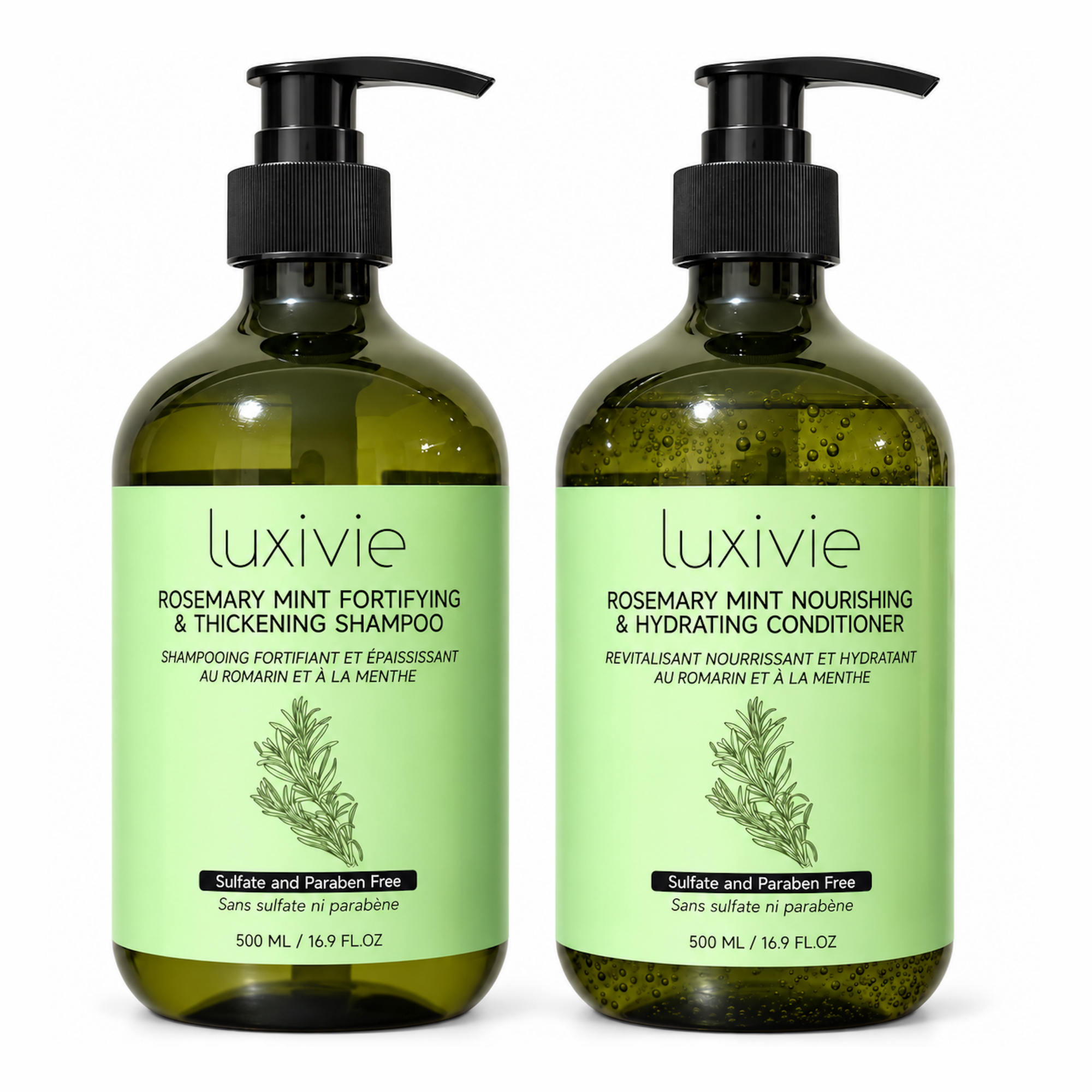
Luxivie Rosemary Mint Shampoo & Conditioner Set for Oily Hair — Gentle Cleansing & Lightweight Hydration
Refresh oily roots without weighing down your hair. This Rosemary Mint duo gently cleanses and refreshes while the lightweight conditioner softens and hydrates without leaving hair feeling heavy. Hair feels fresh, smooth and manageable, with a fuller-looking finish.
Shop Now on Amazon.ca