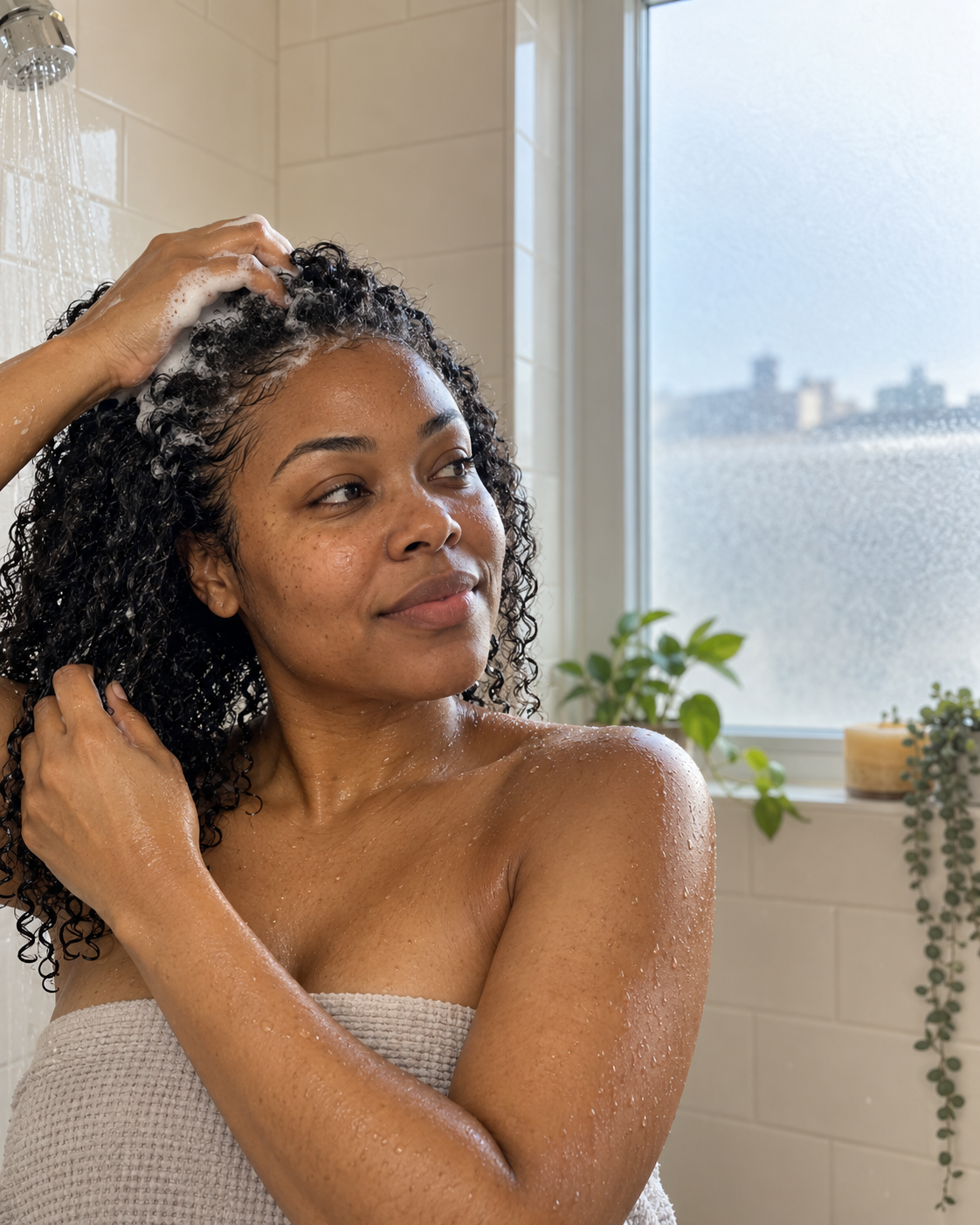

Why More Lather Does Not Always Mean Cleaner Hair
A thick cloud of shampoo foam can feel satisfying. It spreads easily, creates a familiar sensory cue and makes the wash seem productive. When a sulfate-free shampoo produces less foam—especially on the first cleanse—it is easy to assume that the hair is not getting clean.
Foam and cleansing are related, but they are not the same measurement. A shampoo can cleanse effectively with modest lather, while abundant foam does not prove that every area of the scalp was washed or rinsed thoroughly.
The better way to judge a shampoo is by the result: does it remove the routine oil and residue you need removed, rinse cleanly and leave the scalp comfortable and the lengths manageable?
What Creates Shampoo Lather?
Shampoo contains surfactants—ingredients that help water interact with oil and residue so they can be loosened and rinsed away. Agitation introduces air, creating bubbles and foam.
The amount and character of lather depend on:
- The surfactant system
- Product concentration
- Amount of shampoo
- Amount of water
- Natural scalp oil
- Styling-product residue
- Water hardness
- Hair density and length
- How shampoo is distributed
- How much mechanical agitation is used
Because so many variables affect foam, it cannot serve as a precise cleanliness meter.
Lather vs Cleansing
Cleansing refers to removing unwanted oil, sweat, particles and product residue. Lather is the visible foam created during use.
A well-formulated shampoo may produce moderate foam while still doing its job. Another formula may foam generously but be poorly distributed, leaving the crown or nape insufficiently washed.
Think of lather as part of the user experience and a clue about conditions during washing—not a final verdict.
Why the First Shampoo May Lather Less
When the scalp carries substantial oil, dry shampoo or styling product, the first application may produce less visible foam. Surfactants are interacting with that material, and there may be less free surfactant available to create abundant bubbles.
After rinsing, a second smaller application may lather more because some oil and residue have already been removed.
This does not mean everyone needs two shampoos. If one properly distributed cleanse leaves the roots fresh and comfortable, a second is unnecessary.
Does More Lather Mean the Second Wash Cleans Better?
Not automatically. The second application often encounters a cleaner surface, so increased foam may simply reflect less oil and residue—not a need to keep washing until maximum bubbles appear.
Repeated cleansing can leave some scalps uncomfortable or lengths dry. Use the minimum number of cleanses that produces the desired result.
A second cleanse may be useful after:
- Heavy dry-shampoo use
- Significant sweat
- Several days of styling products
- Oil applied near the roots
- A very oily interval between washes
One cleanse may be enough after:
- A recent wash
- Light product use
- A low-activity day
- Thorough distribution and rinsing
Sulfate-Free Shampoo and Foam
Sulfate-free does not mean surfactant-free. These shampoos use other cleansing systems, and their foam profiles vary.
Some sulfate-free shampoos create abundant lather; others create smaller, creamier or slower-building foam. The label alone does not tell you whether a formula will clean oily roots effectively or feel gentle on dry lengths.
Judge the complete formula and your result. Luxivie’s shampoo lines are sulfate-free, so customers should not be told that lower foam automatically signals poor cleansing.
Why Oily Hair May Need Better Technique, Not More Shampoo
Fine or oily hair may show residue quickly, but using a large handful of shampoo in one spot can make rinsing harder.
Try this technique:
- Saturate the scalp thoroughly.
- Emulsify shampoo between wet hands.
- Place small amounts at the hairline, sides, crown and nape.
- Massage gently with fingertips.
- Add a little water if the product is not spreading.
- Rinse from several angles.
- Decide whether a second cleanse is actually needed.
Distribution matters more than creating one large mound of foam at the top of the head.
Water Is Part of the Formula in Use
Shampoo is designed to work with water. Too little water can make it difficult to spread and may encourage overuse.
Before adding more shampoo, add a small amount of water and continue gentle massage. This can help distribute the product and build lather.
Hair that is dense, curly or treated with water-repelling styling products may take longer to saturate. Move sections carefully so water reaches the scalp.
How Hard Water Can Affect the Experience
Hard water contains dissolved minerals that can affect lather, rinsing and how hair feels. The effect varies with formula and local water conditions.
If a shampoo suddenly behaves differently after travel or moving, water may be one factor. Do not assume that low foam proves the shampoo has stopped working.
Mineral residue may make hair feel dull, rough or coated. An occasional appropriate clarifying or chelating product may be relevant, but stronger cleansing should be based on actual residue and product directions.
Product Buildup Can Suppress Lather
Dry shampoo, hairspray, root powder, leave-in products, oils and rich conditioner can accumulate. When these mix with natural sebum, the first shampoo may spread poorly or foam less.
If buildup is suspected:
- Audit everything touching the roots
- Simplify styling layers
- Clean brushes and accessories
- Improve shampoo placement
- Rinse thoroughly
- Consider a second light cleanse when needed
- Use a clarifying product occasionally if everyday shampoo no longer removes accumulated residue
Do not respond by scrubbing harder. Better saturation and distribution are safer first steps.
Does Low Lather Mean Hair Is Still Dirty?
Not necessarily. Assess the dried result:
- Do the roots feel fresh?
- Does the scalp feel comfortable?
- Has movement returned?
- Is visible residue gone?
- Does the hair rinse without a coated feel?
- Are the lengths manageable rather than rough?
If the answer is yes, the shampoo likely performed its cosmetic cleansing role even without dramatic foam.
If the hair remains waxy or heavy immediately after drying, review technique, amount, product buildup and formula suitability.
Does High Lather Mean Hair Is Completely Clean?
No. High foam can occur even when shampoo has not reached every part of the scalp. It can also encourage overconfidence about rinsing.
Pay attention to often-missed areas:
- Crown
- Nape
- Behind the ears
- Temples
- Underneath dense sections
Rinse until the hair and scalp no longer feel coated. More foam without better coverage does not improve the result.
How Much Shampoo Should You Use?
There is no universal coin-size amount. Hair density, length, oil, product use and formula concentration all matter.
Use enough to distribute across the scalp after it is fully wet. If you need more, add a small amount to a missed section rather than doubling the amount everywhere.
High-density fine hair may need more total product than low-density coarse hair because the scalp is harder to access. Strand diameter alone does not determine dosage.
Should You Shampoo Twice?
Double shampooing can be useful, but it is not a rule.
Consider a second cleanse when:
- The first application was consumed by heavy oil or residue
- Dry shampoo has been layered repeatedly
- The scalp remains coated after a thorough first rinse
- The product directions support repeat application
Skip it when:
- One cleanse restores freshness
- The scalp feels comfortable
- Product use was light
- The lengths become dry with repeated washing
Use less product on the second cleanse because much of the initial soil load has already been removed.
Lather and Fine Hair
Fine hair can look cleaner and fuller when oil and residue are removed, but it can also become weighed down by poorly rinsed shampoo.
For fine hair:
- Wet thoroughly
- Use several small placements
- Keep massage at the scalp
- Rinse longer than expected
- Avoid piling the lengths on top of the head
- Condition strategically
- Judge the result after drying
Visible root lift is a more useful outcome than bubble volume.
Lather and Curly or Coily Hair
Curly and coily hair may require section-by-section access to the scalp. A low-foam experience can reflect poor distribution through dense sections rather than weak cleansing.
Separate the hair gently, apply shampoo to the scalp in sections and avoid rough circular motion that tangles the lengths. Use enough conditioner afterward for slip and manageability.
Do not apply a straight-hair foam standard to textured hair. Coverage, comfort and the finished result matter more.
Lather and Dry or Colour-Treated Hair
Dry or processed lengths may feel rough after repeated strong cleansing. Concentrate shampoo at the scalp and allow diluted lather to pass through the lengths.
Check whether the product is labelled for colour-treated hair before making a colour-safe assumption. Sulfate-free status alone does not establish colour suitability.
The Luxivie Biotin + Keratin Shampoo & Conditioner Set is the relevant Luxivie line for normal-to-dry hair. Its CTA should focus on cleansing plus conditioning for manageability, not on creating maximum lather.
How to Judge the Luxivie Rosemary Mint Shampoo
The Rosemary Mint Shampoo is intended for oily hair and is the primary Luxivie CTA for this article. Explain its performance through:
- Fresh-feeling cleansing
- Sulfate-free formula
- Appropriate use for oily hair
- Thorough scalp distribution
- Complete rinsing
- Pairing with the clear Rosemary Mint Conditioner for manageable lengths
Do not promise oil-control treatment or suggest that more foam means the product works better.
Common Lather Myths
“No foam means no cleansing”
False as a general rule. Some formulas cleanse with modest foam.
“The shampoo worked only if the second wash lathers heavily”
The second wash may foam more because less oil remains. One cleanse can still be sufficient.
“Sulfate-free shampoo cannot clean oily hair”
Sulfate-free shampoos use other surfactants. Performance depends on the complete formula and technique.
“A large amount of shampoo creates a deeper clean”
Too much product can be difficult to distribute and rinse. Use an appropriate amount with enough water.
“Squeaky hair is the cleanest hair”
A squeaky or rough feel is not a required sign of cleanliness. Aim for a comfortable scalp and manageable lengths.
A Better Wash-Day Checklist
Instead of asking, “Did it foam enough?” ask:
- Was the scalp fully wet?
- Did shampoo reach every scalp area?
- Was enough water used to distribute it?
- Was the massage gentle?
- Did I rinse the crown and nape thoroughly?
- Was a second cleanse truly necessary?
- Did I condition according to the lengths and texture?
- How did the hair feel after drying?
This checklist measures the routine, not the spectacle.
Frequently Asked Questions
Why does my shampoo lather more the second time?
The first cleanse may remove much of the oil and residue that interfered with foam. The second application then encounters a cleaner surface.
Does sulfate-free shampoo lather?
Many sulfate-free shampoos lather, although the amount and texture vary by surfactant system and use conditions.
Should I add more shampoo when there is little foam?
Add water and improve distribution first. Add a small amount only if sections were missed or the soil load is substantial.
Can hard water reduce lather?
Water mineral content can affect the washing experience and how hair feels. Formula and technique also matter.
Which Luxivie shampoo fits oily hair?
The Luxivie Rosemary Mint Shampoo is the relevant choice for oily hair. Pair it with the clear Rosemary Mint Conditioner, which is also intended specifically for oily hair.
The Bottom Line
Lather is a sensory cue, not a precise measurement of clean hair. Foam changes with formula, oil, residue, water, amount and technique.
Judge shampoo by coverage, rinsing and the finished result. For oily hair, the Luxivie Rosemary Mint Shampoo & Conditioner Set provides the appropriate routine foundation: distribute shampoo across the scalp, rinse thoroughly and condition the lengths. Clean hair is the goal; maximum bubbles are optional.
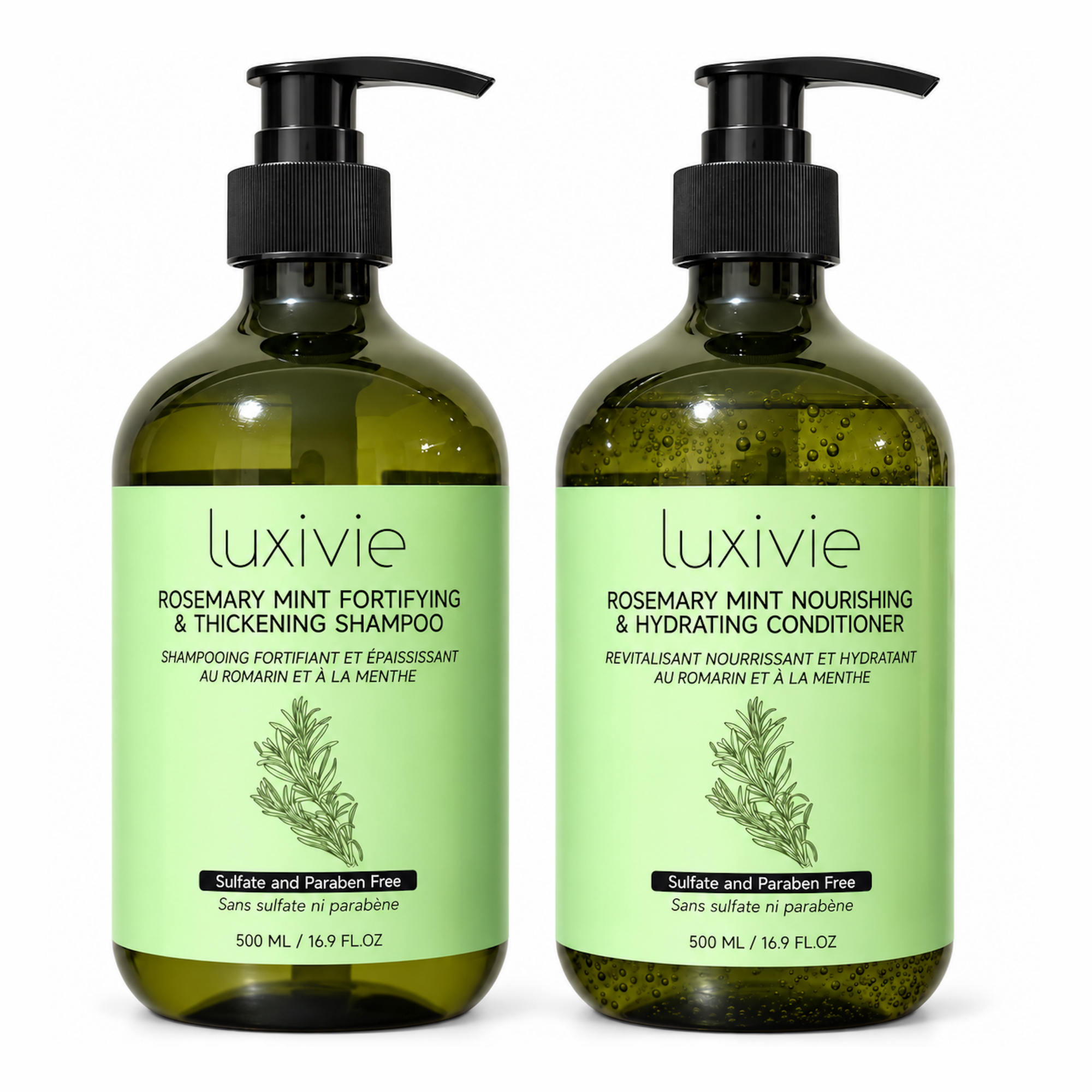
Luxivie Rosemary Mint Shampoo & Conditioner Set for Oily Hair — Gentle Cleansing & Lightweight Hydration
Refresh oily roots without weighing down your hair. This Rosemary Mint duo gently cleanses and refreshes while the lightweight conditioner softens and hydrates without leaving hair feeling heavy. Hair feels fresh, smooth and manageable, with a fuller-looking finish.
Shop Now on Amazon.ca