
Can Scalp Buildup Make Hair Look Thinner?
When hair suddenly looks flatter, stringier or more separated at the roots, it is easy to assume that there is less hair than before. Sometimes the change is visual: oil and product residue have grouped strands together and reduced lift, allowing more scalp to show between sections.
Scalp buildup can make hair look less full, especially when the strands are fine or light in colour compared with the scalp. It does not, however, explain every change in density, and removing buildup does not treat true hair loss.
The useful first step is to separate three questions: Does the hair look flatter? Are strands breaking? Or are more hairs shedding from the root? Each points to a different response.
What People Mean by Scalp Buildup
“Buildup” is a practical cosmetic term for material that remains on the scalp or near the roots. It may include:
- Natural sebum
- Dry shampoo and root powder
- Hairspray, mousse, gel or wax
- Conditioner or masks applied too close to the scalp
- Leave-in products and oils
- Sweat mixed with styling residue
- Flakes and environmental particles
- Mineral residue associated with hard water
This mixture can be difficult to identify by sight alone. Oily roots may look shiny and flexible, while heavy product residue may feel dull, tacky, powdery or stiff. Often, both are present.
How Buildup Changes the Appearance of Fullness
Clean, freely moving strands tend to separate from one another and create space at the roots. Oil and residue can cause several strands to cling together. Instead of hundreds of individual fibres reflecting light and occupying space, the eye sees a smaller number of separated sections.
Buildup can also:
- Weigh down natural root lift
- Make a part appear wider because strands lie flat
- Create dark or shiny root areas that increase contrast with the scalp
- Make fine hair look stringy
- Reduce movement
- Interfere with the way styling products perform
These effects can be noticeable without any change in the number of follicles or hairs.
Try comparing the hair under similar conditions: same lighting, same part, same styling and the same point in the wash cycle. A Day 4 photo under overhead bathroom lighting is not a fair comparison with freshly styled hair beside a window.
Buildup Is Not the Same as Hair Thinning
Hair thinning refers to a reduction in hair density, changes in strand calibre or both. Buildup changes how existing hair sits and looks.
A thorough wash may restore movement and make the roots look fuller if residue was the main issue. It cannot restore hairs that are no longer present, change an underlying shedding pattern or diagnose why density has changed.
Look for the distinction:
Signs that appearance may be strongly affected by oil or residue
- Hair looks fuller immediately after an effective wash
- Roots separate into shiny or coated sections between washes
- Volume returns when product layers are removed
- The part looks similar when the hair is clean and photographed consistently
- There is no clear increase in shed hairs
Signs that deserve closer attention
- The part appears progressively wider even on clean hair
- The ponytail feels consistently smaller
- More full-length hairs are being shed than usual
- There are distinct sparse areas or patches
- The scalp is painful, inflamed, crusted or persistently itchy
- The change followed illness, medication, major stress or another health event
Those signs do not identify a cause on their own. A family doctor or dermatologist can assess persistent or sudden changes.
Buildup, Breakage and Shedding Can Overlap
Buildup may make hair look flat while breakage or shedding is happening separately. Avoid choosing one explanation simply because it is the easiest to see.
Broken hairs are often shorter than the overall length and may have irregular ends. Shed hairs are usually full-length fibres released from the root. Residue can be present in either situation.
The guide Hair Breakage vs Hair Shedding: How to Tell the Difference gives a more detailed, non-diagnostic comparison.
A Gentle Buildup Reset
If the main signs are coated roots, heavy product use and reduced movement, begin with technique before escalating to aggressive scrubbing.
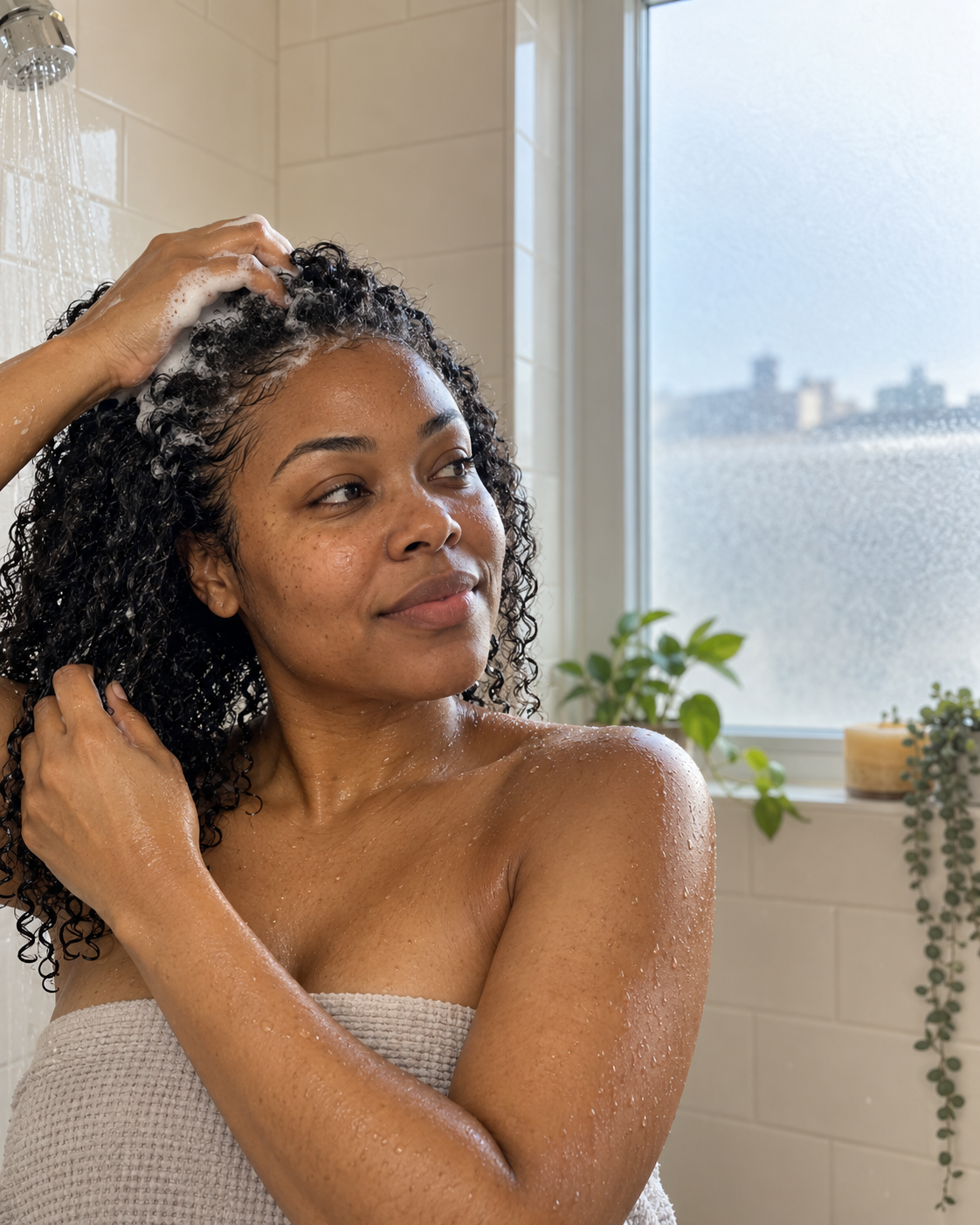
1. Fully saturate the scalp
Dense or water-resistant hair can remain partly dry beneath the surface. Move the hair in sections and allow water to reach the crown and nape.
2. Distribute shampoo in several placements
Emulsify shampoo in wet hands. Place small amounts around the hairline, sides, crown and nape rather than depositing everything at the top.
3. Massage with finger pads
Use gentle, deliberate movement. Fingernails and abrasive scalp tools are not required for ordinary cleansing and may leave the skin uncomfortable.
4. Rinse carefully
Rinse from several angles, especially through dense areas. Incomplete rinsing can create another coated feeling.
5. Decide whether a second cleanse is needed
After heavy dry shampoo, oil or styling product, a second smaller application may be useful. If one cleanse restores freshness, stop there.
6. Condition below the roots
Oily roots do not eliminate the lengths’ need for slip. Apply a lightweight amount to the mid-lengths and ends and rinse well.
For oily hair, Luxivie’s Rosemary Mint Shampoo & Conditioner Set is the relevant routine pairing. The conditioner is clear/transparent and intended for oily hair. Describe the set as supporting fresh-feeling, manageable hair—not as treating thinning or changing scalp oil production.
When to Consider a Clarifying Product
Everyday shampoo may be enough when technique improves. An occasional clarifying shampoo can be helpful when styling residue persists, but “clarifying” does not mean “scrub until squeaky.”
Consider the product directions, frequency of heavy styling and how the scalp and lengths respond. Colour-treated, very dry or fragile-feeling hair may need extra care, and any product should be checked for suitability with the colour service.
Clarifying also does not replace a chelating product when the specific concern is mineral accumulation. The terms are sometimes used loosely in marketing, so read the stated function and directions.
Preventing the Heavy, Flat Cycle
The simplest routine is usually the easiest to evaluate.
- Apply dry shampoo only where needed.
- Avoid adding another layer automatically every morning.
- Keep conditioner, masks and oils away from oily roots.
- Clean brushes and frequently worn accessories.
- Wash after heavy sweat when the scalp feels uncomfortable.
- Use smaller styling amounts and add only if needed.
- Rinse longer than feels necessary around the crown and nape.
- Assess hair only after it is fully dry.
If you need large amounts of root powder to create fullness, the underlying wash or styling routine may need adjustment.
What Not to Do
Do not scrape the scalp
Visible residue does not justify forceful scratching, sharp tools or harsh DIY mixtures.
Do not use more shampoo only to create foam
Oil and residue can reduce first-wash lather. Add water, improve distribution and judge the dried result rather than chasing bubbles.
Do not apply scalp oil to “dissolve” every type of buildup
Oil may add another layer and is not a universal cleansing step. Keep Luxivie Rosemary Hair Oil for suitable use on dry lengths and ends rather than oily, buildup-prone roots.
Do not assume a clean scalp rules out thinning
Cosmetic fullness after washing is useful information, not a medical test.
A Two-Week Observation Plan
For two weeks, keep the routine simple and record:
- Wash dates
- Dry-shampoo and styling-product use
- Workout or hat days
- How the roots look once fully dry
- Whether the scalp feels comfortable
- Any noticeable change in shedding
Take photos in the same location, light, part and hairstyle. If fullness returns predictably after washing and declines as oil and residue accumulate, buildup is likely contributing to the appearance. If a widening part or increased shedding continues regardless of cleansing, seek professional assessment.
Frequently Asked Questions
Can dry shampoo make hair look thinner?
It can make fine hair look dull, stiff or separated when too much accumulates. Used sparingly, it may temporarily improve root appearance by absorbing oil.
Does scalp buildup clog follicles and cause hair loss?
That broad claim is not appropriate for diagnosing hair loss. Buildup can affect scalp comfort and cosmetic appearance; persistent shedding or density change needs professional evaluation.
How often should I clarify oily hair?
There is no universal schedule. Follow the product directions and use it according to actual residue, styling habits and hair response.
Will washing twice make hair look fuller?
A second cleanse may remove remaining residue after a heavy product interval, but it is unnecessary when one thorough cleanse works. More cleansing is not automatically more volume.
Can conditioner make the scalp look more visible?
Rich conditioner at the roots can reduce lift and group fine strands together. Apply an appropriate amount below the roots and rinse thoroughly.
The Bottom Line
Scalp buildup can make hair look thinner by flattening the roots, grouping strands and reducing movement. A careful wash, lighter product layering and clean tools may restore visible fullness when residue is the main issue.
But buildup and true thinning are not interchangeable. If clean hair continues to show progressive density changes, increased shedding, patches or scalp symptoms, move beyond cosmetic trial and error and speak with a qualified healthcare professional.
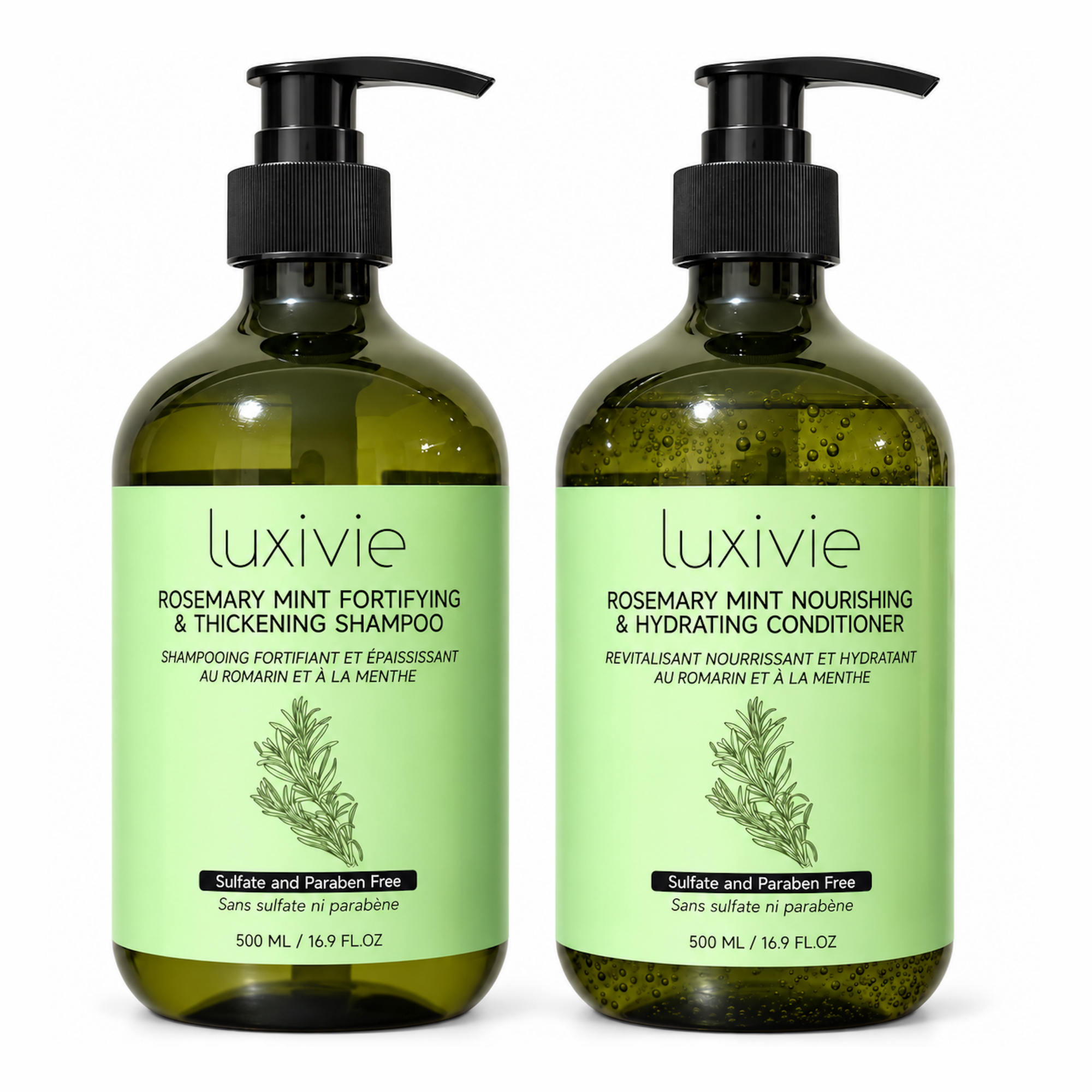
Luxivie Rosemary Mint Shampoo & Conditioner Set for Oily Hair — Gentle Cleansing & Lightweight Hydration
Refresh oily roots without weighing down your hair. This Rosemary Mint duo gently cleanses and refreshes while the lightweight conditioner softens and hydrates without leaving hair feeling heavy. Hair feels fresh, smooth and manageable, with a fuller-looking finish.
Shop Now on Amazon.ca