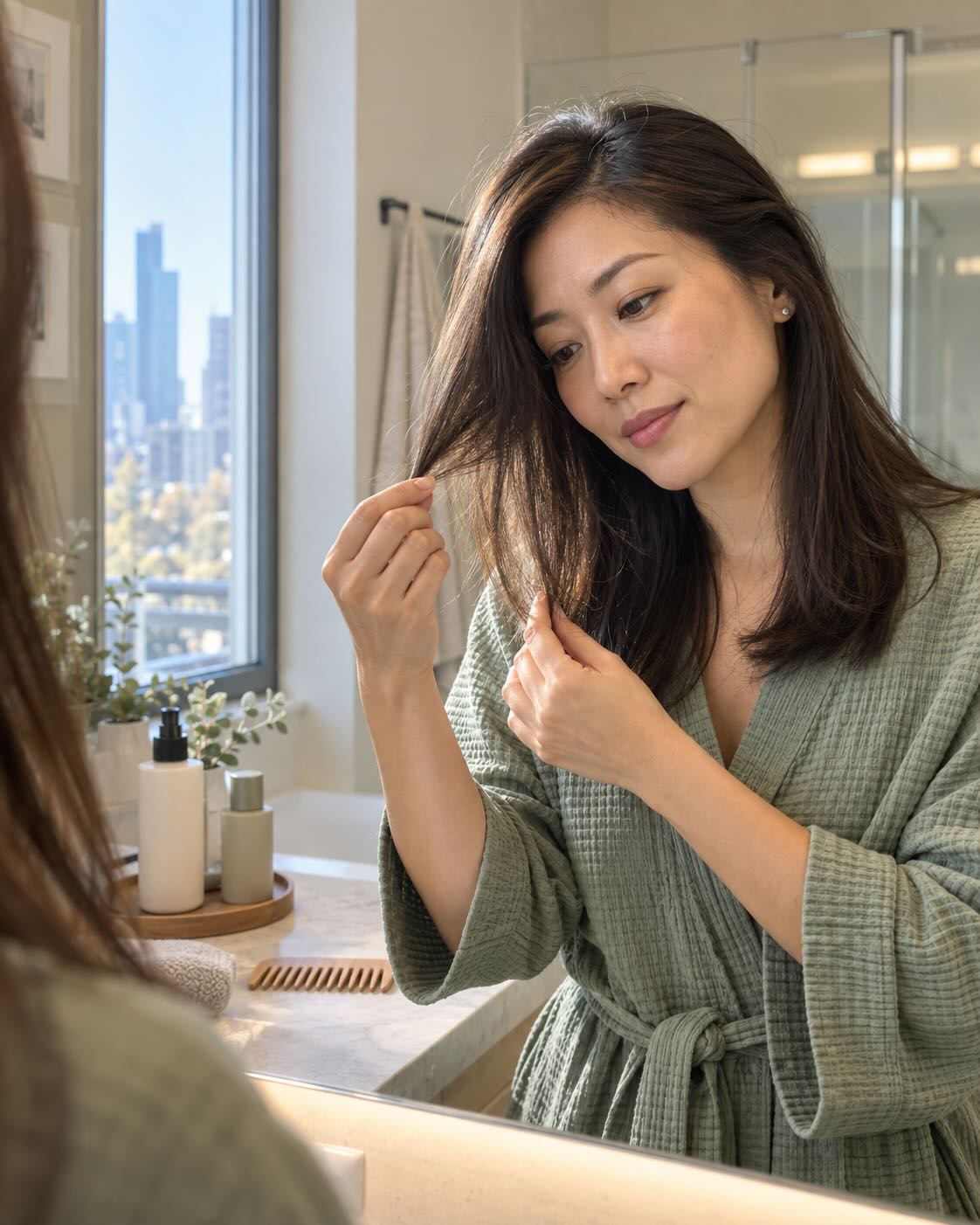
Fine Hair vs Thin Hair: What’s the Difference?
Fine hair and thin hair are often treated as the same thing, but they describe two different characteristics. Fine hair refers to the diameter of each strand. Thin hair refers to how much hair is present across the scalp, often described as hair density.
That distinction matters because a person can have fine strands and plenty of hair, coarse strands and lower density, or a combination of fine and thin hair. Each situation can look and behave differently. It can also call for a different approach to cleansing, conditioning and styling.
Understanding the difference can help you choose products based on how your hair actually feels instead of relying on a label that may be too broad. It can also help you separate a long-standing hair characteristic from a noticeable change that deserves closer attention.
What Is Fine Hair?
Fine hair has strands with a relatively small diameter. The word describes the width of the individual hair fibre, not the number of hairs on the scalp.
You may have fine hair if individual strands are difficult to feel between your fingers or if your hair is easily weighed down by rich conditioners, creams and oils. Fine hair may also lose visible volume quickly after styling because each strand contributes less physical bulk than a medium or coarse strand.
Fine hair is not automatically weak, unhealthy or thinning. Some people naturally have fine hair and high density, meaning they have many strands across the scalp. Fine hair can also be straight, wavy, curly or coily; texture and strand diameter are separate characteristics.
Common characteristics of fine hair
Fine hair often:
Becomes weighed down by heavy products
Shows oil near the roots relatively quickly
Loses visible lift after styling
Feels soft or delicate between the fingers
Benefits from careful detangling and controlled heat
Responds well to lightweight, thoroughly rinsed formulas
These are general patterns rather than strict rules. Hair density, curl pattern, porosity, length, colour treatments and climate can all influence how fine hair behaves.
What Is Thin Hair?
Thin hair usually means lower density: there are fewer strands covering a given area of the scalp. A person may notice more visible scalp, a wider-looking part or a ponytail that feels less full than expected.
Unlike fine hair, which may be a stable natural characteristic, thin-looking hair can describe either a person’s usual density or a change over time. Styling, oil, product buildup, breakage and the way strands group together can all affect how full the hair appears. These cosmetic factors are not the same as a medical hair-loss condition.
If you have recently noticed a meaningful change, it is worth reading more about why hair may look thinner and observing when the change began. A cosmetic routine can help with cleansing, softness, breakage reduction and visible volume, but it cannot identify or treat an underlying health cause.
Common characteristics of lower-density hair
Thin or lower-density hair may:
Reveal more of the scalp through the part or hairline
Form a smaller-feeling ponytail
Offer less overall coverage even when individual strands feel medium or coarse
Look flatter when oil or product residue groups strands together
Show changes in fullness more clearly after breakage
Density can vary naturally across the scalp. Lighting, a freshly changed part, damp hair and tightly grouped strands can also make the scalp look more visible in a mirror or photograph. One observation does not provide a diagnosis.
Fine Hair and Thin Hair Are Not Opposites
The easiest way to understand the terms is to treat diameter and density as two separate measurements.
|
Hair characteristic |
What it describes |
What you may notice |
|
Fine hair |
The diameter of an individual strand |
Soft, narrow strands that can be easily weighed down |
|
Medium or coarse hair |
A wider individual strand diameter |
Strands that feel more substantial and may tolerate richer products |
|
Thin or lower-density hair |
The number of strands across the scalp |
More visible scalp or less overall fullness |
|
Thick or higher-density hair |
A larger number of strands across the scalp |
More overall coverage and bulk |
This creates several combinations. Fine, high-density hair may look full but become flat when products are too heavy. Fine, lower-density hair can lose visible movement when residue groups the strands together. Coarse, lower-density hair may need enough conditioner for each fibre without unnecessary weight. Medium or coarse, high-density hair may tolerate richer products, although texture and scalp condition still matter.
How Can You Tell Which Description Fits?
You do not need a complicated home test. Begin with a few gentle observations and treat them as clues rather than firm conclusions.
For strand diameter, look at a clean, dry strand that has naturally released during brushing. Fine strands tend to be less noticeable between the fingertips, while coarse strands feel more substantial. For density, observe overall coverage when the hair is clean, dry and in its usual style. A recent change matters more than comparison with a generic photograph.
Avoid repeatedly pulling or counting hairs; this does not provide a reliable diagnosis. If a change is sudden, patchy, persistent or accompanied by scalp discomfort, a qualified healthcare professional can assess it more appropriately than an online quiz or cosmetic product.
Why the Difference Changes Your Hair-Care Routine
Fine hair usually needs attention to product weight and placement. Thin-looking hair may need those same adjustments, but it also benefits from a routine that minimizes avoidable breakage and keeps the roots from looking coated.
The goal is not to force the hair to become something it is not. It is to help the existing hair feel clean, move naturally and look its best without exaggerated promises.
Cleansing fine hair
Fine hair can show oil and residue quickly because narrow strands tend to group together when coated. A gentle shampoo that rinses clean can help the roots look fresher and more lifted.
Apply shampoo mainly to the scalp rather than scrubbing the ends. Use the fingertips, not the nails, and rinse thoroughly around the hairline, crown and behind the ears. If the hair still feels coated after washing, first review the amount of styling product being used before automatically choosing a stronger cleanser.
A gentle fine hair routine should also reflect activity level. Someone who exercises regularly or wears winter hats during a Toronto commute may prefer more frequent washing than someone whose scalp remains comfortable for several days. There is no single correct schedule.
Conditioning without flattening the roots
Fine hair still benefits from conditioning, especially when the lengths are colour-treated, heat-styled or exposed to dry indoor air. The important variables are formula weight, amount and placement.
Start with a small amount on the mid-lengths and ends. Add more only where the hair feels dry or tangles easily. Rinse carefully so the hair feels soft but not coated. People with curly or coily fine hair may need conditioner closer to the roots for detangling, so placement should follow texture and comfort rather than a rigid rule.
Reducing visible buildup
Heavy oils, thick creams, dry shampoo and repeated layers of styling products can reduce movement. On fine or lower-density hair, that loss of separation may make the style look flatter and the scalp more visible.
This does not mean every oil or silicone is unsuitable. Amount and placement matter. Use the smallest effective amount and assess the result after the hair is fully dry.
Learning about ingredients commonly found in shampoos for fine hair can be useful, but the whole formula matters more than one highlighted ingredient. A product must cleanse, condition and rinse in a way that fits your hair and scalp.
What If Your Hair Is Both Fine and Oily?
Fine strands and an oily scalp are a common combination. The roots may look separated or flat by afternoon while the ends still need moisture. Canadian weather can make that contrast more noticeable: summer humidity and sweat may affect the roots, while winter hats, wind and indoor heating can leave the lengths feeling dry.
Try treating the scalp and lengths as two zones. Cleanse the scalp carefully, condition according to the needs of the mid-lengths and ends, and avoid applying multiple leave-in products to the roots. A lightweight routine can help preserve movement without asking you to ignore dry ends.
If you use hair oil, begin with a very small amount on the ends and follow the label directions. Oil can improve smoothness and shine, but too much may group fine strands together and reduce visible volume.
What If Your Hair Looks Less Full Than Before?
A routine change can improve the appearance of hair that is flat, oily, coated or affected by breakage. Everyday habits that help hair look fuller include gentler detangling, looser hairstyles, controlled heat and lightweight product placement.
However, shampoo and conditioner cannot determine why density has changed. Speak with a qualified healthcare professional if you notice sudden or patchy changes, persistent increased shedding, scalp pain or irritation, or a change that continues despite treating the hair gently. Seeking an assessment does not mean something serious is necessarily wrong; it is simply the appropriate way to investigate a meaningful change.
Building a Simple Routine
Use this starting framework and adjust it according to texture, scalp comfort and styling needs:
Cleanse the scalp with a shampoo that removes oil and routine buildup without leaving it feeling tight.
Rinse thoroughly, especially at the crown and hairline.
Apply a lightweight conditioner where the hair needs softness and detangling.
Blot wet hair gently instead of rubbing it with a towel.
Detangle from the ends upward with an appropriate comb or brush.
Keep styling products light at the roots and use small amounts on the lengths.
Observe how the hair feels and looks after several washes before changing multiple products again.
Consistency makes it easier to understand what is helping. Changing every product at once can make it difficult to identify which step adds weight or improves manageability.
Frequently Asked Questions
Is fine hair the same as thinning hair?
No. Fine hair describes the diameter of each strand. Thinning hair generally describes lower density or a reduction in fullness. A person can have fine hair without experiencing thinning.
Can hair be coarse and thin?
Yes. Individual strands can feel medium or coarse while the overall density is lower. Strand diameter and the number of strands are separate characteristics.
Does fine hair need conditioner?
Fine hair can benefit from conditioner, particularly on dry, coloured or tangle-prone lengths. Start with a small amount, adjust placement for your texture and rinse thoroughly.
Can shampoo make thin hair look fuller?
A well-matched shampoo can remove oil and residue that make the roots look flat. This may help the hair appear fresher and more voluminous, but shampoo does not treat medical causes of hair loss or create new follicles.
Which Luxivie product fits fine hair with oily roots?
The Luxivie Rosemary Mint Shampoo & Conditioner Set is the most relevant option when the main concerns are oily roots, visible flatness and the need for lightweight everyday care. Use the conditioner according to the needs of your lengths and texture rather than applying more than the hair requires.
The Bottom Line
Fine hair describes strand diameter. Thin hair describes overall density. Knowing which characteristic you are working with makes it easier to choose a routine that cleans effectively, conditions without unnecessary weight and supports natural movement.
If your hair is fine and the roots become oily quickly, consider building your routine around the Luxivie Rosemary Mint Shampoo & Conditioner Set. It offers a straightforward shampoo-and-conditioner pairing for fresh-feeling roots, lightweight care and healthier-looking hair, without making hair-growth promises.
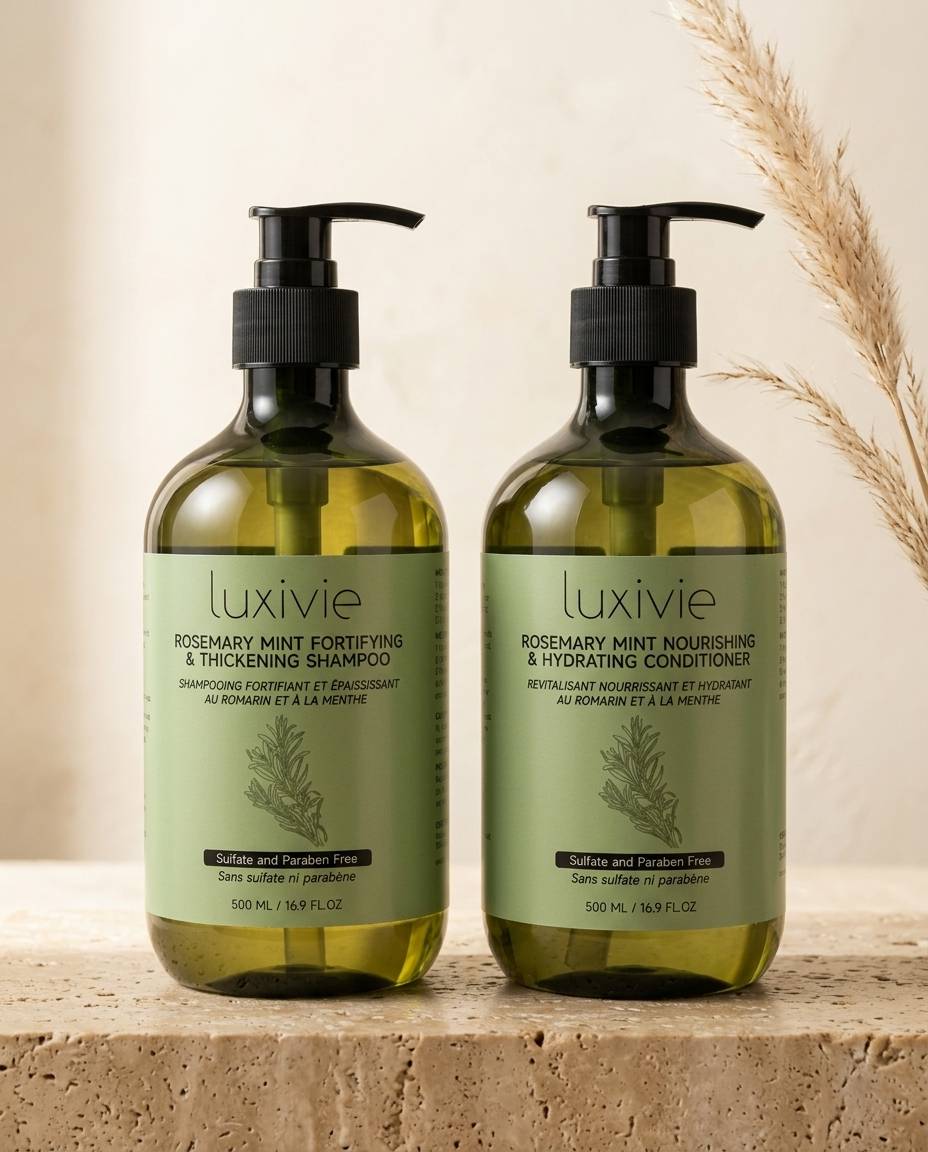
Luxivie Rosemary Mint Shampoo & Conditioner Set for Oily Hair — Gentle Cleansing & Lightweight Hydration
Refresh oily roots without weighing down your hair. This Rosemary Mint duo gently cleanses and refreshes while the lightweight conditioner softens and hydrates without leaving hair feeling heavy. Hair feels fresh, smooth and manageable, with a fuller-looking finish.
Shop Now on Amazon