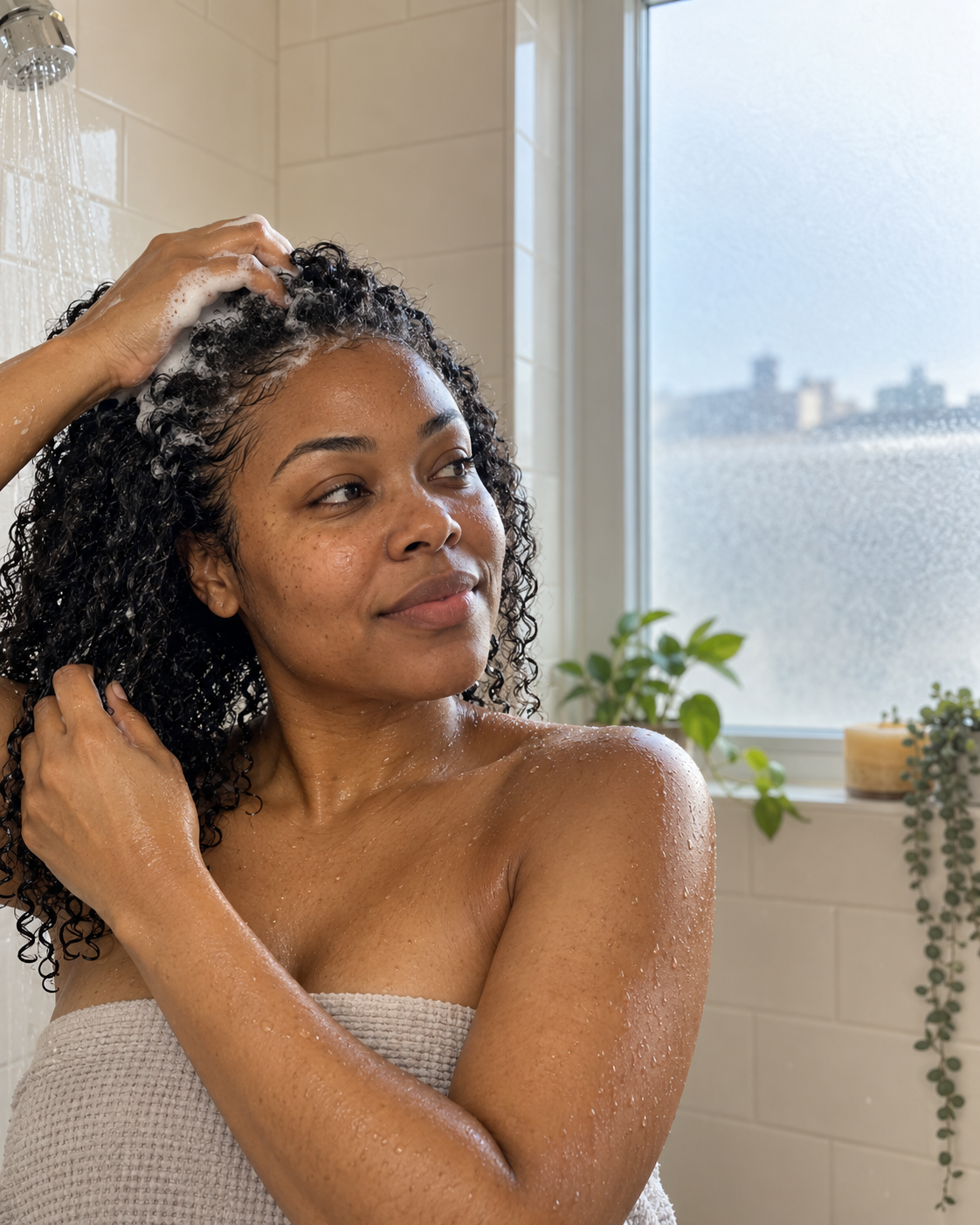

A Simple 7-Day Routine for Fine Hair and Oily Roots
Fine hair and oily roots can make a weekly routine feel like a moving target. The roots may lose lift within a day or two, while the ends still need slip and protection from tangling. Add workouts, hats, dry indoor air or a humid commute, and a schedule that worked last week may suddenly feel wrong.
The answer is not a rigid rule that everyone should wash on the same days. A useful seven-day routine is a decision framework: cleanse when the scalp needs it, condition where the hair needs it and use the lightest refresh that gets you comfortably to the next wash.
This sample week starts with three wash days because that is a practical baseline for many people with fine, oily hair. Move, add or remove a wash according to your scalp, activity and styling habits. The goal is fresh-looking roots and manageable lengths—not stretching time between washes at any cost.
First, Know What You Are Balancing
“Fine” describes the diameter of individual strands. “Oily” describes the amount of sebum present at the scalp and roots. You can have fine hair with high or low density, and your ends can feel dry even when the scalp becomes oily quickly.
That combination benefits from targeted care:
- Shampoo belongs mainly on the scalp.
- Conditioner belongs mainly on the mid-lengths and ends.
- Styling products should be added in small amounts.
- Refreshing should not become repeated layering without cleansing.
- The routine should change after heavy sweat, rich product use or seasonal shifts.
If you are unsure whether strand diameter or overall density is the main concern, start with Fine Hair vs Thin Hair: What’s the Difference? before choosing products.
The Weekly Routine at a Glance
|
Day |
Main step |
Purpose |
|
Day 1 |
Full wash and light conditioning |
Reset roots and prepare the lengths |
|
Day 2 |
Minimal styling and root check |
Preserve movement without unnecessary layering |
|
Day 3 |
Refresh or wash, based on need |
Respond to oil, sweat and appearance |
|
Day 4 |
Low-product day |
Prevent the refresh routine from becoming buildup |
|
Day 5 |
Full wash and careful rinse |
Restore freshness before the weekend |
|
Day 6 |
Style selectively |
Add only what the hairstyle needs |
|
Day 7 |
Assess, clean tools and plan |
Adjust the next week from real results |
The exact weekday does not matter. Day 1 is simply your first full wash.
Day 1: Start With a Thorough, Lightweight Wash
Saturate the scalp completely with lukewarm water. Fine, dense hair often needs more time than expected for water to reach the crown and nape.
Emulsify a modest amount of shampoo between wet hands, then place it at several points: hairline, temples, crown and nape. Massage with finger pads rather than nails. The lengths generally do not need vigorous scrubbing; the diluted cleanser moving through them during rinsing is often enough.
If the first application spreads well and the dried roots feel fresh, one cleanse is sufficient. A second light cleanse can make sense after several days of dry shampoo, heavy styling product or substantial oil, but it is not a requirement.
Rinse from more than one angle. Residual shampoo or conditioner can remove the movement you were trying to create.
Condition without flattening the roots
The clear Rosemary Mint Conditioner is intended for oily hair. Apply a small amount from the mid-lengths downward, concentrating on areas that tangle. If your hair is very short, smooth a trace across the ends rather than coating the scalp.
Detangle gently while the conditioner provides slip, then rinse thoroughly. Fine hair does not need to feel squeaky to have been rinsed well; it should feel clean and manageable rather than coated.
After washing, blot or squeeze with a soft towel. Avoid rough back-and-forth rubbing. Lift the roots with your fingers while drying and keep leave-ins or oils away from the scalp unless the product is specifically designed for root use.
Day 2: Protect the Clean-Hair Window
Day 2 is often when fine hair still has movement but begins to show where the routine is too heavy.
Before adding anything, ask what the hair actually needs. If the roots look fresh and the ends move freely, do nothing. Constantly “topping up” styling products can shorten the clean-looking window.
If a small area is flat:
- Change the part.
- Lift the roots with clean fingertips.
- Use a cool or low-heat airflow for a brief reset.
- Add a minimal styling product only if the shape still needs support.
Keep brushes, combs, pillowcases and hats reasonably clean. Oil and styling residue on frequently used items can transfer back to freshly washed hair.
Day 3: Decide Between Refreshing and Washing
This is a decision day, not a mandatory dry-shampoo day.
Choose a refresh when the scalp feels comfortable and only a few root areas look shiny or flat. Choose a wash when the roots feel broadly oily, the scalp is uncomfortable, there is visible residue or you have sweated heavily.
For a light refresh, part the hair in a few places and apply a small amount of dry shampoo according to its directions. Give it time to interact with oil, then distribute or brush away excess. Adding a large cloud to the surface rarely improves the result.
If dry shampoo leaves a chalky, sticky or dull result, use less next time or wash instead. Dry shampoo can absorb some oil and improve appearance, but it does not replace cleansing with water and shampoo.
If Day 3 is a wash day
Repeat the Day 1 scalp technique but reassess the conditioner amount. The ends may need less after only two days. You can condition just the last portion of the hair.
Washing when the scalp needs it is not a failure. A routine that asks you to tolerate discomfort or heavy buildup for an arbitrary number of days is not serving you.
Day 4: Make It a Low-Product Day
After a refresh or wash, let Day 4 remain simple. Avoid stacking dry shampoo, root powder, texture spray and hairspray unless the style genuinely requires them.
For fine hair, multiple light products can collectively become heavy. Even when each layer is described as weightless, the total amount matters.
Try one of these low-product options:
- A loose braid or low-tension ponytail
- A soft headband that is clean and not overly tight
- A part change for lift
- A claw clip positioned without pulling at the hairline
- A quick cool-air root reset
If the ends feel dry, rub one drop of a suitable oil or serum between the palms and touch only the driest tips. Skip oil if the ends already feel flexible and smooth.
Day 5: Complete the Second or Third Full Wash
For many people, Day 5 is the next full wash. It removes the oil and refresh products accumulated since Day 1 or Day 3.
Use the same fundamentals:
- Fully wet the scalp.
- Distribute shampoo in several small placements.
- Massage gently.
- Add water before automatically adding more product.
- Rinse the crown, sides and nape carefully.
- Condition according to the lengths, not the scalp oil level.
The Luxivie Rosemary Mint Shampoo & Conditioner Set is the relevant Luxivie pairing for oily hair. The shampoo should be presented as a cosmetic cleanser for fresh-feeling roots—not as a treatment that changes oil production. The clear conditioner helps make the lengths manageable when applied strategically.
Day 6: Style With the Next Wash in Mind
Weekend plans, events or time outdoors may change what Day 6 requires. Style freely, but notice what each product means for the next wash.
Root powder, dry shampoo, waxes and firm-hold sprays may require more careful cleansing. A light volumizing technique may rinse more easily. Neither choice is morally better; the point is to understand the tradeoff.
If you use hot tools, apply an appropriate heat protectant and choose the lowest effective temperature. Fine strands can respond quickly to heat, so repeated passes may be unnecessary.
Avoid creating lift by forceful backcombing every week. Occasional gentle styling is different from repeatedly compacting and pulling the hair near the roots.
Day 7: Assess Instead of Automatically Adding Product
By Day 7, you have useful information. Look at the pattern rather than judging the hair as “good” or “bad.”
Ask:
- Which day did the roots first look oily?
- Was that different after exercise or wearing a hat?
- Did the ends feel dry after every wash or only after double shampooing?
- Did conditioner improve detangling without flattening the roots?
- How many refresh-product layers were used?
- Did the hair feel oily, coated or both?
- Did the scalp remain comfortable?
Clean the brush if it contains visible oil, lint or product residue. Remove trapped hair, then wash the tool according to its material and manufacturer instructions. Wipe frequently used hair accessories as appropriate.
Use the answers to adjust next week by one variable at a time.
How to Adapt the Routine
If your roots are oily by the next morning
Review shampoo coverage, rinsing, root-level conditioner and styling products. Clean the pillowcase and brush. If the roots are still oily quickly, an earlier wash may be appropriate.
If the ends feel rough
Use a little more conditioner, leave it on for the directed time and reduce repeated shampoo contact with the lengths. Review towel friction, hot-tool temperature and the condition of the ends.
If the hair is flat immediately after washing
Check for incomplete rinsing, conditioner applied too close to the roots, overly rich leave-ins or too much styling product. Fine hair can also be high density, so make sure water and shampoo reach the scalp beneath the top layer.
If the scalp feels tight or uncomfortable
Use lukewarm rather than hot water, massage more gently and reconsider frequent double cleansing. Persistent itching, burning, sores, marked flaking or sudden changes deserve advice from a qualified healthcare professional rather than more cosmetic experimentation.
If you work out most days
There is no single exercise rule. After light activity, drying the roots and restyling may be enough. After heavy sweat, a wash may feel better. Avoid layering dry shampoo onto damp, sweaty roots; let the scalp dry first or wash it.
Seasonal Adjustments in Canada
Warm, humid weather can make roots appear oily faster and encourage more frequent washing after outdoor activity. Cold weather brings hats, scarf friction and dry indoor air, so the ends may need more conditioning even if the roots remain oily.
In winter, apply conditioner precisely rather than switching the entire routine to a very rich formula. In summer, rinse thoroughly after swimming and consider what sunscreen, sweat and styling products have touched the hairline.
The schedule should follow the conditions, not the calendar alone.
Common Mistakes to Avoid
Waiting as long as possible between washes
Longer is not automatically healthier. Wash according to comfort, appearance and routine.
Skipping conditioner because the roots are oily
Scalp oil does not guarantee that the ends have enough slip. Strategic conditioner can reduce tangling without coating the roots.
Using dry shampoo for several consecutive layers
Repeated application may make fine hair dull, stiff or coated. Build in a proper wash.
Changing everything at once
If you change shampoo, conditioner amount, dry shampoo and drying technique together, you will not know what helped. Adjust one or two variables and observe.
Treating oil as dirtiness or poor hygiene
Sebum is a normal scalp secretion. How visible it becomes depends on many factors, including strand diameter, density, styling and time since washing.
Frequently Asked Questions
Can I wash fine, oily hair every day?
Some people prefer daily washing. Use a suitable shampoo, gentle technique and conditioner on the lengths. Adjust if the scalp feels uncomfortable or the hair becomes rough.
How many times a week should I use dry shampoo?
There is no universal number. Use the smallest amount needed and wash before residue becomes heavy. Product directions and scalp response matter.
Should conditioner go on fine hair?
Yes, when the lengths need slip or softness. Keep the amount modest and focus below the roots.
Is this routine suitable for fine, curly hair?
Use the same decision framework, but preserve curl clumps, detangle with adequate slip and adjust product amounts for density and pattern. Avoid brushing dry curls simply to distribute refresh product.
Which Luxivie set suits oily roots?
The Rosemary Mint Shampoo & Conditioner Set is intended for oily hair. Its conditioner is clear rather than creamy and should still be concentrated on the lengths.
The Bottom Line
A good weekly routine for fine hair and oily roots is flexible. Begin with thorough scalp cleansing, lightweight conditioning and minimal product layering. On each decision day, choose between a light refresh and a real wash based on how the scalp and hair actually feel.
Track the result for two or three weeks, change one variable at a time and let the schedule serve your hair—not the other way around.
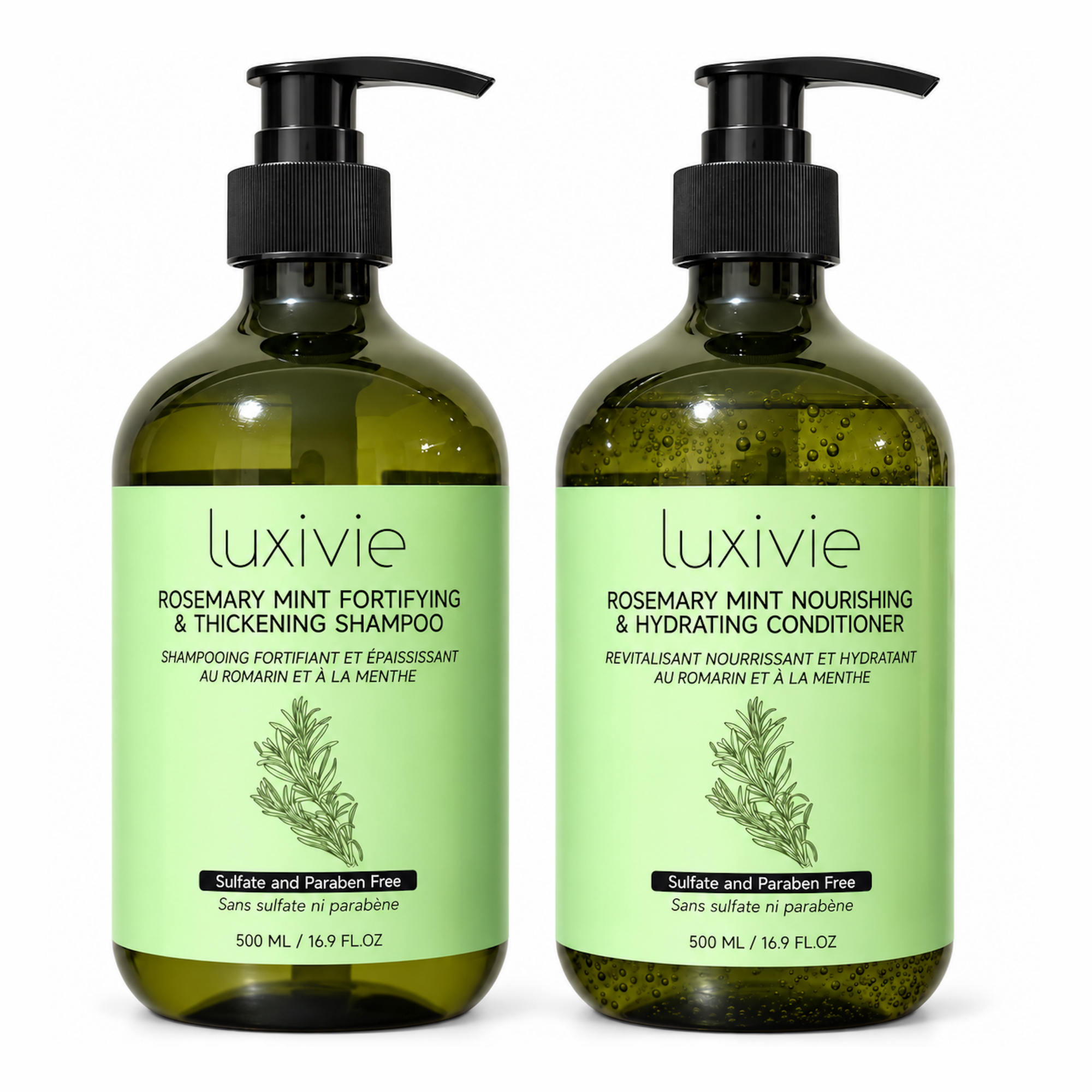
Luxivie Rosemary Mint Shampoo & Conditioner Set for Oily Hair — Gentle Cleansing & Lightweight Hydration
Refresh oily roots without weighing down your hair. This Rosemary Mint duo gently cleanses and refreshes while the lightweight conditioner softens and hydrates without leaving hair feeling heavy. Hair feels fresh, smooth and manageable, with a fuller-looking finish.
Shop Now on Amazon.ca