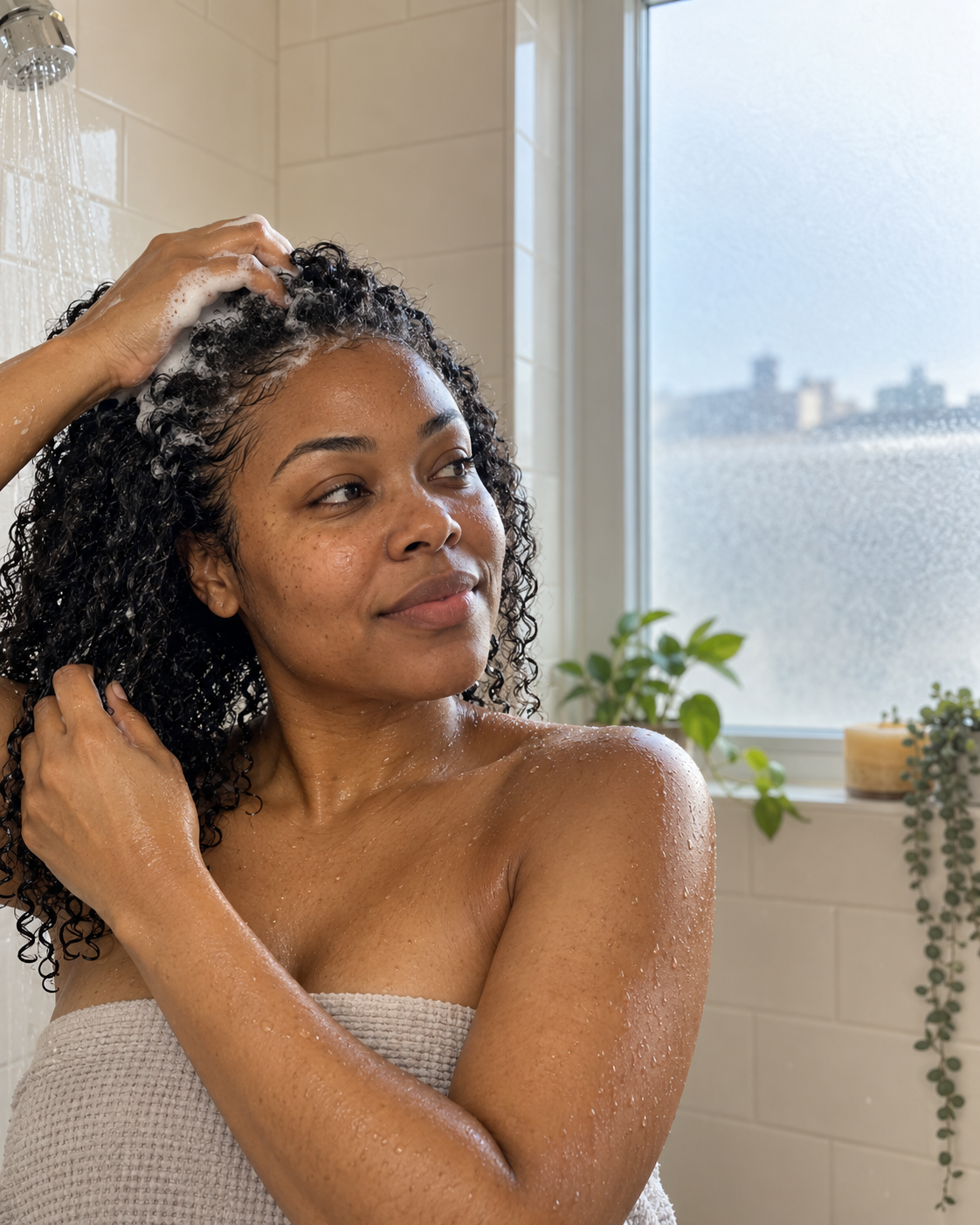

How to Add Volume to Fine Hair Without Product Buildup
Fine hair often responds quickly to styling—and just as quickly to too much styling product. A mousse can create lift on Monday, dry shampoo can extend the style on Tuesday, and a smoothing cream can calm the ends on Wednesday. By the end of the week, the roots may feel coated and the movement that those products were meant to create has disappeared.
The answer is not necessarily to avoid products. It is to build volume through the entire routine so that one spray, powder or foam does not have to do all the work.
For fine hair, visible volume usually comes from clean separation between strands, controlled product placement, low-friction handling and a drying method that lifts the roots. Heavy layering can work against those goals. A lighter routine can help the hair look fuller and move more naturally without implying that a cosmetic product changes hair density or permanently thickens each strand.
Here is how to create that routine.
What “Volume” Means for Fine Hair
Volume describes the visual space and body in a hairstyle. It is influenced by strand diameter, density, texture, cut, oil, humidity, styling and the direction in which the hair dries.
Fine hair has narrow individual strands. It may be high-density and naturally full, or it may also be lower-density. Understanding the difference between fine and thin hairhelps set realistic expectations. Cleansing and styling can improve lift, separation and shape, but they cannot create new follicles.
That distinction is positive rather than limiting: you can focus on changes that are visible and practical. Fresh roots, fewer heavy layers and thoughtful drying often make a bigger cosmetic difference than adding another “volumizing” product.
Why Fine Hair Can Lose Volume So Quickly
Several factors may make fine hair look flat. Often, more than one is involved.
Natural scalp oil
Sebum helps lubricate the scalp and hair. On fine strands, even a moderate amount can cause the roots to group together, reducing airy separation. This does not mean the scalp is dirty or unhealthy. It simply means oil is more visible on this hair type.
Styling residue
Dry shampoo, root powder, hairspray, mousse, heat protectant, leave-in conditioner and oil can all be useful. When several are layered or applied too generously, residue may reduce movement and make the hair harder to refresh.
Conditioner in the wrong place
Fine hair still needs conditioning, but an amount that works well on coarse or very dry hair may be too much for fine strands. Applying a rich conditioner at the roots can also reduce lift for some people.
Incomplete rinsing
Shampoo or conditioner left near the crown, nape or behind the ears may make freshly washed hair feel heavy. Fine, dense hair sometimes needs more rinsing than expected because water and product must move through many narrow strands.
Drying the roots flat
If the roots dry in one fixed direction against the scalp, the finished style may look flatter. This is not a problem with air-drying itself; it is about the position in which the roots set.
Product transfer and repeated touching
Running hands through the hair can transfer skin oils and disturb root lift. You do not need to avoid touching your hair completely, but frequent adjustment can make a fresh style look greasier or flatter sooner.
Step 1: Reset the Wash Routine
Volume begins before styling. The scalp should feel clean and comfortable, while the lengths remain manageable.
Wet thoroughly
Give water time to reach the scalp. Move the hair gently with your fingers so the crown and nape are fully saturated. Shampoo spreads more evenly on thoroughly wet hair, which may reduce the temptation to use too much.
Shampoo the scalp in sections
Instead of placing one large amount at the crown, distribute small amounts across the front hairline, sides, crown and nape. Massage with the pads of your fingers. Avoid scratching with nails or roughing up the lengths.
The Luxivie Rosemary Mint Shampoo is the most relevant current Luxivie cleanser for fine hair that becomes oily or flat quickly. Position it as a fresh-feeling, lightweight cleansing option—not as a treatment for thinning or oil production.
Decide whether one cleanse is enough
One thorough cleanse may be all you need. A second light cleanse can be useful after heavy dry shampoo, a very sweaty day or several layers of styling product. Shampooing twice is not automatically better, and abundant lather is not proof that hair is cleaner.
Use the result as your guide. If one wash leaves the roots fresh and the scalp comfortable, stop there.
Rinse deliberately
Rinse from several angles and lift sections so water reaches the scalp. Give extra attention to the crown, nape and behind the ears. The goal is hair that feels clean, not squeaky or rough.
Step 2: Condition Without Sacrificing Movement
Skipping conditioner can leave fine lengths tangled, static-prone or rough, especially if the hair is long, coloured or heat-styled. The solution is usually to control amount and placement.
Start with a small amount of conditioner. Emulsify it between wet hands, then apply it to the mid-lengths and ends. Add more only where the hair needs slip. If your roots become flat easily, keep the richest application away from the scalp.
For fine curls and coils, adjust this rule. You may need conditioner closer to the roots to detangle or maintain definition. Use less product per section rather than following a straight-hair placement rule that does not fit your texture.
Rinse thoroughly. The hair should feel smooth enough to detangle but not covered by a visible or waxy layer.
The Luxivie Rosemary Mint Conditioner is the natural pairing for the shampoo in this routine. Its role in the CTA should remain simple: provide targeted conditioning while allowing the user to control where and how much is applied.
Step 3: Reduce Friction After Washing
Wet hair can be more vulnerable to stretching and rough handling. Do not rub it vigorously with a towel or twist it tightly into a heavy wrap.
Instead:
Squeeze excess water gently with your hands.
Blot with a soft microfibre towel or smooth cotton T-shirt.
Detangle with an appropriate comb or brush, starting at the ends and working upward.
Support longer sections with one hand while detangling with the other.
Avoid repeatedly brushing the roots once the style begins to dry.
Reducing friction may help preserve a smoother surface and limit tangles. It also keeps the routine from creating frizz that then requires several smoothing products.
Step 4: Use Fewer Styling Products, More Precisely
A lightweight routine does not mean using no styling product. It means giving each product a clear job.
Choose one main volume product
Select either a lightweight mousse, root spray or other volume product that suits your texture. Start below the maximum amount suggested on the label. Apply mainly where lift is needed instead of coating the full length automatically.
Using mousse, root spray, texture spray and powder in the same routine may create short-term grip but also increases the chance of residue. Add a second product only if you can identify what the first one did not accomplish.
Keep smoothing products on the lengths
If the ends are frizzy or dry, use a small amount of leave-in conditioner or hair oil where needed. Avoid dragging it through the root area unless the product is designed for that use and your hair responds well.
For the Luxivie Rosemary Hair Oil, begin with the smallest practical amount, warm it between the hands and touch it lightly onto dry or damp ends according to the label. The oil can support shine and smoothness, but too much may group fine strands together. It is an optional ends-only step in this article, not the primary CTA.
Respect the product’s format
Apply aerosols in a well-ventilated area and follow the directions. Keep powders controlled so they land at the roots rather than covering the bathroom and lengths. Allow each product to distribute before deciding that more is required.
Step 5: Dry for Root Lift
Drying technique can produce volume without adding another layer of product.
Change the direction of the roots
While the roots are damp, lift sections away from their usual resting direction. If you part your hair on the left, dry the roots temporarily toward the right and return the part near the end. You can also move sections gently from side to side while drying.
This creates temporary lift by preventing the roots from setting completely flat in one direction.
Use controlled airflow
If blow-drying, use comfortable heat, keep the dryer moving and maintain some distance from the hair. Concentrate on drying the roots rather than repeatedly heating already-dry ends. Use a heat protectant whenever you style with heat.
A nozzle can help direct air, while a diffuser may be more suitable for curls or waves. The goal is controlled drying, not maximum heat.
Air-dry with intention
Air-drying can still create volume. Change the part while the roots are damp, use clips to lift selected root sections, or gently reposition the hair during early drying. Avoid heavy clips that pull on delicate sections.
Once curls begin to form, repeated touching may create frizz, so use a method suited to your texture.
Step 6: Refresh Without Building a Second Style on Top
The day after washing, first decide what the hair actually needs.
If only one area is flat, reposition or lightly mist that section rather than coating the full scalp. If the roots look oily, a modest amount of dry shampoo may temporarily refresh their appearance. Dry shampoo does not clean the scalp in the same way as washing, and repeated layers can contribute to residue.
Apply only as directed, allow it to sit for the recommended time and distribute it gently. Avoid automatically adding another layer each morning. When the roots feel coated or no longer respond to refreshing, wash them.
If the lengths need smoothing, use a trace amount of leave-in or oil on the ends. Keep root refresh and end care as separate tasks.
A Simple Volume Routine for Fine Hair
Use this sequence as a starting point:
On wash day
Thoroughly wet the scalp and hair.
Shampoo the scalp with controlled section-by-section placement.
Rinse carefully and repeat only if needed.
Condition the mid-lengths and ends with a small, adjustable amount.
Blot rather than rub.
Apply one primary styling product.
Dry the roots in changing directions with controlled airflow or intentional air-drying.
Finish the ends with a minimal smoothing product only if needed.
Between washes
Reposition flat sections before adding product.
Use dry shampoo sparingly when the appearance of oil is the main concern.
Avoid adding oil or leave-in near the roots.
Limit repeated touching and restyling.
Wash when the scalp or roots no longer feel comfortably refreshable.
Weekly or as needed
Clean brushes, combs and reusable accessories so they do not return residue to fresh hair. Review how many products touch your roots. If normal shampooing no longer removes accumulated residue, use a clarifying product according to its directions and your hair’s response.
There is no universal need to clarify once a week. Someone who uses several root products may need it more often than someone who uses almost none.
How Canadian Weather Changes the Routine
Fine hair may behave differently across Canadian seasons.
In humid summer weather, sweat and moisture in the air can reduce the life of a style. Use fewer layers, focus on thorough cleansing and accept that wash frequency may change with activity.
In winter, indoor heating can leave the lengths static-prone while hats flatten the roots. Condition the ends, let hair dry fully before putting on a close-fitting hat when practical, and reposition the roots after removing it. A satin-lined or smoother hat may reduce friction, but no accessory can prevent all flattening.
During wet spring or autumn weather, a flexible hairstyle may be more realistic than trying to hold rigid height all day. Volume that moves naturally often looks better for longer than a heavily sprayed shape.
Troubleshooting Flat or Coated Fine Hair
|
What you notice |
Possible routine factor |
Adjustment to try |
|
Roots feel heavy immediately after washing |
Incomplete rinsing or rich product near the scalp |
Rinse in sections and keep rich conditioner lower on the hair |
|
Hair looks good on wash day but coated after repeated refreshing |
Dry shampoo or styling layers |
Use less per application and wash instead of adding another layer |
|
Ends feel dry when roots look fresh |
Shampoo or heat reaching the lengths too aggressively |
Focus shampoo on the scalp and add targeted conditioner to the ends |
|
Volume disappears after applying oil |
Too much oil or placement too high |
Use a smaller amount only on the driest ends |
|
Hair feels rough after clarifying |
Clarifying frequency or formula may be too strong for the routine |
Clarify only as needed and follow with suitable conditioning |
|
Curls lose definition when chasing root volume |
Too much disruption during drying |
Use root clips or a diffuser and reduce touching once curls form |
Change one factor at a time. That makes it easier to see whether amount, placement, technique or formula caused the result.
Common Volume Mistakes to Avoid
Using more product when hair already feels coated
If a style is not responding, another layer may create stiffness rather than lift. Reset with washing when residue is the issue.
Applying every product from roots to ends
The scalp, mid-lengths and ends have different needs. Root products should support lift; conditioning products should target areas that need softness.
Skipping conditioner to keep hair light
Dry, tangled lengths can require more smoothing product later. A small amount of well-placed conditioner may produce a lighter result overall.
Chasing a squeaky-clean feeling
Hair does not need to feel rough to have volume. A cleanser that leaves the scalp uncomfortable is not a sustainable solution.
Treating buildup as a permanent hair problem
Residue can affect appearance and movement, but it does not mean the hair is permanently damaged. Simplifying the routine and washing appropriately can restore a lighter feel.
Frequently Asked Questions
Can fine hair use mousse?
Yes. A lightweight mousse can provide shape and lift. Begin with a modest amount and apply it mainly where support is needed. If it leaves the hair coated, use less or reduce other styling layers.
Does dry shampoo cause buildup?
Dry shampoo can contribute to residue when used frequently or layered repeatedly. It temporarily absorbs oil and refreshes appearance, but it does not replace cleansing with water and shampoo.
How often should fine hair be clarified?
Clarify according to product use and how the hair feels, following the product directions. There is no single schedule for everyone.
Can hair oil be used on fine hair?
Yes. Use a very small amount on the mid-lengths or ends and observe the result. Fine hair often needs less than coarse or very dry hair.
What Luxivie product is best for this routine?
The Luxivie Rosemary Mint Shampoo & Conditioner Set is the strongest fit when the main concerns are fine strands, oily or flat roots and the need for controlled conditioning. The Rosemary Hair Oil can be an optional ends-only step when dryness or flyaways need light smoothing.
The Bottom Line
Lasting-looking volume is easier to achieve when it is built into cleansing, conditioning, drying and refreshing—not placed entirely on one styling product. Keep the roots clean, use conditioner where it is needed, choose one main styling aid and let technique create part of the lift.
For a simple starting point, build the routine around the Luxivie Rosemary Mint Shampoo & Conditioner Set. Use the shampoo at the scalp, keep conditioner targeted to the lengths and add only the styling product that has a clear job. The result should be fine hair that feels fresh, flexible and naturally movable rather than stiff or coated.
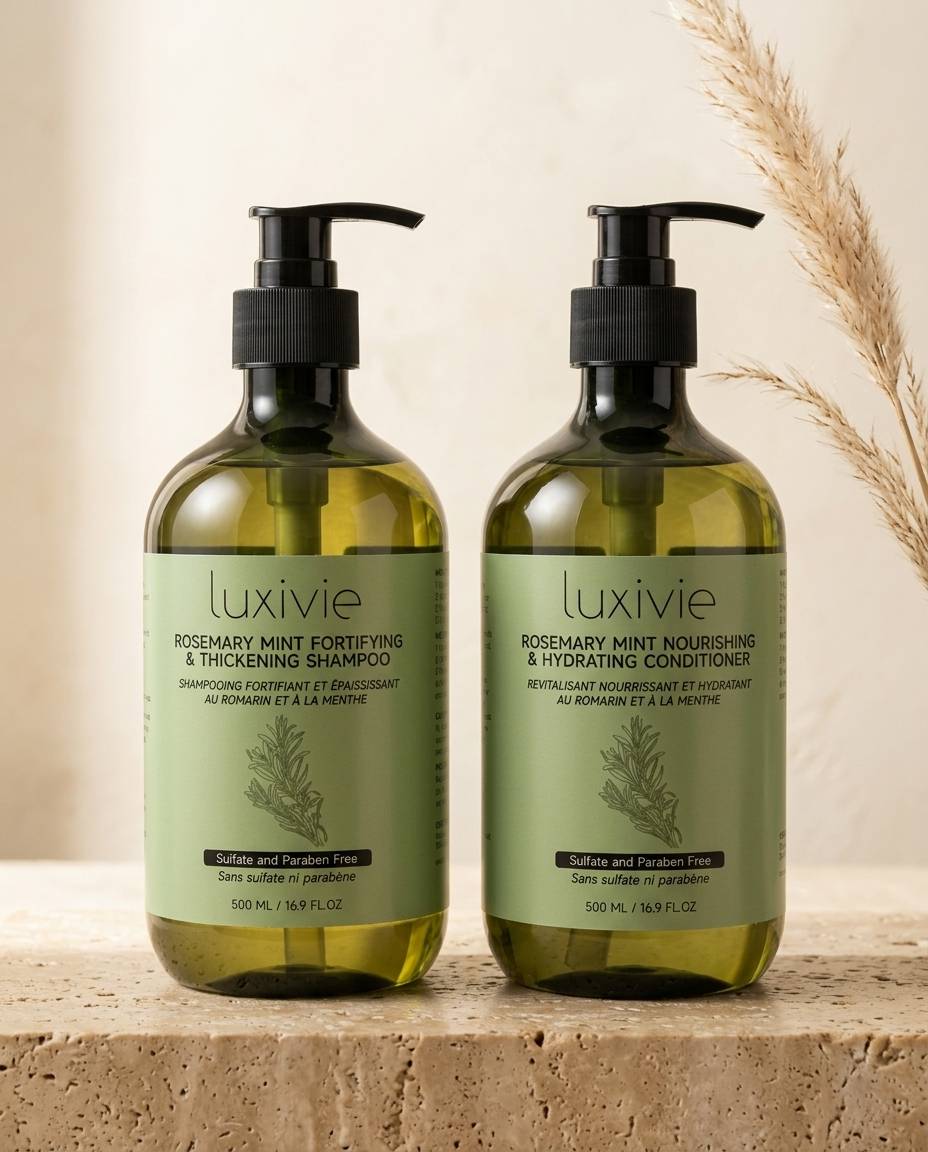
Luxivie Rosemary Mint Shampoo & Conditioner Set for Oily Hair — Gentle Cleansing & Lightweight Hydration
Refresh oily roots without weighing down your hair. This Rosemary Mint duo gently cleanses and refreshes while the lightweight conditioner softens and hydrates without leaving hair feeling heavy. Hair feels fresh, smooth and manageable, with a fuller-looking finish.
Shop Now on Amazon.ca