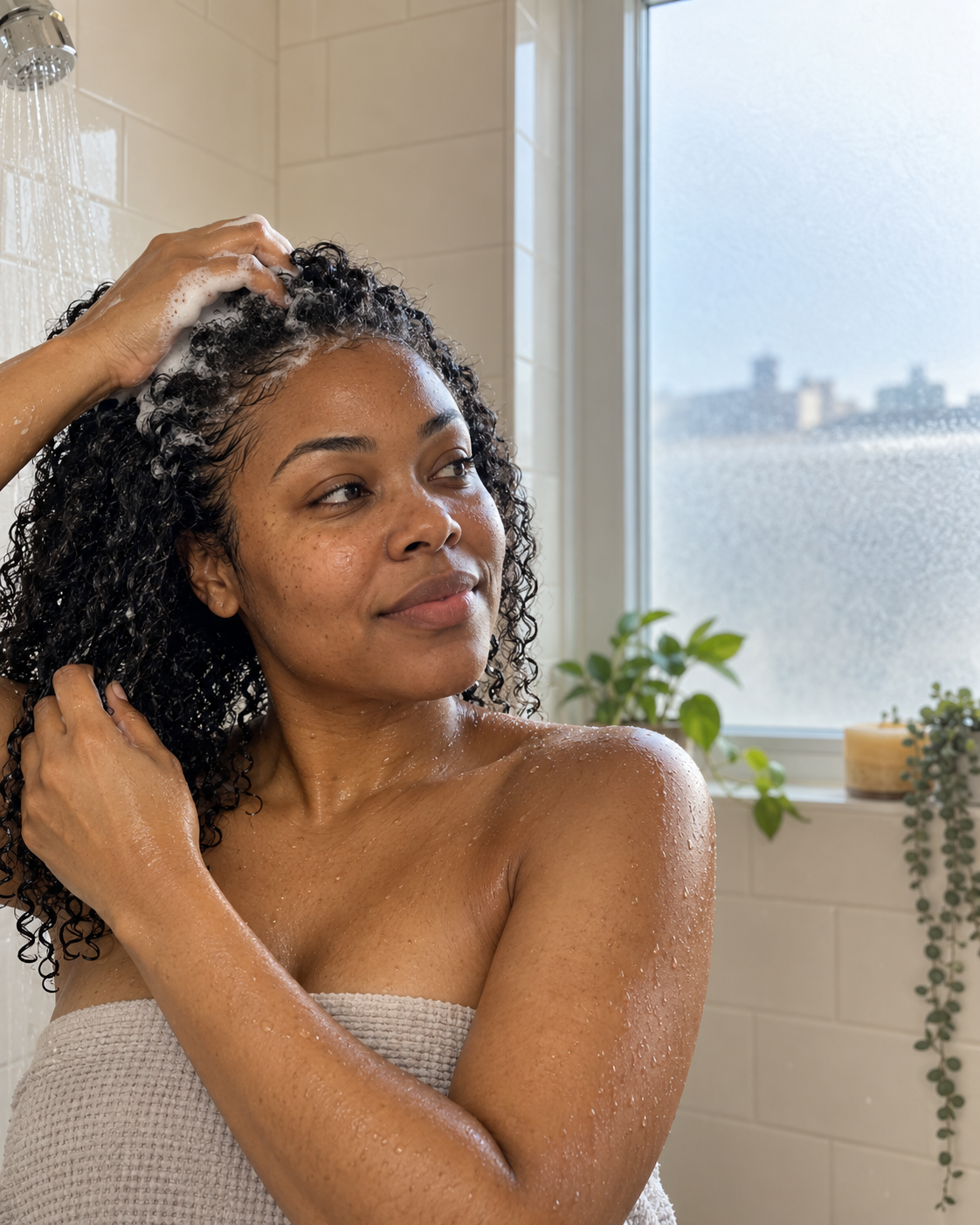
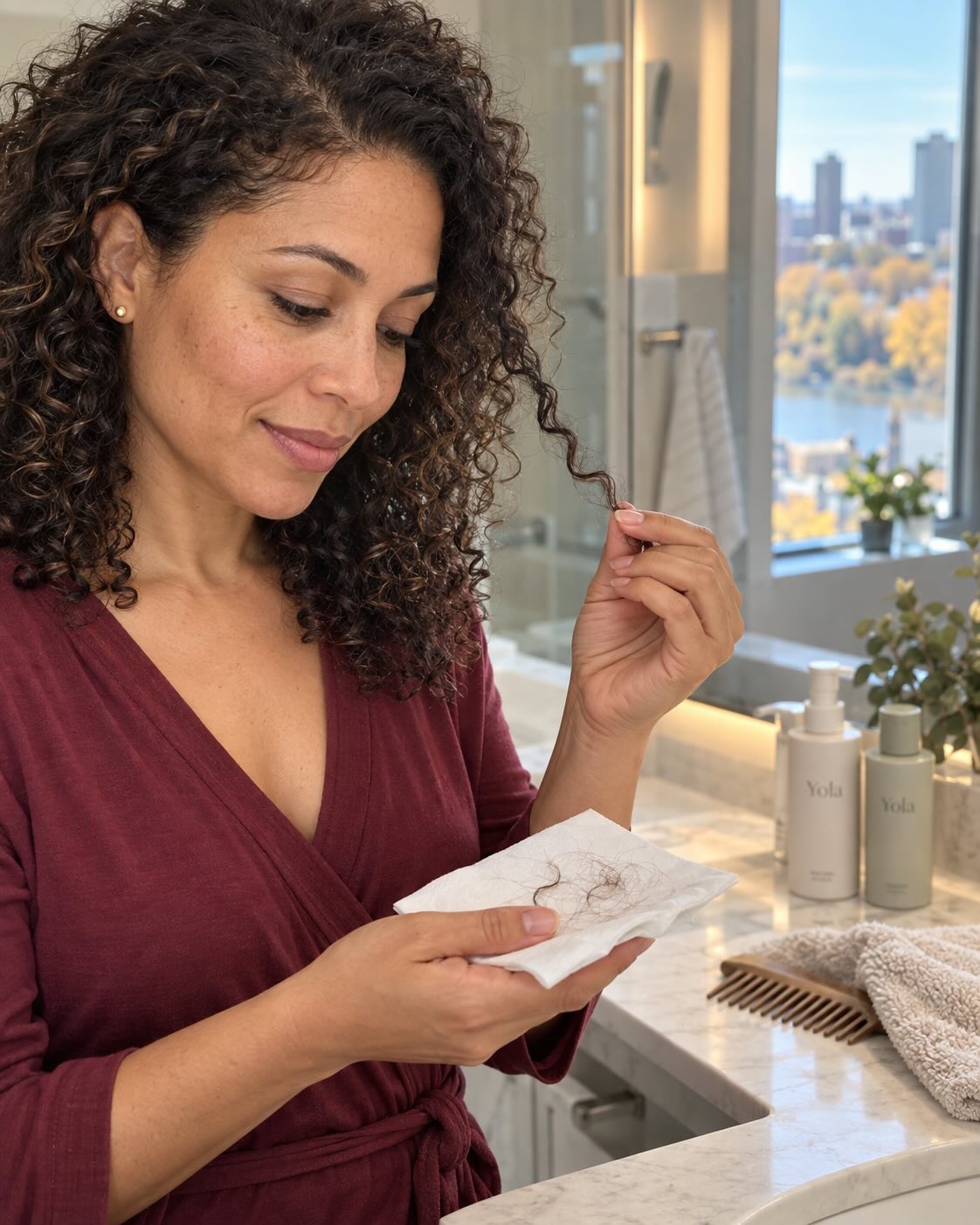
Hair Breakage vs Hair Shedding: How to Tell the Difference
Finding hair in the shower, on a brush or across a sweater can be unsettling, but not every loose or shorter hair represents the same process. Some hairs release from the root as part of the hair cycle. Others snap somewhere along the fibre. The first is shedding; the second is breakage.
The difference matters because a cosmetic routine can reduce friction, improve conditioning and help fragile-feeling lengths resist avoidable snapping. It cannot diagnose or treat an underlying reason for increased shedding.
You do not need to count every hair or inspect it anxiously. A few calm observations, length, shape, location and timing can help you describe the pattern. If the change is sudden, patchy, persistent or accompanied by scalp symptoms, a qualified healthcare professional is the right person to assess it.
Breakage and Shedding Are Different Events
Hair shedding
Shedding occurs when an entire hair releases from the follicle. Released hairs are often close to the full length of the surrounding hair. One end may appear slightly thicker or club-shaped, but home inspection of the end is not a reliable diagnostic test.
Some shedding is part of the normal hair cycle. The amount that becomes visible varies with hair length, wash frequency, detangling habits and how long released hairs remain caught in curls, braids or a style before wash day.
Hair breakage
Breakage occurs when the hair fibre snaps between the root and the end. Broken pieces may be shorter than the surrounding hair, vary widely in length and lack an attached root end.
Breakage is more likely where the fibre has experienced repeated friction, high heat, chemical processing, tight styling or rough detangling. Dryness does not prove that hair is structurally damaged, but rough, tangled hair can be more difficult to handle gently.
Breakage vs Shedding at a Glance
|
Clue |
Breakage may be more likely |
Shedding may be more likely |
|
Length |
Short pieces or many different lengths |
Hairs close to the full surrounding length |
|
End |
Snapped, frayed or blunt-looking |
One end may look slightly club-shaped |
|
Location |
Short pieces around the hairline, crown, shoulders or styling areas |
Full-length hairs in the shower, brush or style takedown |
|
Pattern |
More noticeable after detangling, heat, colouring or tight styling |
More noticeable after several days between washing or detangling |
|
Routine response |
Gentler handling and conditioning may reduce avoidable snapping |
Routine changes may affect collection, but not necessarily the biological cause |
These clues can overlap. A person may experience breakage and shedding at the same time, and photographs cannot confirm a diagnosis.
A Simple Observation Method
Use a short observation period rather than repeatedly checking throughout the day.
Look at length
Compare a few released hairs with your overall hair length. Many short pieces suggest breakage may be contributing. Mostly full-length hairs suggest shedding may be more prominent.
Layers, bangs and new growth can also create shorter hairs, so short pieces are not automatic proof of breakage.
Look at shape
Broken fibres may have rough, split or uneven ends. A shed hair may have a subtly thicker root end. Avoid pulling hairs from the scalp for comparison.
Notice where hair appears
Short pieces on clothing, around the sink or after hot-tool styling may point toward breakage. Full-length hairs collected during wash day can reflect hairs that were already released but remained caught in the style.
Notice when the pattern changed
Ask whether the change followed:
- New colour or lightening service
- More frequent flat ironing or curling
- A tighter hairstyle
- Extensions, braids or repeated tension
- A new detangling tool
- Illness, medication or a major life change
- A change in scalp comfort
This timeline helps you describe the situation. It does not identify a medical cause by itself.
Why Wash Day Can Make Shedding Look Dramatic
Hair that has already released may remain trapped among neighbouring strands. This is especially common with curly, coily, dense or long hair and when several days pass between detangling sessions.
During washing and conditioning, those hairs finally slide free and collect in one place. A larger wash-day bundle does not necessarily mean all the hairs released during that shower.
Consider the full interval between wash days, not only the pile you see at one moment. If the amount represents a clear and persistent departure from your usual pattern, professional advice is more useful than trying to compare it with an internet photograph.
Common Contributors to Hair Breakage
Rough detangling
Pulling a brush through knots from root to tip can concentrate force on tangled sections. Detangle in manageable sections, begin at the ends and work upward.
Repeated high heat
Hot tools can help create a style, but repeated high temperatures and multiple passes may leave hair more fragile. Use heat protection, choose the lowest effective temperature and avoid repeatedly heating a dry section.
Chemical processing
Colouring, lightening, relaxing and perming change the hair fibre. Processed hair may need more conditioning and gentler handling. Follow professional guidance and avoid overlapping chemical services unnecessarily.
Tight or repetitive styling
Consistent tension in the same area can contribute to breakage. Vary placement, reduce tightness and give stressed sections time away from high-tension styles.
Friction
Rough towels, coat collars, scarves, pillow contact and repeated brushing can add friction. No fabric eliminates breakage, but smoother handling may reduce avoidable stress.
Inadequate conditioning for the texture
Hair that lacks slip may be harder to detangle. Conditioner does not permanently repair every form of structural damage, but it can improve smoothness and manageability, making gentler handling easier.
What Can Contribute to Increased Shedding?
Shedding has many possible explanations, including normal cycling and health-related factors. It is not appropriate to diagnose the cause from a loose hair, a shampoo result or a short checklist.
Changes can coincide with stress, illness, hormonal shifts, nutritional concerns, medication changes or scalp conditions. That does not mean one of these is necessarily responsible for your experience.
Cosmetic shampoo and conditioner cannot determine or treat the cause of increased shedding. If you notice a meaningful change, document when it began and seek professional advice.
When to Seek Professional Advice
Speak with a qualified healthcare professional if you notice:
- Sudden or substantial change from your usual shedding pattern
- Patchy areas or clearly widening areas of visible scalp
- Persistent increase lasting beyond a short observation period
- Scalp pain, burning, marked itching, redness or sores
- Shedding after a medication or health change
- Loss of eyebrows or body hair alongside scalp changes
- Concern that is affecting your wellbeing
Seeking an assessment does not mean the cause is serious. It means a health-adjacent change is being evaluated by the appropriate person.
A Routine for Breakage-Prone Lengths
When the main concern appears to be snapping along the fibre, focus on reducing friction and improving manageability.
Cleanse the scalp without tangling the lengths
Apply shampoo mainly to the scalp. Massage with fingertips and allow diluted lather to move through the lengths during rinsing. Avoid piling long hair on top of the head.
Condition for slip
Apply conditioner to the areas that tangle or feel rough. Work in sections if needed. Fine hair may need a smaller amount; curly, coily or processed hair may require more thorough distribution.
Detangle patiently
Use a tool appropriate to your texture. Support the section with one hand, begin at the ends and move upward. Add water or conditioner when a section lacks slip rather than forcing the tool through it.
Dry with less friction
Blot or squeeze with a soft towel or smooth cotton T-shirt. Do not rub vigorously. If blow-drying, keep the airflow moving and use heat protection.
Review repeated stress points
Look for breakage around elastic placement, the crown, the nape or areas repeatedly touched by hot tools. Adjusting one repeated habit may be more useful than adding several new products.
Choosing Luxivie Products for Breakage-Prone Hair
The Luxivie Biotin + Keratin Shampoo & Conditioner Set is the most relevant current Luxivie option when the concern is dry, normal or fragile-feeling hair that needs conditioning and stronger-looking, more manageable lengths.
Use cosmetic wording carefully. A protein-containing or conditioning formula may help hair feel smoother or stronger and may reduce breakage associated with rough handling. It should not be described as treating shedding, changing the hair-growth cycle or permanently rebuilding severely damaged fibres.
If the main concern is shedding from the root, the CTA should not imply that this set is the solution. Keep the recommendation limited to fibre care while encouraging appropriate assessment for a new or persistent shedding change.
Fine Hair: Breakage Can Look Like Thinning
Fine strands contribute less visible bulk individually. When they snap at different lengths, the ends may look less full and the style may lose volume.
Oil and product residue can also group fine strands together, exposing more scalp. That visual effect differs from breakage, and both differ from a true change in density.
Before assuming hair is thinning, consider strand diameter, breakage, buildup and styling. If density appears to be changing over time, seek professional guidance.
Curly and Coily Hair Considerations
Released hairs may remain trapped within curls until detangling or wash day, making the amount appear concentrated. Curves in the fibre can also create more points where tangles form.
Helpful practices include:
- Detangling in sections
- Using adequate conditioner or slip
- Working slowly from ends upward
- Avoiding dry brushing when it disrupts the texture or increases snapping
- Reducing tension at edges and repeated style points
- Allowing enough time for takedown and wash day
There is no universal requirement to detangle wet or dry. Choose the method that provides control and minimizes force for your texture.
Colour-Treated Hair Considerations
Lightened or repeatedly coloured hair may feel drier, more porous or more fragile. Focus on conditioning, controlled heat and careful handling.
Products can improve softness, smoothness and manageability, but cannot permanently reverse every structural change. Regular trims remove split ends; they do not change shedding at the root.
What Not to Do
Do not count every hair repeatedly
Daily counting without a standardized clinical method can increase worry without providing a diagnosis. Observe the overall pattern and change from your baseline.
Do not perform aggressive pull tests at home
Pulling on the hair can create additional release or breakage and may be interpreted incorrectly.
Do not assume a visible bulb proves the cause
The shape of one end cannot tell you why a hair released. A clinician considers history, pattern, scalp examination and other information.
Do not buy a growth product solely because hair is breaking
Breakage occurs along the fibre. A routine focused on slip, conditioning and lower friction is more directly relevant than a product making unsupported growth promises.
Do not treat shedding as a cosmetic-product failure
A shampoo can clean the scalp and improve hair appearance. It does not control every biological or health-related factor associated with shedding.
A Seven-Day Observation Checklist
For one week, note only a few practical details:
Whether loose hairs are mostly full length or mixed short pieces
Whether breakage appears after a specific tool or style
Whether the scalp has new discomfort
Whether the amount differs clearly from your usual pattern
Whether recent health, medication or routine changes occurred
Whether gentler detangling reduces short snapped pieces
Whether professional advice is warranted
This checklist is meant to improve description, not produce a diagnosis.
Frequently Asked Questions
How can I tell if a hair shed from the root?
A shed hair is often close to full length and may have a slightly club-shaped end. However, home inspection cannot determine why it released.
Does breakage mean my hair is unhealthy?
Breakage can reflect accumulated chemical, heat or mechanical stress. A few broken hairs do not define the overall health of your hair. Focus on repeated patterns and gentler care.
Can conditioner reduce breakage?
Conditioner can improve slip, reduce friction and make detangling easier, which may help reduce avoidable snapping. It does not treat shedding from the follicle.
Can shampoo stop shedding?
An ordinary cosmetic shampoo should not be presented as stopping shedding or treating hair loss. Seek professional guidance for a new or persistent change.
Which Luxivie set fits breakage-prone lengths?
The Luxivie Biotin + Keratin Shampoo & Conditioner Set is the more relevant choice for dry, normal or fragile-feeling lengths. Its role is cosmetic fibre care—not treatment of shedding.
The Bottom Line
Breakage produces shorter snapped fibres, while shedding releases the full hair from the follicle. The patterns can overlap, and home observation cannot diagnose the cause of increased shedding.
For breakage-prone lengths, use gentler detangling, controlled heat and enough conditioner for slip. The Luxivie Biotin + Keratin Shampoo & Conditioner Set can support smoother, stronger-looking and more manageable hair. If the concern is a sudden or persistent change in shedding, seek professional advice rather than relying on a cosmetic CTA.
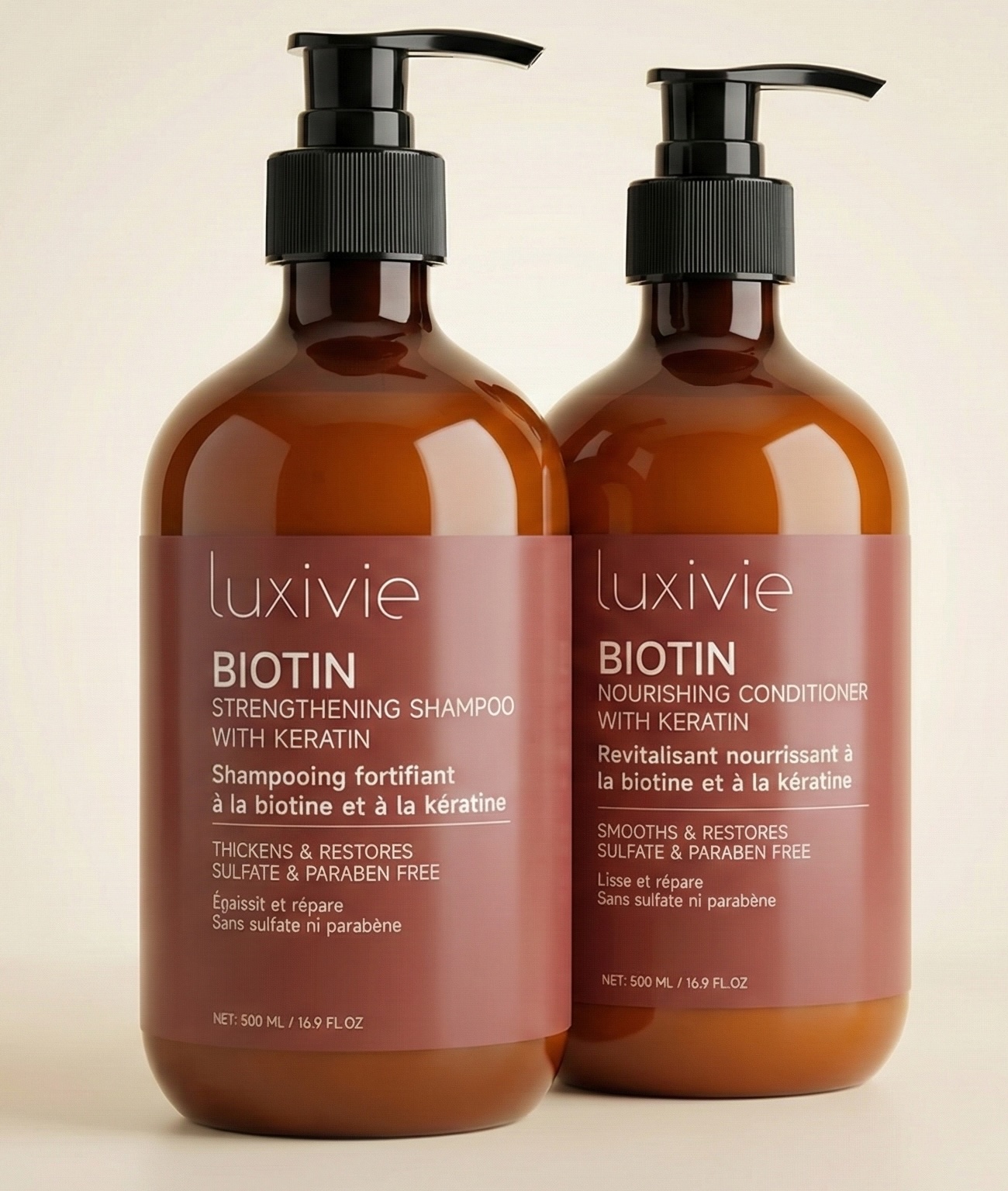
Luxivie Biotin & Keratin Shampoo & Conditioner Set for Dry & Damaged Hair — Strengthening & Smoothing Care
Care for dry, damaged-looking hair with a strengthening and smoothing duo. The shampoo gently cleanses while helping hair look fuller and more polished. The conditioner softens and smooths for easier detangling and improved manageability, leaving hair feeling soft and refreshed without weighing it down.
Shop Now on Amazon.ca