
Product Buildup vs Natural Scalp Oil: How to Tell
Your roots look flat, separated or shiny, but the reason is not always obvious. Is your scalp naturally oily, or are dry shampoo, conditioner and styling products leaving residue behind? The two can look similar, and they often occur together.
Knowing the difference can help you choose a better response. Natural scalp oil usually calls for routine cleansing at a frequency that suits you. Product buildup often calls for reviewing how much product touches the roots, improving rinsing or occasionally using a cleanser designed to remove more accumulated residue.
This is an observation guide, not a method for diagnosing a scalp condition. Timing, texture and recent product use can provide useful clues, but persistent discomfort, visible inflammation or an unexplained change deserves professional assessment.
What Is Natural Scalp Oil?
The scalp produces sebum, an oily substance that helps lubricate the skin and hair near the roots. Everyone produces it, although the amount and how quickly it becomes visible vary.
Fine or straight hair may appear oily relatively quickly because sebum can spread along the strand and make narrow hairs group together. On curly or coily hair, the scalp may feel oily even when the lengths remain dry because the oil does not move as easily through bends in the fibre.
Natural oil often appears gradually after washing. The roots may begin to look shinier, flatter or more separated as time passes. This does not automatically mean the scalp is unhealthy or that the hair is dirty. It means the hair has reached the point at which cleansing may improve comfort and appearance.
What Is Product Buildup?
Product buildup is residue left by one or more products on the scalp or hair. Common contributors include:
Dry shampoo
Root powder
Hairspray and texture spray
Styling mousse or gel
Leave-in conditioner
Hair oil or serum
Rich rinse-out conditioner applied near the scalp
Incompletely rinsed shampoo or conditioner
Repeated layers of products between washes
Minerals from water can also affect how hair feels, but hard-water residue is a separate issue from ordinary styling-product buildup.
Buildup can make roots look greasy even when the residue itself is not oily. Powders may absorb oil at first, then combine with sebum and styling products to create a coated or dull feeling. Rich creams and oils may create shine and strand separation that resemble natural oiliness.
Product Buildup vs Oily Scalp at a Glance
|
Clue |
Natural scalp oil may be more likely |
Product buildup may be more likely |
|
Timing |
Develops gradually in a familiar pattern after washing |
Appears sooner after adding or changing products |
|
Location |
Most visible at the scalp, part line and roots |
May appear where sprays, powders, creams or conditioner were applied |
|
Feel |
Roots feel slick, soft or separated |
Hair may feel waxy, powdery, sticky, stiff or coated |
|
Appearance |
Shine and flatness increase over time |
Dullness, flakes of product, uneven shine or reduced movement may appear |
|
After a normal wash |
Usually feels fresh again |
May remain coated if cleansing or rinsing was insufficient |
|
Routine connection |
Similar even when few styling products are used |
Often follows repeated layering, dry shampoo or heavy root application |
These clues are not absolute. Natural oil and residue can exist at the same time, so the most useful question is often not “Which one is it?” but “How much of each is affecting my hair today?”
Clue 1: Look at the Timing
Timing is one of the most practical ways to separate a normal oil pattern from a product-related change.
If your hair usually looks fresh after washing and becomes oily at roughly the same time—perhaps by the next morning or late on the second day—that pattern may mainly reflect natural sebum and your hair type.
If the roots suddenly look heavy immediately after styling, conditioner application or a new leave-in, product weight is more likely involved. Hair that looks clean after drying but becomes dull and coated after several days of dry-shampoo use may be showing a mixture of oil and accumulated powder.
Keep a simple note for two or three wash cycles:
When the hair was washed
Which products touched the roots
How much was used
When the roots first looked flat or shiny
Whether the hair felt slick, powdery, waxy or stiff
You do not need a detailed diary. A few observations can reveal whether the same product or placement step precedes the problem.
Clue 2: Notice the Texture, Not Only the Shine
Natural scalp oil commonly feels slick or soft. Product residue can feel more varied.
Dry shampoo may leave a powdery, gritty or matte texture. Hairspray can create stiffness. Oils, creams and rich conditioners can feel slippery or waxy. Incomplete rinsing may leave hair oddly soft but heavy, as though it never fully dried clean.
Run clean fingers lightly across a small root section; avoid repeatedly touching the full hairstyle. Ask whether the sensation matches ordinary oil or feels different from your familiar pattern.
Texture is a clue, not a test. Do not scrape the scalp or aggressively rub at visible particles. If the scalp is flaking, uncomfortable or irritated, it may not be a simple cosmetic-residue issue.
Clue 3: Check Where the Problem Appears
Natural oil is often most noticeable near areas with direct scalp contact: the part line, fringe, temples and crown. Product residue may follow the application pattern.
For example:
A root powder may collect along the part.
Dry shampoo may be heavier around the crown or fringe.
Conditioner may flatten the areas where it was placed too close to the scalp.
Hair oil may create separated sections wherever hands transferred it upward.
Hairspray may leave the outer layer stiff while the underneath still feels clean.
If only one section feels coated, try correcting that placement before changing the entire routine.
Clue 4: Review Everything Touching the Roots
Many people count only shampoo and conditioner, but the root area may encounter far more products.
Create a quick root-product audit:
Shampoo
Conditioner
Dry shampoo
Mousse or gel
Root-lifting spray
Heat protectant
Hairspray or texture spray
Leave-in conditioner
Oil or serum transferred from the hands
Then consider tools and fabrics. Brushes can carry oil and styling residue. Bonnets, hats, pillowcases and workout headbands can also contact the roots. This does not mean they are causing a scalp problem, but cleaning them according to their care instructions helps keep the routine consistent.
When several products have similar jobs, simplify. A root spray, texture spray and powder may all add grip, but layering all three can reduce movement on fine hair.
Clue 5: Observe What Happens After Washing
A comfortable, thorough wash should remove routine oil and much everyday product residue.
If your hair feels clean afterward and follows its normal oil timeline, natural sebum was probably a major factor. If the roots remain waxy, stiff or coated immediately after drying, consider:
Whether the scalp was fully saturated before shampooing
Whether shampoo reached the crown, sides and nape
Whether enough time was spent rinsing
Whether rich conditioner touched the roots
Whether the cleanser was matched to the amount of styling residue
Whether brushes or styling tools returned residue to clean hair
Do not assume that more aggressive scrubbing is the answer. Improve water saturation, distribution and rinsing first.
A Step-by-Step Reset for Suspected Buildup
Step 1: Simplify before you intensify
For one or two wash cycles, reduce optional root products. Keep the routine to shampoo, appropriately placed conditioner and one essential styling product. This helps identify whether layering contributed to the coated feeling.
Step 2: Shampoo in sections
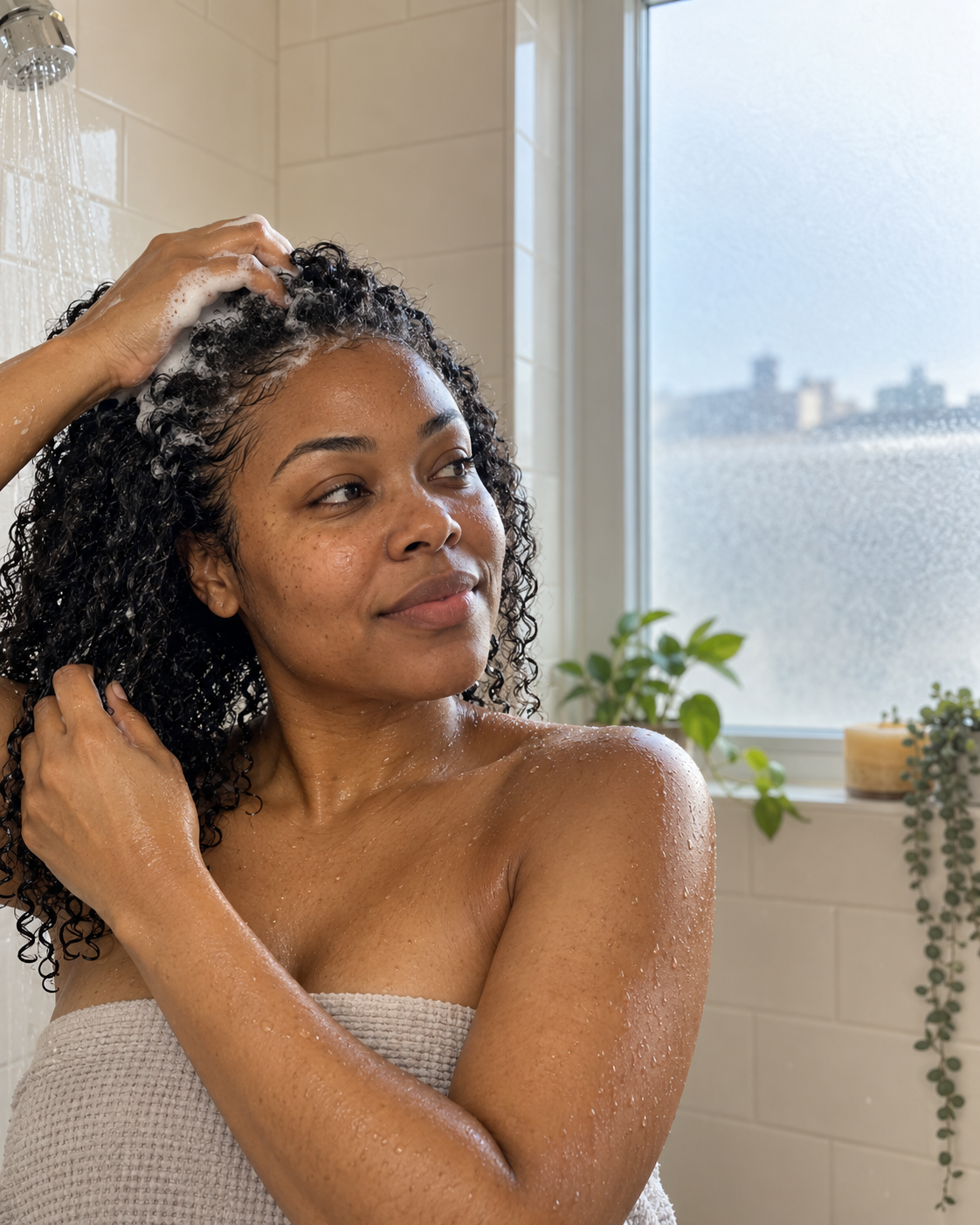
Wet the scalp thoroughly. Apply small amounts of shampoo to the front, sides, crown and nape rather than placing one large amount in a single spot. Massage gently with the fingertips and rinse carefully.
The Luxivie Rosemary Mint Shampoo is the most relevant current Luxivie product for this routine because the intended use is lightweight, fresh-feeling cleansing for oily or buildup-prone roots. It should not be presented as changing sebum production or treating a scalp disorder.
Step 3: Decide whether a second cleanse is useful
If the first application barely spreads because it is moving through significant oil, dry shampoo or styling residue, rinse and use a smaller second application. If one cleanse leaves the roots fresh and comfortable, a second is unnecessary.
Double shampooing is a situational technique, not a daily requirement or proof of better hygiene.
Step 4: Rinse deliberately
Lift sections and direct water toward the crown, nape and behind the ears. Residue can remain where dense hair limits water flow.
Step 5: Keep conditioner targeted
Apply conditioner to the areas that need softness and detangling. For straight or wavy hair that becomes flat easily, this often means the mid-lengths and ends. Curly or coily hair may need conditioner closer to the roots; adjust the amount and placement to texture.
Step 6: Reintroduce products one at a time
Once the hair feels clean, add optional root products back gradually. Use the smallest effective amount and observe the result before layering another formula.
When to Consider Clarifying Shampoo
Clarifying shampoo is designed to remove more accumulated residue than an everyday cleanser. It may be useful when:
Normal washing no longer restores movement
Dry shampoo has been layered repeatedly
Root powders or strong-hold products are used often
Hair feels coated soon after washing despite thorough rinsing
The routine includes several oils, creams or leave-ins
Clarifying does not have to follow a fixed weekly schedule. The appropriate frequency depends on product use, hair texture, colour treatment and how the hair responds.
If the lengths are dry, coloured or fragile-feeling, apply clarifying shampoo mainly where residue is present and follow with suitable conditioning. Check whether the clarifying product is labelled for colour-treated hair when that matters to you.
An everyday cleanser and a clarifying shampoo have different jobs. One supports routine cleansing; the other can provide an occasional deeper reset.
Dry Shampoo: Helpful Refresh or Source of Residue?
Dry shampoo can temporarily absorb oil and refresh the appearance of roots. It does not clean with water and rinse away oil in the same way as shampoo.
To reduce unnecessary accumulation:
Follow the product directions
Apply only where oil is visible or expected
Avoid coating the entire length
Allow the recommended settling time
Distribute gently
Avoid adding layer after layer when the hair already feels coated
Return to regular washing when refreshing stops working
Dry shampoo is not inherently bad, and buildup is not inevitable. Amount, frequency and placement determine whether it remains a useful convenience or becomes part of the problem.
Can Buildup Make Hair Look Thinner?
Residue and oil can group strands together, reduce movement and flatten the roots. This may expose more scalp between sections and make hair look temporarily less full.
That appearance effect is not the same as a reduction in hair density. Cleansing away residue may restore separation and visible lift, but shampoo should not be presented as treating hair loss.
If you notice a sudden, patchy or persistent change in density, increased shedding or ongoing scalp discomfort, speak with a qualified healthcare professional. A cosmetic reset can clarify how residue affects appearance; it cannot identify a medical cause.
How Fine Hair Changes the Picture
Fine strands can be especially responsive to small amounts of oil and product. A quantity that feels light on coarse or high-volume hair may group fine strands together.
For fine hair:
Begin with less product
Keep rich formulas away from the roots when they reduce lift
Choose one main root-styling product
Rinse longer than expected
Clean brushes regularly
Use oil only on the driest lengths or ends
Wash when refreshing adds more residue than benefit
This does not mean fine hair must avoid conditioner, oils or styling products. It means precise amounts and placement matter more.
How Canadian Seasons Can Affect What You Notice
In warm or humid weather, sweat and natural oil may make roots appear greasy sooner. Outdoor activity and sunscreen transfer near the hairline can add to the coated feeling.
In autumn and winter, hats may flatten roots and transfer styling residue, while indoor heating can leave lengths drier. The contrast may encourage extra dry shampoo at the scalp and extra conditioning on the ends, two useful steps that can become heavy when overapplied.
Adjust one variable at a time. Increase wash frequency after active days, reduce root-product layers under hats or add conditioner only to dry lengths rather than changing every product with the season.
A Practical Decision Guide
Your roots become shiny on a familiar schedule
This is likely influenced by natural scalp oil. Wash at a frequency that keeps the scalp comfortable, using a suitable everyday shampoo.
Your hair feels heavy immediately after conditioning
Reduce the amount, move application lower or rinse more thoroughly. Curly and coily textures can adjust quantity without automatically avoiding the root area.
Your roots look dull or powdery after several refresh days
Dry-shampoo residue may be contributing. Wash rather than adding another layer.
Hair remains waxy after one normal cleanse
Improve shampoo distribution and rinsing. If accumulated styling residue is substantial, consider a second light cleanse or an occasional clarifying shampoo.
The scalp is persistently itchy, painful, inflamed or unusually flaky
Stop treating the issue as ordinary buildup and seek advice from a qualified healthcare professional.
Common Mistakes to Avoid
Assuming every shiny root is buildup
Natural sebum creates shine. If the pattern is consistent and resolves with normal washing, stronger cleansing may not be necessary.
Assuming every coated feeling is oil
Powders, polymers, conditioner and incompletely rinsed products can feel heavy without being natural oil.
Scrubbing harder
Aggressive scratching can leave the scalp uncomfortable and tangle the lengths. Better saturation, distribution and rinsing are safer first adjustments.
Clarifying on a rigid schedule
Clarify according to residue and product directions. Frequent use may leave some hair types feeling dry, particularly if the lengths do not need stronger cleansing.
Trying to stop the scalp from producing oil
Cosmetic shampoo removes sebum and residue. It should not be claimed to permanently alter oil production.
Frequently Asked Questions
How do I know if my hair has product buildup?
Look for a change connected to product use: a waxy, powdery or stiff feel; reduced movement; dullness; or roots that remain coated after normal washing. These clues are not diagnostic, but they can guide a routine reset.
Can conditioner cause buildup?
Conditioner can leave fine or oily roots feeling heavy when a rich formula is applied too generously or not rinsed thoroughly. Conditioner remains useful for softness and detangling; adjust amount and placement rather than eliminating it automatically.
Does oily hair need clarifying shampoo?
Not necessarily. An everyday shampoo may be enough for natural oil and routine product use. Clarifying becomes more relevant when accumulated residue remains after ordinary cleansing.
Can I have buildup and an oily scalp at the same time?
Yes. Natural sebum can mix with dry shampoo, styling products and conditioner residue. A simplified routine and thorough wash can help you see what remains.
Which Luxivie product fits this concern?
The Luxivie Rosemary Mint Shampoo & Conditioner Set is the strongest current fit. Use the shampoo mainly at the scalp for fresh-feeling cleansing and the conditioner where the lengths need softness. Keep the CTA cosmetic: it supports cleansing, manageability and lightweight care rather than changing oil production.
The Bottom Line
Natural scalp oil usually follows a familiar timeline and feels slick. Product buildup is more likely to appear after repeated layering, feel powdery, waxy or stiff, or remain after an incomplete wash. The two can overlap.
Begin with a root-product audit, simplify optional styling layers and improve shampoo distribution and rinsing. For oily or buildup-prone roots, the Luxivie Rosemary Mint Shampoo & Conditioner Set offers a straightforward base: cleanse the scalp, condition the lengths and keep extra root products intentional.
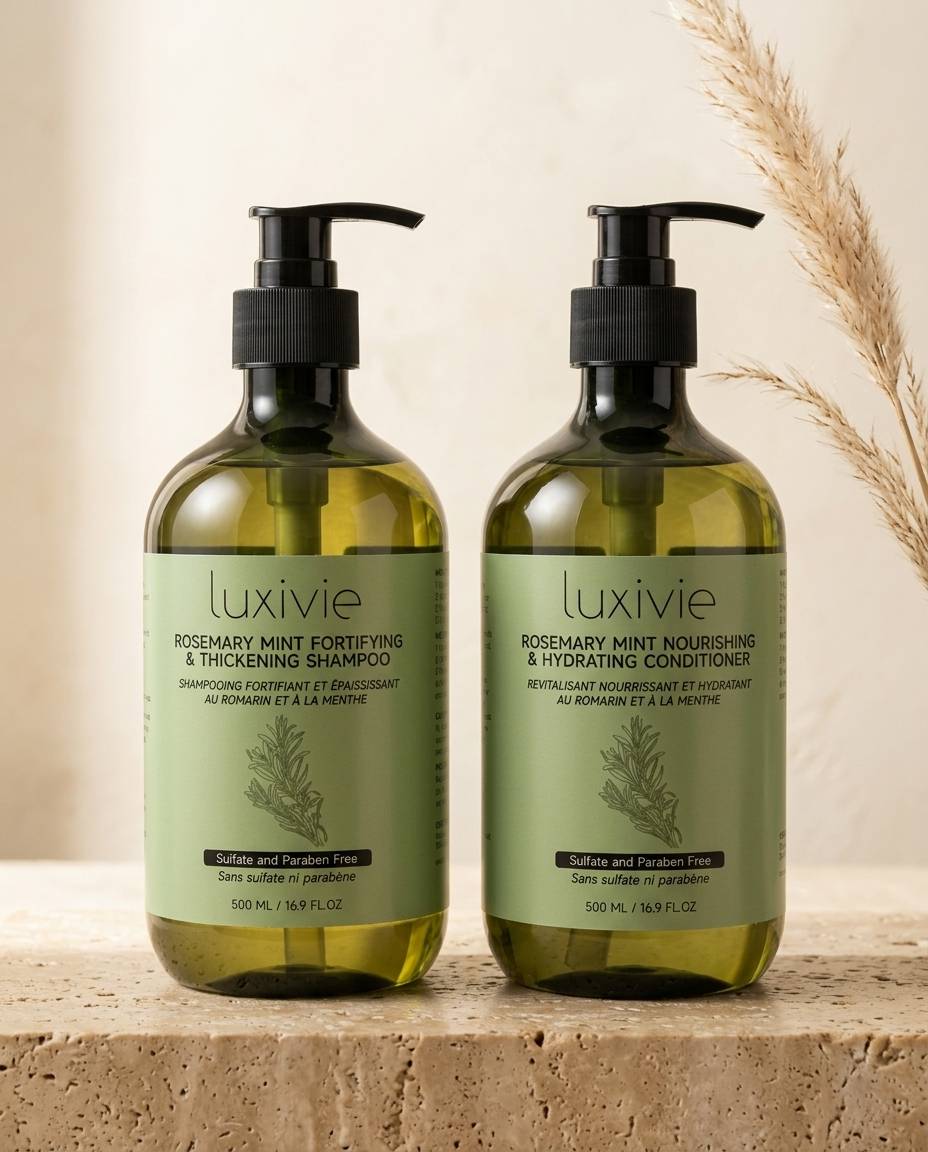
Luxivie Rosemary Mint Shampoo & Conditioner Set for Oily Hair — Gentle Cleansing & Lightweight Hydration
Refresh oily roots without weighing down your hair. This Rosemary Mint duo gently cleanses and refreshes while the lightweight conditioner softens and hydrates without leaving hair feeling heavy. Hair feels fresh, smooth and manageable, with a fuller-looking finish.
Shop Now on Amazon.ca