Oily Roots and Dry Ends: How to Balance Both
Oily roots and dry ends can make hair care feel like a contradiction. Washing often enough to refresh the scalp may leave the lengths feeling rough. Adding conditioner or oil for softness may make the top look flat sooner. A routine designed for only “oily hair” or only “dry hair” may solve one concern while exaggerating the other.
The most practical solution is to stop treating every centimetre of the hair in the same way.
Your scalp is living skin that produces sebum. The hair fibre through the lengths is not living tissue and becomes older as it grows farther from the scalp. The roots receive natural oil first, while the ends experience more washing, brushing, friction, heat, colour processing and exposure to weather. It is entirely possible for these zones to need different care at the same time.
A split-zone routine cleans where oil accumulates and conditions where dryness appears. It does not try to “train” the scalp, eliminate natural oil or coat the entire head in moisture.
Why Roots Can Be Oily While Ends Feel Dry
Combination hair is common because oil distribution is uneven.
Sebum begins at the scalp
Sebaceous glands in the scalp produce oil that helps lubricate the skin and hair near the roots. The amount and visibility of oil vary between people. Fine, straight hair may show oil quickly because sebum can spread easily and make narrow strands group together. Curly and coily patterns may not distribute oil along the bends of the fibre as readily, so the scalp can feel oily while the lengths remain dry.
Oiliness is not automatically a sign of poor hygiene. Climate, activity, hats, styling products, wash frequency and individual skin characteristics can all affect how the roots look and feel.
Ends have a longer history
The ends are the oldest part of the hair. They have been exposed to more shampooing, detangling, friction, sunlight, indoor heating and styling. Colouring or lightening may make them feel more porous, rough or fragile.
Natural scalp oil may not reach longer ends in meaningful amounts, especially on curly or highly textured hair. That is why dry ends can coexist with a scalp that needs regular cleansing.
Canadian seasons can increase the contrast
In summer, heat, humidity and sweat may make the roots appear oilier. In winter, cold air, wind, hats and dry indoor heating may leave the lengths more static-prone or rough while the scalp continues its usual oil pattern.
The routine may need seasonal adjustments. There is no reason to expect the same product amount and wash schedule to work identically in a humid Toronto July and a heated indoor environment in January.
The Split-Zone Principle
Think of the hair in three areas:
Scalp and roots: where oil, sweat and root products tend to accumulate.
Mid-lengths: where the hair may need light conditioning and detangling support.
Ends: where dryness, friction and visible splitting are most likely to appear.
You do not need three separate product collections. You need controlled placement.
Shampoo belongs mainly at the scalp. Conditioner belongs mainly where the fibre needs softness and slip. Leave-in conditioner or oil belongs on specific dry areas, not automatically from roots to ends.
This basic change often does more than buying an aggressive oily-scalp shampoo and a very rich mask, then applying both everywhere.
Step 1: Choose a Comfortable Wash Frequency
Wash when the scalp and roots need cleansing, using a formula that they comfortably tolerate. Some people with oily roots prefer daily washing. Others feel comfortable washing every second or third day. Exercise, headwear, styling products and personal preference all matter.
Avoid forcing the scalp through an uncomfortable schedule in an attempt to “train” it to produce less oil. There is no reliable cosmetic rule that gradually delaying washes will make every scalp less oily.
At the same time, washing more often than your formula and lengths comfortably tolerate may leave the ends rough. The solution may be a better-matched shampoo, lower water temperature, gentler handling or more precise conditioner placement, not simply waiting longer between washes.
Track how your scalp feels, not only how the roots photograph under bright light. Wash when oil, sweat, residue or discomfort tells you it is time.
Step 2: Shampoo the Scalp, Not the Ends
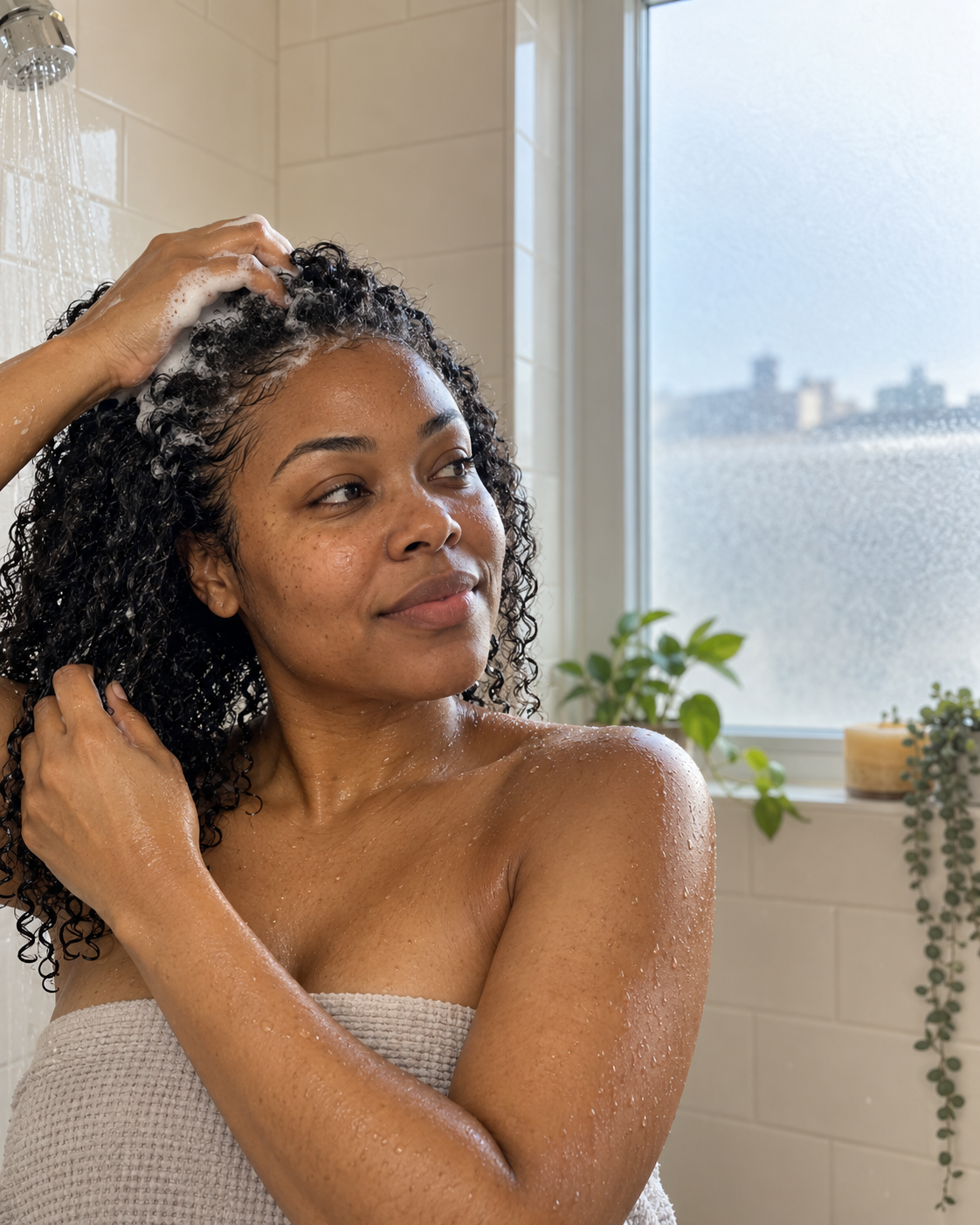
Thoroughly wet the hair, then apply shampoo in several small placements around the scalp. Massage gently with the fingertips at the hairline, crown, sides and nape.
You generally do not need to scrub shampoo directly into dry ends. During rinsing, the diluted cleanser will move through the lengths. This is usually enough for routine cleansing unless the ends carry heavy product or another specific residue.
The Luxivie Rosemary Mint Shampoo is the best current Luxivie match when oiliness at the roots is the dominant concern. Its role is to support a fresh-feeling cleansing routine. It should not be presented as changing sebum production or treating a scalp condition.
When a second cleanse may help
A second light shampoo can be useful after heavy dry shampoo, significant sweat or several days of root-product use. It is not required at every wash.
If the first cleanse distributes well and leaves the scalp clean after rinsing, stop. If it barely spreads because it is working through substantial oil and residue, rinse and use a smaller second application. Evaluate scalp comfort and the condition of the lengths afterward.
Why stronger is not always better
A cleanser that leaves the scalp feeling tight or the hair squeaky is not automatically balancing oil more effectively. The roots may still become oily again according to their normal pattern, while the lengths feel drier.
Choose effective but comfortable cleansing. If a shampoo repeatedly leaves you uncomfortable, change the formula, amount, frequency or water temperature.
Step 3: Condition According to Texture and Dryness
Conditioner is not the enemy of oily hair. It reduces friction, improves slip and helps dry lengths feel smoother and more manageable. The key variables are amount, richness, placement and rinsing.
Start with a modest amount on the mid-lengths and ends. Work it through sections rather than coating the outer surface only. Add a little more to areas that tangle or feel rough.
If conditioner makes your roots look flat, keep it away from the scalp. If you have curls or coils that require conditioning closer to the roots for detangling and definition, adjust placement accordingly and use less product in that area. Texture-specific needs are more important than a universal “never condition the roots” rule.
Rinse thoroughly. The goal is soft, flexible hair, not a slippery layer that remains after the shower.
The Luxivie Rosemary Mint Conditioner is the natural pairing when the roots are oily and the lengths need light, targeted care. If the lengths are substantially dry, processed or fragile-feeling, a richer or strengthening routine may sometimes be more appropriate. In that case, use it on the affected lengths rather than increasing weight at the roots.
Step 4: Add Moisture Only Where It Is Needed
After washing, blot the hair gently and assess the ends. Do not add leave-in conditioner, cream and oil automatically just because the ends were dry before washing.
Choose one light finishing step first.
Leave-in conditioner
A water-based leave-in can support detangling and softness. Apply a small amount to damp mid-lengths and ends. Fine hair may need very little.
Hair oil
Oil can help smooth the appearance of dry ends and add shine. It does not add water to the hair or permanently repair split ends.
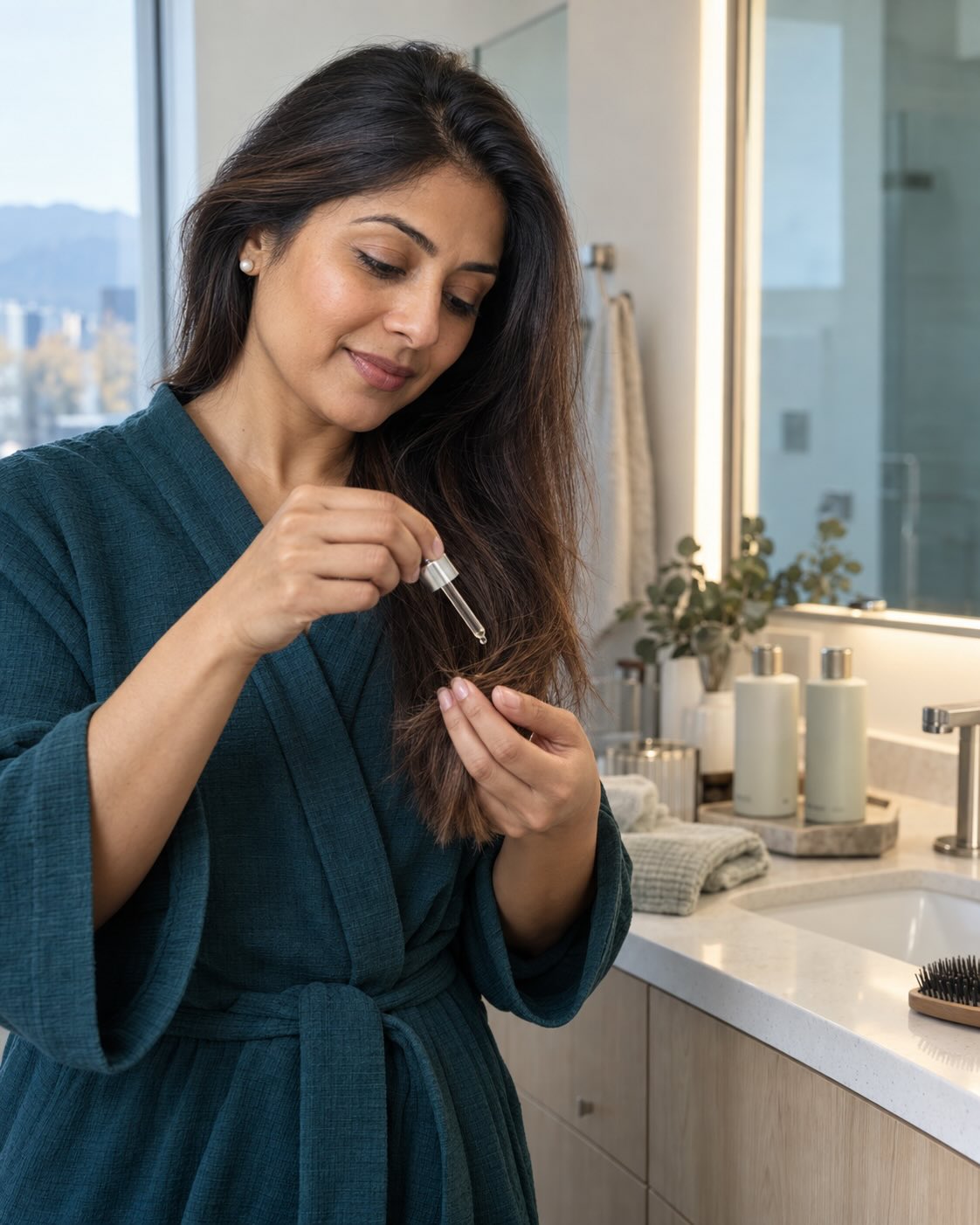
For the Luxivie Rosemary Hair Oil, follow the label and begin with the smallest amount you can distribute evenly. Warm it between the palms and touch it lightly onto the ends. Keep it away from the roots if oil makes them look heavy.
The oil is a relevant secondary product for this mixed concern, but the main article CTA remains the Rosemary Mint Shampoo & Conditioner Set because cleansing and conditioning placement form the foundation of the routine.
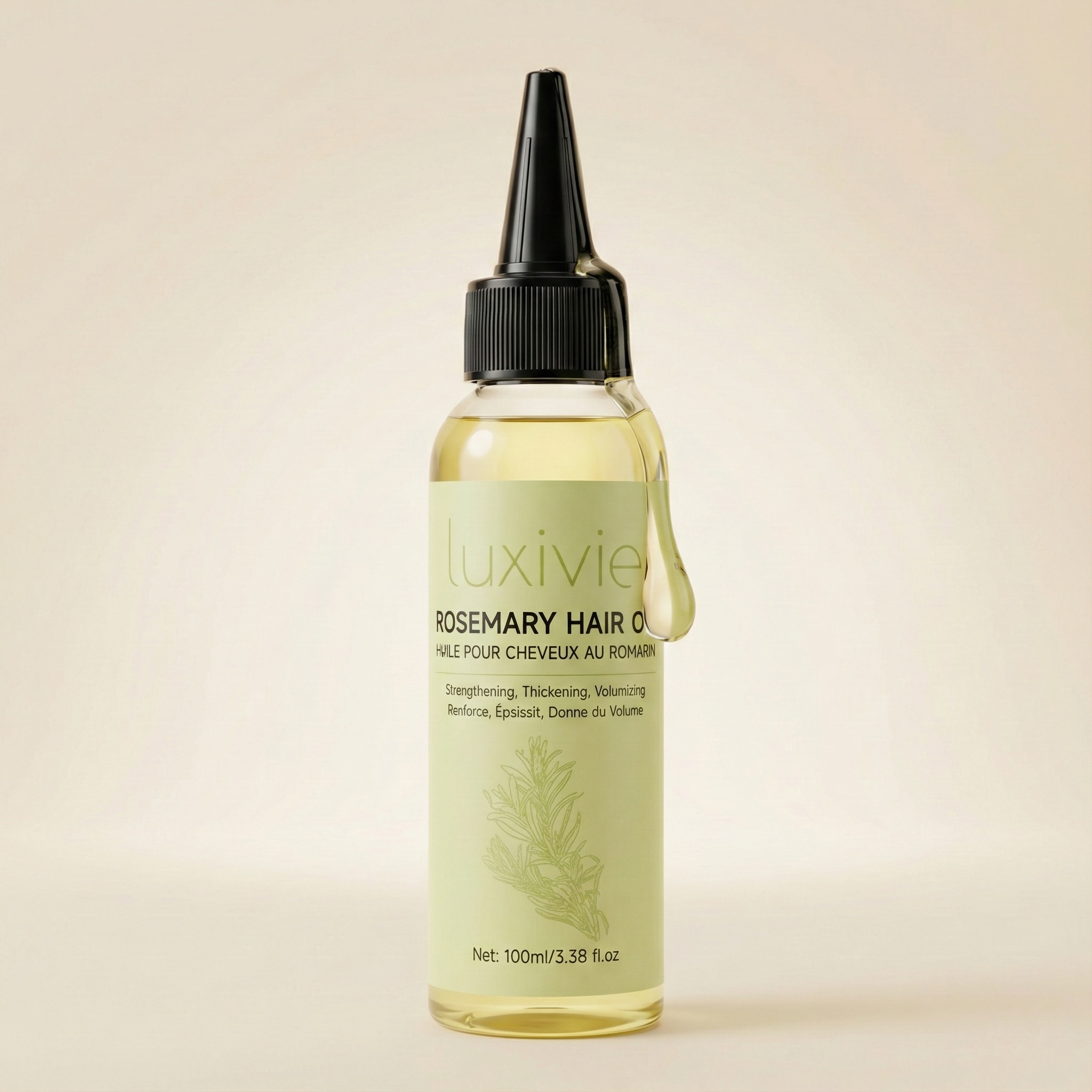
Luxivie Rosemary Hair Oil — Lightweight Oil for Fuller-Looking, Smoother Hair
Description: Give thinning-looking hair a smoother, more polished appearance. This lightweight rosemary hair oil helps add shine and softness while enhancing the look of fuller-looking hair. A simple finishing step for dry, dull or thinning-looking hair without a heavy, greasy feel.
Shop Now on Amazon.caMask or treatment
If the ends are very dry, an occasional conditioning mask may improve softness and manageability. Apply it only where needed and follow its directions. Using a mask every wash is not automatically more effective and may weigh down finer lengths.
Step 5: Protect the Ends From Routine Friction
Dry ends are not managed by products alone. Daily handling can determine how smooth they look and how easily they tangle.
Blot wet hair instead of rubbing it aggressively with a towel.
Detangle from the ends upward with a suitable tool.
Use a heat protectant whenever using hot tools.
Keep dryer airflow moving and avoid repeatedly heating dry ends.
Choose hair ties without sharp edges or exposed metal.
Avoid pulling the same tight style every day.
Keep coat collars, scarves and bag straps from repeatedly trapping the ends when practical.
These steps cannot prevent every split end, but they can reduce avoidable friction and handling stress.
Regular trims remove ends that have already split. Products can temporarily smooth their appearance but cannot permanently fuse them back together.
A Complete Routine for Oily Roots and Dry Ends
Wash day
Saturate the scalp and hair thoroughly with comfortably warm water.
Distribute shampoo across the scalp in several small placements.
Massage gently with fingertips and avoid piling the ends on top of the head.
Rinse carefully, lifting sections so water reaches the crown and nape.
Repeat with a smaller amount only when oil or residue makes it useful.
Apply conditioner to the mid-lengths and ends, adjusting for texture.
Rinse until the hair feels soft but not coated.
Blot, detangle gently and apply one light leave-in or ends-only oil if needed.
Dry with controlled heat and a heat protectant, or air-dry without leaving the roots compressed in one direction.
Between washes
If roots begin to look oily but the scalp still feels comfortable, use a small amount of dry shampoo according to its directions or choose a style that works with the current texture. Dry shampoo temporarily refreshes appearance; it does not remove oil and residue in the same way as washing.
Avoid brushing scalp oil aggressively through the ends as a substitute for conditioning. Gentle brushing may distribute some oil on straight or wavy hair, but excessive brushing can add friction and may not be suitable for curls or coils.
If the ends feel dry, use a minimal amount of leave-in or oil only there. Do not refresh the ends by adding product at the roots.
When buildup appears
If the roots remain coated after normal washing, review dry shampoo, powders, sprays, silicones, oils and the cleanliness of brushes. An occasional clarifying shampoo may help remove accumulated residue, but use it according to need and product directions.
Apply richer conditioning to the dry lengths after clarifying. Avoid assuming that the scalp and ends need the same strength of reset.
How to Adjust the Routine by Hair Type
Fine, straight hair
Use smaller amounts and keep rich products low on the hair. Thorough rinsing and root-directed drying can help preserve movement. A trace amount of oil may be enough for the ends.
Wavy hair
Use enough conditioner for slip without coating the wave pattern. Scrunch or style with one lightweight product rather than several overlapping creams. Avoid repeatedly brushing dry waves if that increases frizz.
Curly or coily hair
The lengths may need more conditioning and section-by-section application even when the scalp becomes oily. Cleanse the scalp thoroughly while minimizing rough manipulation of the curls. Conditioner placement may extend closer to the roots, and an oil or cream may be helpful on the ends in an amount appropriate to the texture.
Colour-treated or lightened hair
Processed ends may need more conditioning than untreated roots. Check that products are labelled for colour-treated hair when colour maintenance is a priority. Reduce very hot water and repeated high-heat styling.
Common Mistakes With Combination Hair
Using an aggressive shampoo everywhere
Strong cleansing through already-dry ends may make them feel rougher. Concentrate shampoo on the scalp and let rinsing handle the lengths during normal washes.
Avoiding conditioner because the scalp is oily
The scalp’s oiliness does not eliminate the needs of the fibre. Use conditioner in the zones that need it.
Applying oil from roots to ends
Oil at the roots may reduce visible freshness, especially on fine hair. Use it as a targeted finishing product unless the label and your texture call for another method.
Layering multiple refresh products
Dry shampoo, texture spray and root powder can build up. If the roots feel coated, washing may work better than adding another layer.
Trying to make the scalp stop producing oil
Cosmetic shampoo removes oil; it should not be claimed to permanently change sebum production. Focus on comfortable cleansing and a schedule that fits real life.
Ignoring sudden changes
A new and persistent change in oiliness, scalp comfort or hair density may deserve professional assessment. Cosmetic advice can support routine care but cannot identify a health cause.
A Seasonal Canadian Plan
Spring and summer
Heat, humidity, exercise and time outdoors may increase sweat and make roots feel oily sooner. Wash according to comfort, use fewer root products and rinse after swimming. Condition the lengths after sun, chlorine or frequent washing.
Autumn
As indoor heating begins, watch for static or rough ends. You may need slightly more conditioner without changing the shampoo used at the scalp.
Winter
Keep conditioning targeted to the lengths, reduce friction from scarves and coat collars, and let hair dry before prolonged cold exposure when practical. Hats can flatten roots, but applying extra dry shampoo every time may lead to residue. Reposition the roots after removing the hat and wash when needed.
The key is to change one variable at a time. Increase conditioner on the ends before replacing the entire routine. Adjust shampoo frequency before choosing the strongest cleanser available.
Frequently Asked Questions
Should I wash oily roots every day if my ends are dry?
You can wash daily if the scalp needs it and the routine remains comfortable. Focus shampoo at the scalp, use appropriate water temperature and condition the ends. If daily washing leaves the lengths rough, adjust formula, technique or conditioning rather than assuming you must tolerate oily roots.
Should conditioner go on oily roots?
If conditioner makes the roots flat, begin at the mid-lengths and ends. Curly, coily, dry or tangle-prone hair may benefit from conditioning closer to the roots, so adapt the amount and placement to texture.
Can hair oil fix dry ends?
Hair oil can improve shine and temporarily smooth the appearance of dry or split ends. It does not permanently repair structural splitting. Use a small amount and trim split ends when needed.
Is dry shampoo good for oily roots and dry ends?
Dry shampoo can temporarily refresh the appearance of roots without wetting the dry lengths. Use it sparingly and wash when residue accumulates. It should not replace regular cleansing indefinitely.
Which Luxivie products fit oily roots and dry ends?
Begin with the Luxivie Rosemary Mint Shampoo & Conditioner Set: shampoo at the scalp, conditioner through the lengths. If the ends still need smoothing, add a very small amount of Luxivie Rosemary Hair Oil according to its label. Keep the oil targeted to the ends if your roots become heavy easily.
The Bottom Line
Oily roots and dry ends do not require you to choose one concern and ignore the other. Treat the scalp and lengths as separate zones: cleanse where oil accumulates, condition where the fibre feels dry and use finishing products only where they add a clear benefit.
The Luxivie Rosemary Mint Shampoo & Conditioner Set is the most relevant foundation for this split-zone routine. Use the shampoo mainly at the scalp and adjust conditioner amount and placement to your texture. For ends that need extra polish, the Luxivie Rosemary Hair Oil can be added sparingly as a secondary step. This balanced approach supports fresh-looking roots and softer, more manageable ends without asking one product to do everything.
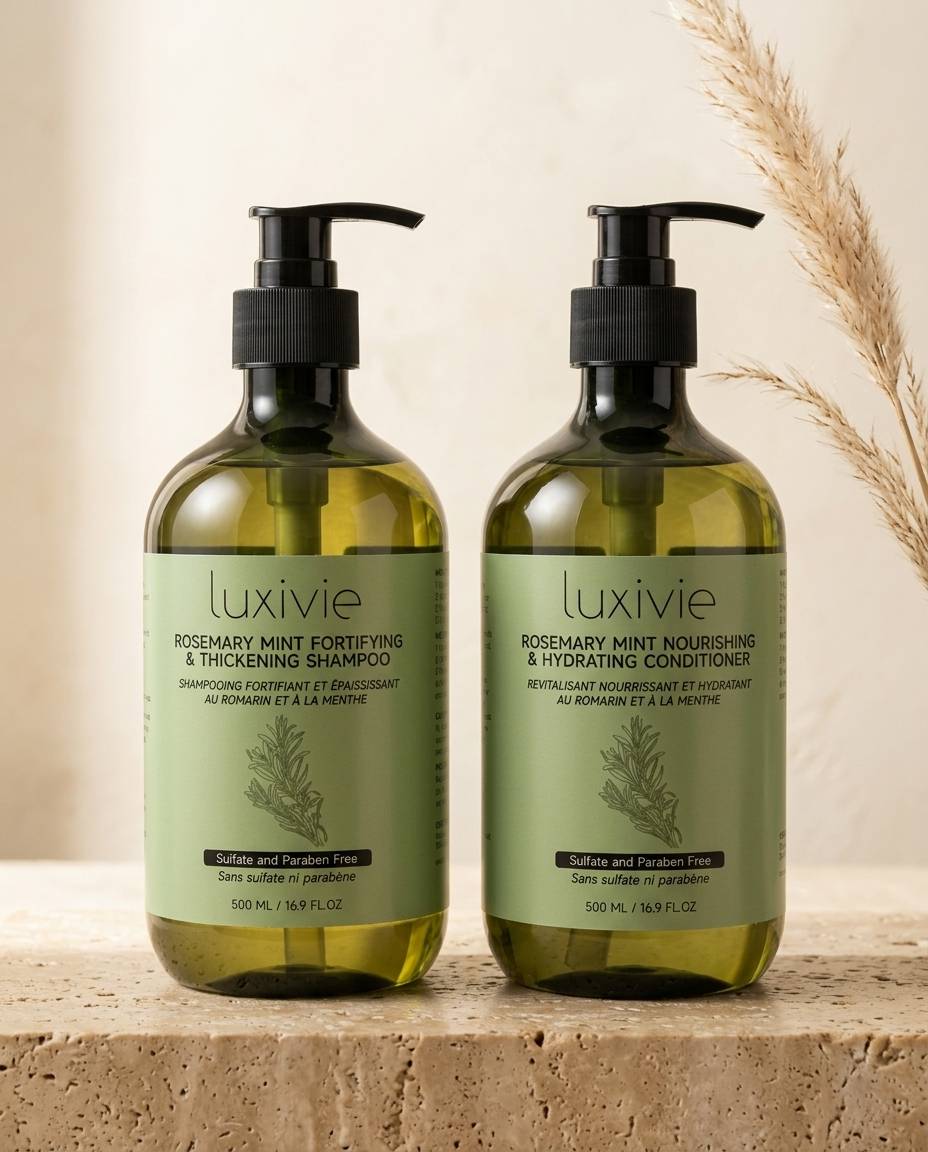
Luxivie Rosemary Mint Shampoo & Conditioner Set for Oily Hair — Gentle Cleansing & Lightweight Hydration
Refresh oily roots without weighing down your hair. This Rosemary Mint duo gently cleanses and refreshes while the lightweight conditioner softens and hydrates without leaving hair feeling heavy. Hair feels fresh, smooth and manageable, with a fuller-looking finish.
Shop Now on Amazon.ca