
How to Protect Hair From Hat and Scarf Friction
Winter hats and scarves are essential in Canada, but they can be hard on your hair. A warm knit hat may flatten the roots. A rough scarf can rub against the nape and ends. A high collar can create tangles throughout the day. By the time you get indoors, your hair may feel dry, static, frizzy, or more difficult to style than it did in the morning.
This does not mean you should stop wearing the accessories that keep you warm. It means your winter hair routine should account for friction.
Friction is one of the most overlooked causes of seasonal hair stress. When fabric repeatedly rubs against hair, it can rough up the outer layer of the strand. This can make dry hair look duller and damaged hair feel more tangled. Over time, especially when hair is already fragile, the nape, hairline, and ends may be more prone to breakage.
A few small changes can help protect your hair while still keeping you comfortable through Canadian fall and winter.
Why Hats and Scarves Affect Hair
Every time hair rubs against a surface, there is friction. Some fabrics are smoother and gentler, while others are rougher and more likely to catch on the hair.
Common winter items that create friction include:
Wool hats.
Acrylic beanies.
Knit scarves.
Turtlenecks.
Coat collars.
Hoods.
Sweaters.
Synthetic-lined winter accessories.
The effect can be especially noticeable if you have:
Fine hair.
Long hair.
Curly or coily hair.
Bleached or colour-treated hair.
Dry ends.
Hair extensions.
A sensitive scalp.
Hair that tangles easily.
Winter accessory friction is often linked to static, frizz, flattened roots, tangling, dry ends, and breakage around the nape and hairline. Smooth materials, satin or silk barriers, and gentle removal techniques are commonly recommended to reduce these effects.
What Friction Does to Dry and Damaged Hair
Healthy-looking hair has a smoother outer layer, called the cuticle. When hair is dry, colour-treated, heat-damaged, or already rough, that outer layer may not lie as smoothly. Friction can make the issue more visible.
You may notice:
Frizz concentrated at the crown or nape.
Hair tangling underneath coats.
Short, broken pieces near the hairline.
Flat roots and puffy ends.
Static after removing a hat.
Split ends that feel worse in winter.
Curls losing shape under hats and hoods.
For people focused on damaged hair care, reducing friction is just as useful as adding more conditioning products. If hair is exposed to repeated rubbing every day, even a great shampoo and mask routine may not fully solve the problem.
Choose Smoother Winter Accessories
You do not need to buy an entirely new winter wardrobe. Start by paying attention to what touches your hair most often.
Look for satin- or silk-lined hats
A satin- or silk-lined hat can create a smoother barrier between hair and rough knit fabric. This can be especially helpful for curly, coily, textured, fine, or colour-treated hair.
A lining does not eliminate all static or flattening, but it may reduce friction and make the hair easier to restyle after you take the hat off.
Use a silk or satin scarf under your existing hat
If you love your current wool hat, wrap a small silk or satin scarf around your hair before putting it on. This can work especially well for long hair, curls, braids, twists, or protective styles.
The goal is not to create a tight wrap. Keep it comfortable and avoid pulling at the hairline.
Consider softer outer fabrics
Natural fibres and smoother materials may be gentler than coarse or highly synthetic fabrics. You may not always be able to control what your coat or scarf is made of, but adding a smooth layer between the fabric and your hair can make a difference.
Avoid overly tight hats
A very tight hat can create more pressure at the roots and hairline. Choose a fit that keeps you warm without compressing your style or rubbing excessively.
Prepare Hair Before You Leave Home
The best winter hair protection begins before you put on your coat.
Make sure hair is fully dry
Putting a hat over wet or damp hair can create creases, flattened roots, tangles, and an uncomfortable scalp. Drying hair fully before wearing winter accessories also makes it easier to preserve your style.
Detangle gently
Before leaving home, detangle your hair from the ends upward. If your hair is already tangled before it goes under a scarf or coat collar, the friction throughout the day can make it worse.
Use a wide-tooth comb for curls and textured hair, a gentle detangling brush for straight or wavy hair, or your fingers if your hair responds best to finger detangling.
Add lightweight protection to the lengths
Apply a small amount of leave-in conditioner, detangling mist, anti-frizz cream, or lightweight serum to the mid-lengths and ends. This can help hair move more smoothly against fabric.
Avoid applying rich oils or thick creams near the roots if your hair is fine or gets oily easily. Focus on the ends, which are more likely to rub against scarves, coat collars, and sweaters.
Choose the right hairstyle
Loose, low-tension styles are often easier on hair under winter accessories. Consider:
A low loose braid.
A low bun with a soft scrunchie.
Two loose braids.
A protective twist.
A tucked-under style.
A low ponytail that does not pull at the hairline.
Avoid placing the same tight ponytail or bun in the exact location every day. Repeated tension plus friction can stress the same area of hair.
How to Wear a Scarf Without Tangling Your Hair
Scarves are often overlooked, but they can be one of the biggest sources of nape tangling. Long hair rubbing against the scarf throughout the day can become dry, knotted, and rough.
Try these techniques:
Keep long hair inside a loose braid.
Place hair over one shoulder instead of leaving it spread across the back.
Use a smooth scarf layer closest to your hair.
Avoid wrapping a rough scarf directly around exposed hair.
Loosen the scarf indoors rather than keeping it tight against the hair all day.
Check the nape gently before brushing at night.
If you wear a hood, make sure the hair at the back of your neck is not caught or compressed awkwardly before you pull it up.
How to Take Off a Hat Without Ruining Your Hair
The way you remove your hat matters. Pulling it off quickly can create a burst of static and disturb the cuticle.
Instead:
Remove the hat slowly.
Use your fingertips to lift roots gently.
Smooth the top layer with clean hands.
Use a small amount of leave-in product only if needed.
Avoid immediately brushing dry, static hair aggressively.
Let your hair settle for a few minutes before restyling.
If your roots are flat, a tiny amount of dry shampoo or root-lifting spray can help. Use it sparingly. Too much product can make hair feel heavy or create buildup.
Keep the Nape and Ends Protected
The nape of the neck is one of the most vulnerable areas in winter. It rubs against scarves, collars, hoods, and jackets throughout the day. This can lead to tangling and breakage, especially if the hair is long, dry, or textured.
Give this area extra attention by:
Applying a lightweight leave-in to the bottom layers.
Keeping hair loosely braided when wearing high collars.
Checking for knots before bed.
Avoiding tight styles that pull at the nape.
Using a satin pillowcase to reduce friction overnight.
Trimming dry or splitting ends regularly.
For very long hair, consider tucking the ends into a loose braid, coat, or scarf layer rather than leaving them exposed to wind and friction.
Adjust Your Wash and Styling Routine
Winter friction is easier to manage when the hair starts out hydrated and flexible.
A practical damaged hair care routine may include:
A gentle shampoo that does not leave hair stripped.
Conditioner on the lengths and ends every wash.
A lightweight leave-in product before styling.
A heat protectant before blow-drying.
Low-friction accessories and detangling tools.
A keratin shampoo Canada formula may be useful for hair that feels rough or weak from repeated styling, weather, and friction. Choose a formula that helps hair feel smoother without making it stiff.
If your hair is fine and fragile, a biotin shampoo Canada formula may fit into a lightweight strengthening routine. Balance it with conditioner and moisture support so hair does not become dry or overloaded with repair ingredients.
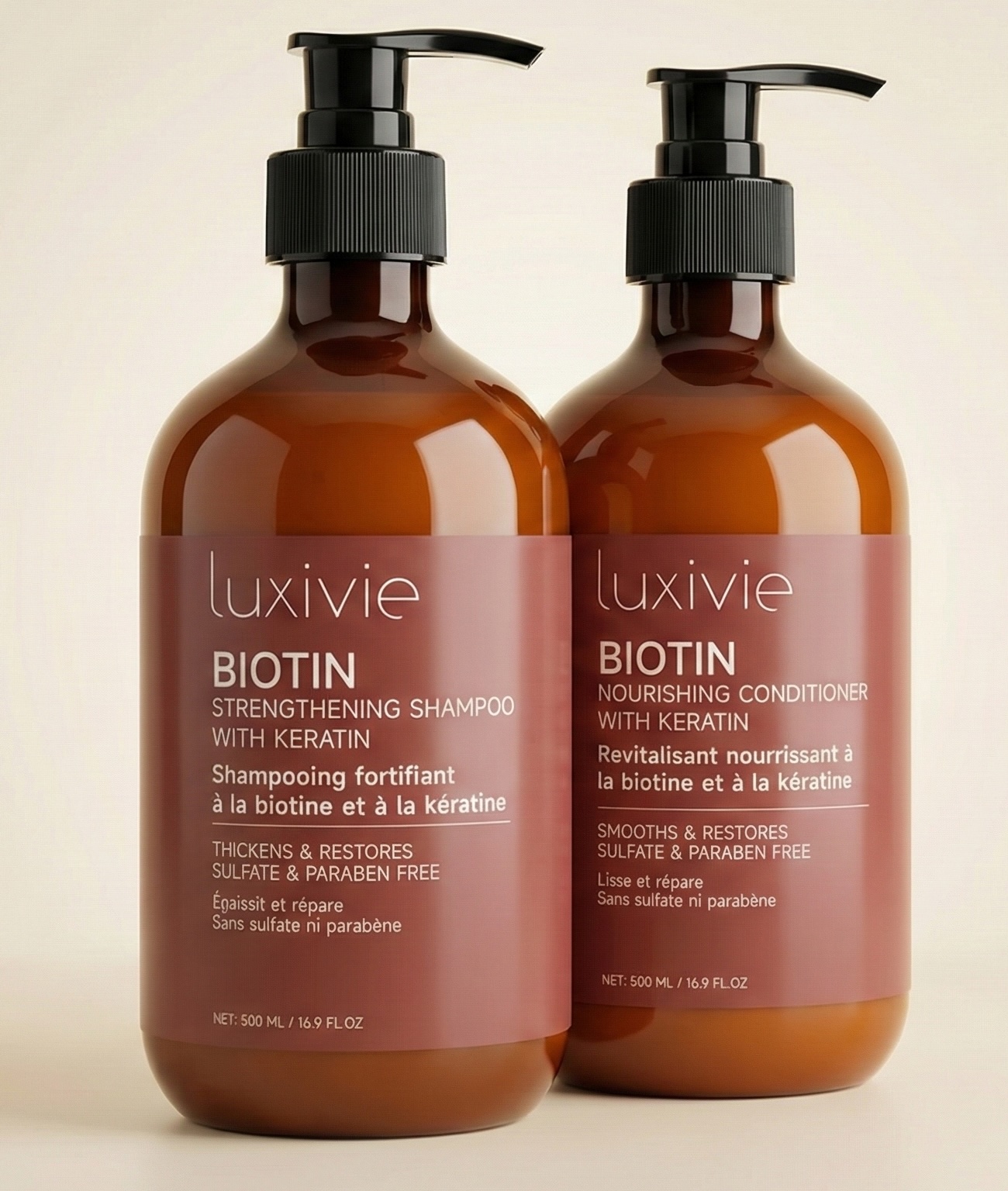
Luxivie Biotin & Keratin Shampoo & Conditioner Set for Dry & Damaged Hair — Strengthening & Smoothing Care
Care for dry, damaged-looking hair with a strengthening and smoothing duo. The shampoo gently cleanses while helping hair look fuller and more polished. The conditioner softens and smooths for easier detangling and improved manageability, leaving hair feeling soft and refreshed without weighing it down.
Shop Now on AmazonTips for Different Hair Types
Fine hair
Fine hair can flatten easily under hats and may become static quickly. Use a lightweight leave-in spray, avoid heavy oils at the roots, and choose loose styles that do not pull.
Curly and wavy hair
Curls can lose definition from hat friction. Use a leave-in conditioner, wear a satin-lined hat or scarf barrier, and avoid brushing curls dry after removing your hat.
Coily and textured hair
Textured hair often benefits from moisture retention and protective styles. Satin and silk barriers can be particularly useful for helping reduce friction around the hairline and nape.
Colour-treated or bleached hair
Colour-treated hair can be more fragile in winter. Use gentle detangling, regular moisture support, and smooth fabrics whenever possible. Keep the ends protected, especially when they are exposed to scarves and coat collars.
Short hair
Short hair can still experience friction at the crown and hairline. Use a smooth hat lining, avoid very tight headwear, and use a small amount of lightweight styling product to refresh after removal.
A Simple Hat-and-Scarf Hair Routine
Before leaving home
Make sure hair is fully dry.
Detangle gently.
Apply a small amount of leave-in conditioner or serum to the lengths.
Choose a low-tension style.
Put on a smooth-lined hat or silk barrier.
Arrange your scarf so it does not rub against exposed ends.
During the day
Avoid repeatedly pulling the hat on and off.
Keep long hair protected from coat collars.
Avoid touching your hair constantly.
Use a small amount of product only if needed.
When you come indoors
Remove your hat slowly.
Lift the roots with your fingertips.
Smooth flyaways with a small amount of leave-in.
Do not brush roughly.
Check the nape and ends for tangles.
FAQ
Can hats cause hair breakage?
Hats do not automatically cause breakage, but repeated friction from rough or tight fabrics can contribute to tangling, static, and stress on already dry or fragile hair.
Are stain-lined hats better for hair?
They can help reduce friction compared with direct contact between hair and rough knit or wool fabrics. Satin or silk barriers may be especially helpful for textured, curly, fine, or colour-treated hair.
How do I stop my scarf from tangling my hair?
Wear hair in a loose braid, use lightweight leave-in moisture on the ends, and avoid allowing rough scarf fabric to rub directly against exposed hair all day.
Should I wear a hat with wet hair?
It is better to let hair dry fully before wearing a hat. Wet hair under a hat can become flattened, creased, tangled, and difficult to restyle.
What is the best winter hairstyle to reduce friction?
Loose braids, low buns, twists, and other low-tension styles can help keep the ends protected and reduce rubbing against scarves and collars.